 Kwisi: O dinosaure efe?
 Ntwa ya didinosaure
 Peiso ya didinosaure
 Dipapadi tse nyane tsa didinosaure
 Albamo ya ditikara
 Manane a TOP a didinosaure
 Nkgethele!
Sinornithoides
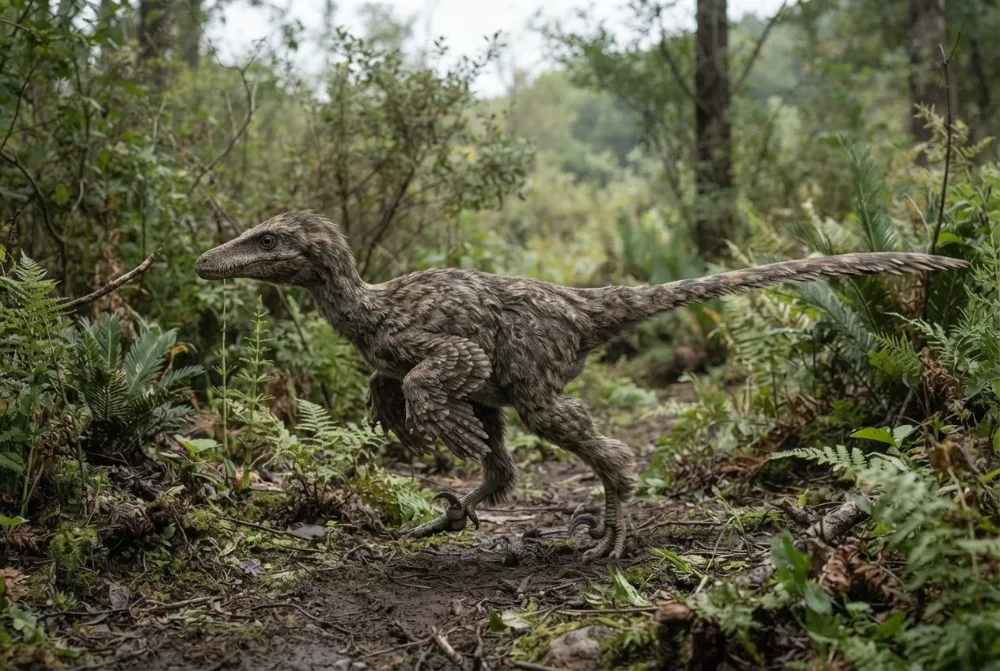
Sinornithoides was a tiny, bird-like dinosaur that lived about 113 million years ago. It was probably a fast hunter of small prey like insects. One fossil was found curled up like a sleeping bird, with its snout tucked under its arm.12
E phetse neng?
E ne e le kgolo hakae?
E ne e le telele hakae?
E ne e phahame hakae?
E ne e le boima hakae?
 telele jwaloka dikatse tsa lapeng tse 2 ho tloha nkong ho isa mohatleng🍌telele jwaloka dibanana tse 6 di behilwe ka molae batla e le boima jwaloka katse ya lapeng🍌boima jwaloka dibanana tse 21🪑e nyane hoo e ka tsamayang ka tlasa setulo🏃e ne e ka matha dimitara tse 100 ka metsotswana e 14 (motho ya lebelo ka ho fetisisa o hloka 9,6)
Sinornithoides e ne e le kgolo hakae ha e bapiswa le WENA?
Ke dipalo feela ho browser ya hao. Ha ho letho le bolokwang kapa le romelwang kae kapa kae.
E ne e le lebelo hakae?


Dintlha tse monate
Sinornithoides had a sickle claw on its second toe, like other troodontids, which it may have used to grip prey.1
The fossil was preserved in a sleeping pose, with its snuck under one hand, just like a modern bird resting.1
Its skull was long and pointed, but the head was short compared to its body length.1
The teeth on the front of its upper jaw had no serrations, but the back teeth had small serrations only on one edge.1
Sinornithoides had a furcula (wishbone) and a basket of fifteen pairs of belly ribs called gastralia.1
Troodontids like Sinornithoides had some of the highest brain-to-body sizes among non-bird dinosaurs, meaning they were probably smart.1
Dipotso tse botswang haholo ka Sinornithoides
?How big was Sinornithoides?
About 1 metre long, and weighed around 2.5 kilograms. That is about the size of a large chicken.13
?What did Sinornithoides eat?
It probably ate invertebrates and other small prey, like insects and lizards.1
?Was Sinornithoides a dinosaur?
Yes, it was a small, bird-like theropod dinosaur from the Early Cretaceous period.1
?Did Sinornithoides have feathers?
The sources do not mention feathers directly, but as a troodontid closely related to birds, it likely had feathers. Many troodontid fossils show evidence of feathers.1
Bakeng sa ditsebi tsa didinosaure
- Lebitso la saense
- Sinornithoides
- E rehilwe ke
- Russell and Dong 19944
- Sehlopha
- Diraptor
- Lelapa / leloko
- Troodontidae4
- Tlhophiso
- Theropoda > Troodontidae4
- Dilemo tsa mafika
- dilemo tse dimilione tse 113 ho isa ho 110 (Albian)4
- Dibopeho tsa mafika
- Zhonggou, Ejinhoro4
- Dinaha
- Tjhaena4
- Direkoto tsa difosili
- 2 ho The Paleobiology Database4
- Ho sibollwa
- A Chinese-Canadian expedition found the nearly complete skeleton in 1988 near Huamuxiao, in the Ordos Basin of Inner Mongolia. Dale Russell and Dong Zhiming named it Sinornithoides youngi in 1993/1994, honoring paleontologist Yang Zhongjian.12
Moo dintlha di tswang teng
- Sinornithoides (en.wikipedia.org)
- cdnsciencepub.com (cdnsciencepub.com)
- SINORNITHOIDES : DinoChecker dinosaur archive (dinochecker.com)
- Sinornithoides in The Paleobiology Database (CC BY 4.0): dilemo, dibaka, dibopeho tsa mafika, tlhophiso.
Ntlha e nngwe le e nngwe leqepheng lena e na le nomoro e supang mohlodi wa yona. Haeba re fositse ho hong, re kopa tshwarelo, re balatedi ba didinosaure, ha re koranta ya saense. Re bolelle ho [email protected] mme re tla e lokisa.
 Rex o lapile! Dino Wiki ke projeke ya ntate bakeng sa mora wa hae ya ratang didinosaure, ke mahala, ha ho dipapatso, ha ho disebedi. Batho ba baholo ba ka fepa Rex seneke ho thusa hore e dule e le inthaneteng.Fepa Rex
 Velociraptor
 Microraptor
 Deinonychus
 Asiamericana
 Richardoestesia
 Saurornitholestes
 Stegosaurus
 Iguanodon
 Archaeopteryx
 Giganotosaurus
 Baryonyx
 Paronychodon