 Kwisi: O dinosaure efe?
 Ntwa ya didinosaure
 Peiso ya didinosaure
 Dipapadi tse nyane tsa didinosaure
 Albamo ya ditikara
 Manane a TOP a didinosaure
 Nkgethele!
E phetse neng?

E ne e le kgolo hakae?
E ne e le telele hakae?
E ne e phahame hakae?
kakanyo
E ne e le boima hakae?
 telele jwaloka dikatse tsa lapeng tse 2 ho tloha nkong ho isa mohatleng🍌telele jwaloka dibanana tse 6 di behilwe ka mola🪶bobebe ho feta katse ya lapeng🍌boima jwaloka dibanana tse 8🪑e nyane hoo e ka tsamayang ka tlasa setulo🏃e ne e ka matha dimitara tse 100 ka metsotswana e 19 (motho ya lebelo ka ho fetisisa o hloka 9,6)
Sinosauropteryx e ne e le kgolo hakae ha e bapiswa le WENA?
Ke dipalo feela ho browser ya hao. Ha ho letho le bolokwang kapa le romelwang kae kapa kae.
E ne e le lebelo hakae?


Dintlha tse monate
Sinosauropteryx was the first feathered dinosaur discovered that was not directly related to birds.1
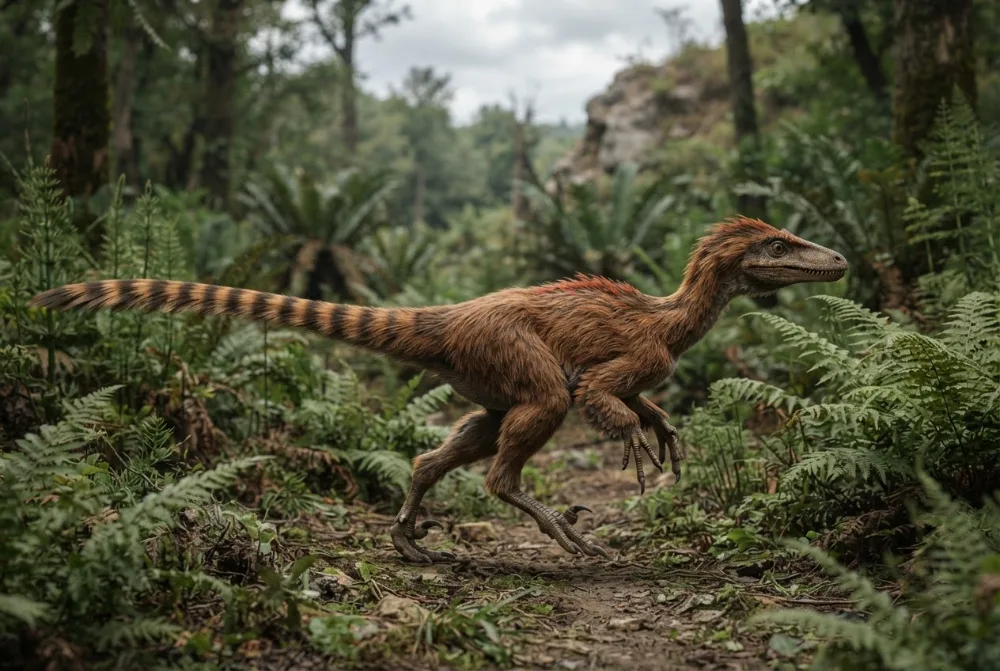
Scientists used Sinosauropteryx to figure out a dinosaur's color pattern for the first time ever.1
A fossil of Sinosauropteryx has a tiny lizard preserved in its stomach, showing what it ate for its last meal.1
Sinosauropteryx had over 50 very long tail bones, which made up about 60% of its body length.2
Its feathers were short and simple, like down feathers, not like the flight feathers of modern birds.2
Sinosauropteryx could not fly, but it could run fast on two legs, like an ostrich.2
One of the small mammals Sinosauropteryx ate, called Zhangheotherium, may have been venomous, with spurs on its ankles like a platypus.1
Dipotso tse botswang haholo ka Sinosauropteryx
?How big was Sinosauropteryx?
About 1.07 metres (3.5 feet) long and weighed around 0.55 kilograms (1.2 pounds). That is about as long as a skateboard but much lighter.31
?Did Sinosauropteryx have feathers?
Yes, it had a coat of thin, hair-like feathers. It was the first non-avian dinosaur discovered with evidence of feathers.13
?What did Sinosauropteryx eat?
It ate small animals like lizards, mammals, and insects. One fossil even has a tiny lizard preserved in its stomach.13
?When did Sinosauropteryx live?
It lived during the Early Cretaceous period, about 125 to 122 million years ago.13
?Where was Sinosauropteryx found?
Its fossils were found in Liaoning Province in northeastern China.13
?What color was Sinosauropteryx?
Scientists think it was reddish-brown with a light belly and dark and light bands on its tail, like a camouflage pattern.13
Bakeng sa ditsebi tsa didinosaure
- Lebitso la saense
- Sinosauropteryx
- E rehilwe ke
- Ji and Ji 19965
- Sehlopha
- Didinosaure tse jang nama
- Lelapa / leloko
- Sinosauropterygidae5
- Tlhophiso
- Theropoda5
- Dilemo tsa mafika
- dilemo tse dimilione tse 126 ho isa ho 120 (Barremian / Aptian)5
- Dibopeho tsa mafika
- Yixian5
- Dinaha
- Tjhaena5
- Direkoto tsa difosili
- 4 ho The Paleobiology Database5
- Ho sibollwa
- A fossil hunter named Li Yumin found the first Sinosauropteryx remains in 1996 in Liaoning, China. He sold the fossils to museums, and scientists Ji and Ji named the dinosaur in the same year.15
Moo dintlha di tswang teng
- Sinosauropteryx | Natural History Museum (nhm.ac.uk)
- On the Discovery of the earliest fossil bird in China (Sinosauropteryx (naturalhistory.si.edu)
- Sinosauropteryx (en.wikipedia.org)
- Dinosaurs - Sinosauropteryx prima - The Australian Museum (australian.museum)
- Sinosauropteryx in The Paleobiology Database (CC BY 4.0): dilemo, dibaka, dibopeho tsa mafika, tlhophiso.
Ntlha e nngwe le e nngwe leqepheng lena e na le nomoro e supang mohlodi wa yona. Haeba re fositse ho hong, re kopa tshwarelo, re balatedi ba didinosaure, ha re koranta ya saense. Re bolelle ho [email protected] mme re tla e lokisa.
 Rex o lapile! Dino Wiki ke projeke ya ntate bakeng sa mora wa hae ya ratang didinosaure, ke mahala, ha ho dipapatso, ha ho disebedi. Batho ba baholo ba ka fepa Rex seneke ho thusa hore e dule e le inthaneteng.Fepa Rex
 Allosaurus
 Carnotaurus
 Dilophosaurus
 Giganotosaurus
 Compsognathus
 Paronychodon
 Stegosaurus
 Iguanodon
 Archaeopteryx
 Microraptor
 Deinonychus
 Baryonyx