 Kwisi: O dinosaure efe?
 Ntwa ya didinosaure
 Peiso ya didinosaure
 Dipapadi tse nyane tsa didinosaure
 Albamo ya ditikara
 Manane a TOP a didinosaure
 Nkgethele!
E phetse neng?

E ne e le kgolo hakae?
E ne e le telele hakae?
E ne e phahame hakae?
E ne e le boima hakae?
 telele jwaloka dintja tse 4 ho tloha nkong ho isa mohatleng🍌telele jwaloka dibanana tse 19 di behilwe ka mola
 boima jwaloka dikatse tsa lapeng tse 10🍉boima jwaloka mahapu a 8🧸boima jwaloka bana ba kereshe ba 2🎒boima jwaloka bana ba sekolo ba 1🏃e ne e ka matha dimitara tse 100 ka metsotswana e 7.8 (motho ya lebelo ka ho fetisisa o hloka 9,6)
Suskityrannus e ne e le kgolo hakae ha e bapiswa le WENA?
Ke dipalo feela ho browser ya hao. Ha ho letho le bolokwang kapa le romelwang kae kapa kae.
E ne e le lebelo hakae?


Dintlha tse monate
Suskityrannus had the earliest known arctometatarsalian foot among its group, meaning its foot bones were pinched together for running fast.21
The fossils were discovered in 1998 by a geologist named Robert Denton and a teenage museum volunteer named Sterling Nesbitt.1
Suskityrannus lived during a time when sea levels were high and much of North America was underwater.2
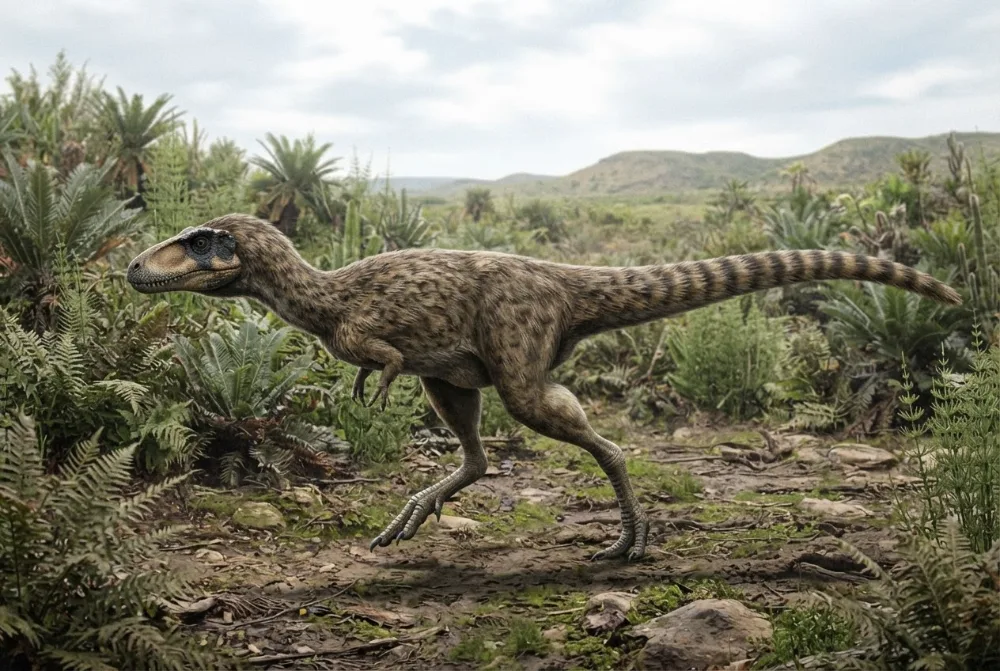
Its name means 'coyote tyrant' in the Zuni language, because it was a small, clever predator like a coyote.1
The two known skeletons belong to young individuals that were still growing, but adults were still much smaller than later tyrannosaurs like T. rex.1
Suskityrannus filled a big gap in the fossil record, showing how small early tyrannosaurs evolved into giant ones.2
Dipotso tse botswang haholo ka Suskityrannus
?How big was Suskityrannus?
Suskityrannus was a small dinosaur. Its skull was only 25 to 32 centimetres (9.8 to 12.6 inches) long, and the known specimens were still growing, so adults were much smaller than later tyrannosaurs like T. rex.1
?What did Suskityrannus eat?
Suskityrannus was a predator, so it likely ate small animals like lizards, early mammals, and maybe baby dinosaurs. Its sharp teeth and fast legs helped it hunt.12
?When did Suskityrannus live?
Suskityrannus lived about 92 million years ago during the Turonian stage of the Late Cretaceous period.12
?Where was Suskityrannus found?
Suskityrannus fossils were found in the Moreno Hill Formation of the Zuni Basin in western New Mexico, USA.1
?Was Suskityrannus a dinosaur?
Yes, Suskityrannus was a dinosaur. It was a small tyrannosauroid theropod, which is a group of meat-eating dinosaurs that includes T. rex.1
Bakeng sa ditsebi tsa didinosaure
- Lebitso la saense
- Suskityrannus
- E rehilwe ke
- Nesbitt et al. 20193
- Sehlopha
- Ditiranosaure
- Lelapa / leloko
- Tyrannosauroidea3
- Tlhophiso
- Theropoda > Tyrannosauroidea3
- Dilemo tsa mafika
- dilemo tse dimilione tse 94 ho isa ho 90 (Turonian)3
- Dibopeho tsa mafika
- Moreno Hill3
- Dinaha
- Amerika3
- Direkoto tsa difosili
- 1 ho The Paleobiology Database3
- Ho sibollwa
- The first fossils were found in 1998 by geologist Robert Denton and teenager Sterling Nesbitt in New Mexico. The species was officially named Suskityrannus hazelae in 2019.1
- E sa ntse e phehwa kgang
- Scientists are not sure exactly how big adult Suskityrannus grew, because only young skeletons have been found.1
Moo dintlha di tswang teng
- Suskityrannus (en.wikipedia.org)
- A mid-Cretaceous tyrannosauroid and the origin of North American end-Cretaceous dinosaur assemblages | Nature Ecology & Evolution (nature.com)
- Suskityrannus in The Paleobiology Database (CC BY 4.0): dilemo, dibaka, dibopeho tsa mafika, tlhophiso.
Ntlha e nngwe le e nngwe leqepheng lena e na le nomoro e supang mohlodi wa yona. Haeba re fositse ho hong, re kopa tshwarelo, re balatedi ba didinosaure, ha re koranta ya saense. Re bolelle ho [email protected] mme re tla e lokisa.
 Rex o lapile! Dino Wiki ke projeke ya ntate bakeng sa mora wa hae ya ratang didinosaure, ke mahala, ha ho dipapatso, ha ho disebedi. Batho ba baholo ba ka fepa Rex seneke ho thusa hore e dule e le inthaneteng.Fepa Rex
 Tyrannosaurus
 Tarbosaurus
 Albertosaurus
 Daspletosaurus
 Gorgosaurus
 Alectrosaurus
 Triceratops
 Velociraptor
 Spinosaurus
 Ankylosaurus
 Parasaurolophus
 Pteranodon