 Kwisi: O dinosaure efe?
 Ntwa ya didinosaure
 Peiso ya didinosaure
 Dipapadi tse nyane tsa didinosaure
 Albamo ya ditikara
 Manane a TOP a didinosaure
 Nkgethele!
E phetse neng?

E ne e le kgolo hakae?
E ne e le telele hakae?
E ne e phahame hakae?
E ne e le boima hakae?
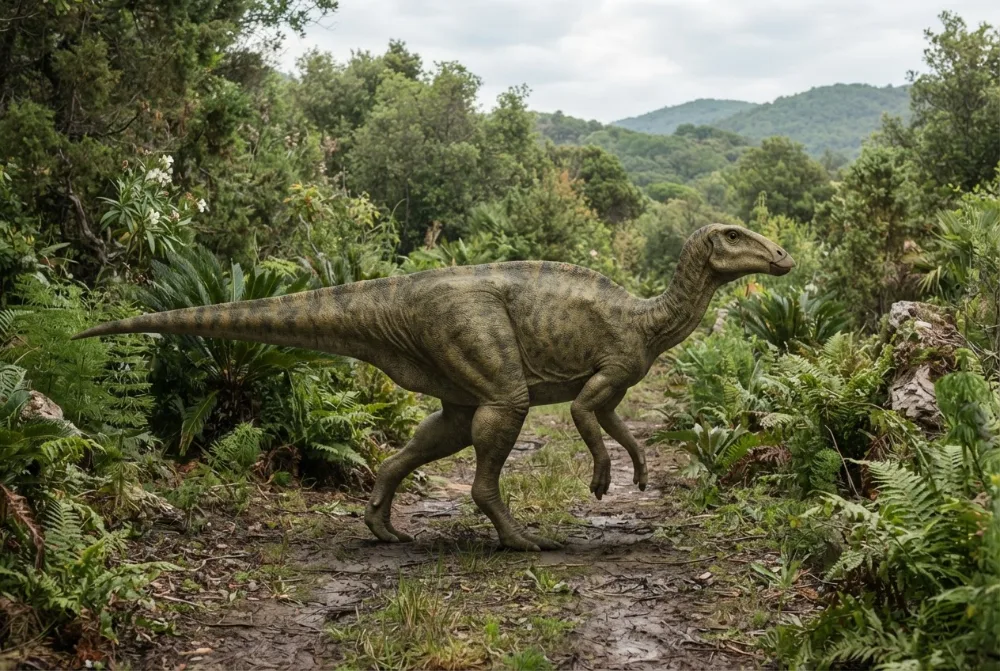
 telele jwaloka dintja tse 4 ho tloha nkong ho isa mohatleng🍌telele jwaloka dibanana tse 25 di behilwe ka mola🍉boima jwaloka mahapu a 120🧸boima jwaloka bana ba kereshe ba 31🎒boima jwaloka bana ba sekolo ba 18🏃e ne e ka matha dimitara tse 100 ka metsotswana e 9.2 (motho ya lebelo ka ho fetisisa o hloka 9,6)
Tethyshadros e ne e le kgolo hakae ha e bapiswa le WENA?
Ke dipalo feela ho browser ya hao. Ha ho letho le bolokwang kapa le romelwang kae kapa kae.
E ne e le lebelo hakae?


Dintlha tse monate
Tethyshadros lived on a large island in the ancient Tethys Ocean, which is why it was named after that sea.1
The first skeleton, nicknamed Antonio, was found in a vertical rockface and took years to dig out.1
Tethyshadros had a mix of old-fashioned features, like a short neck and a skull like Iguanodon, and advanced features, like teeth arranged in batteries like true hadrosaurs.1
Scientists once thought Tethyshadros was a dwarf dinosaur, but later bone studies showed the main skeleton was from a teenager, not a full-grown adult.1
A second skeleton, nicknamed Bruno, is bigger and more complete, with a full skull and many bones.1
Tethyshadros is one of the latest surviving non-hadrosaurid hadrosauromorphs, meaning it lived just before true hadrosaurs became common.1
Dipotso tse botswang haholo ka Tethyshadros
?How big was Tethyshadros?
About 4.5 metres (15 feet) long, though some scientists think that estimate might be too high. The adult skeleton Bruno was 15 to 20% larger than the subadult Antonio.1
?What did Tethyshadros eat?
It was a plant-eater. Its beak and teeth were adapted for eating plants, and it may have used its strange serrated beak to bite specific food items.13
?Why did Tethyshadros have a strange beak?
Nobody knows for sure. It might have helped it bite certain plants, or been used for grooming or display.3
?Was Tethyshadros a dwarf dinosaur?
It was originally thought to be a dwarf, but later bone studies showed the main skeleton (Antonio) was a teenager, not a full-grown adult. The adult Bruno was larger.1
?When did Tethyshadros live?
It lived during the Late Cretaceous, about 81.5 to 80.5 million years ago.1
?Where was Tethyshadros found?
In an abandoned quarry at Villaggio del Pescatore, near Trieste, Italy. It lived on a large island in the ancient Tethys Ocean.1
Mosenyi wa ditshomo
Tshomo: Tethyshadros was a dwarf dinosaur.
Nnete: The first skeleton was a subadult, not a full-grown adult, so it was not a dwarf species.1
Bakeng sa ditsebi tsa didinosaure
- Lebitso la saense
- Tethyshadros
- E rehilwe ke
- Dalla Vecchia 20094
- Sehlopha
- Dija-dimela tse nang le melomo
- Lelapa / leloko
- Telmatosauridae4
- Tlhophiso
- Ornithischia > Ornithopoda > Iguanodontia4
- Dilemo tsa mafika
- dilemo tse dimilione tse 84 ho isa ho 72 (Campanian)4
- Dibopeho tsa mafika
- Aurisina4
- Dinaha
- Itali4
- Direkoto tsa difosili
- 1 ho The Paleobiology Database4
- Ho sibollwa
- Fossil fragments were found in the 1980s by Alceo Tarlao and Giorgio Rimoli. A nearly complete skeleton was discovered in 1994 and excavated by 1999. The dinosaur was named Tethyshadros insularis by Fabio Dalla Vecchia in 2009.1
- E sa ntse e phehwa kgang
- Scientists still debate the exact total length of Tethyshadros, because the tail of the first skeleton was missing and its length had to be estimated.1
Moo dintlha di tswang teng
- Tethyshadros (en.wikipedia.org)
- Friuli-Venezia Giulia - Fossili Regionali (fossiliregionali.it)
- The “Duck-billed” Dinosaur That Wasn’t (smithsonianmag.com)
- Tethyshadros in The Paleobiology Database (CC BY 4.0): dilemo, dibaka, dibopeho tsa mafika, tlhophiso.
Ntlha e nngwe le e nngwe leqepheng lena e na le nomoro e supang mohlodi wa yona. Haeba re fositse ho hong, re kopa tshwarelo, re balatedi ba didinosaure, ha re koranta ya saense. Re bolelle ho [email protected] mme re tla e lokisa.
 Rex o lapile! Dino Wiki ke projeke ya ntate bakeng sa mora wa hae ya ratang didinosaure, ke mahala, ha ho dipapatso, ha ho disebedi. Batho ba baholo ba ka fepa Rex seneke ho thusa hore e dule e le inthaneteng.Fepa Rex
 Iguanodon
 Tenontosaurus
 Thescelosaurus
 Zalmoxes
 Camptosaurus
 Rhabdodon
 Tyrannosaurus
 Triceratops
 Velociraptor
 Spinosaurus
 Ankylosaurus
 Parasaurolophus