 Kwisi: O dinosaure efe?
 Ntwa ya didinosaure
 Peiso ya didinosaure
 Dipapadi tse nyane tsa didinosaure
 Albamo ya ditikara
 Manane a TOP a didinosaure
 Nkgethele!
Uriash
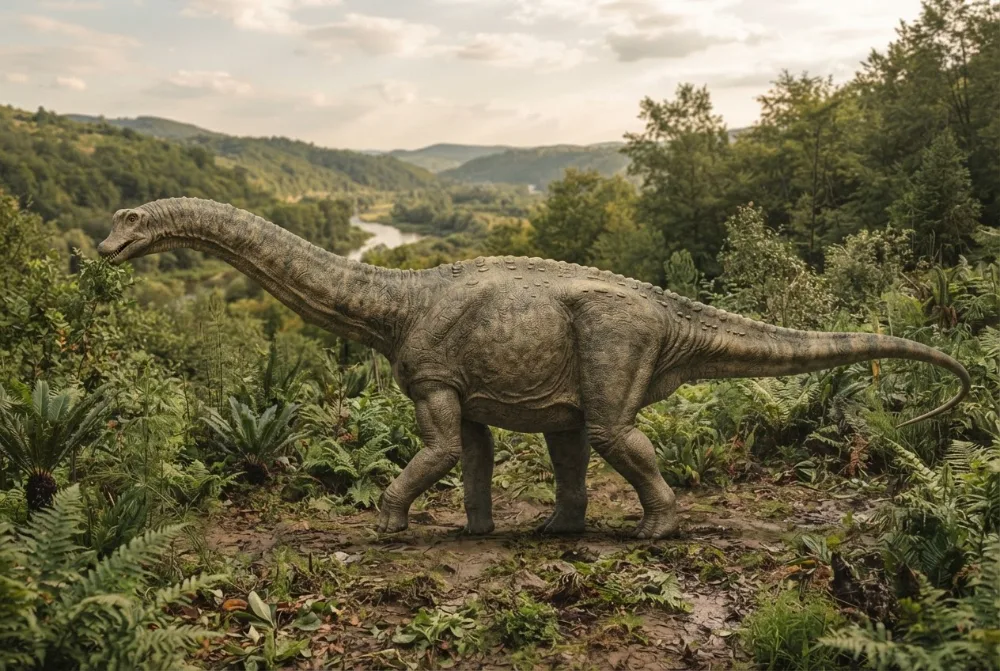
Uriash was a huge, long-necked plant-eater that lived on an ancient island in what is now Romania. It was one of the biggest dinosaurs ever found in Europe from the very end of the Age of Dinosaurs.12
E phetse neng?
E ne e le kgolo hakae?
E ne e le telele hakae?
E ne e phahame hakae?
kakanyo
E ne e le boima hakae?
 telele jwaloka dikoloi tse 2.5 tse pakilweng ka mola🍌telele jwaloka dibanana tse 66 di behilwe ka mola
 boima jwaloka ditlou tse 1.5🍉boima jwaloka mahapu a 1600🎒boima jwaloka ditlelase tse feletseng tse 10 tsa bana ba sekolo🐻❄️boima jwaloka dibere tse tshweu tse 18🏃e ne e ka matha dimitara tse 100 ka metsotswana e 21 (motho ya lebelo ka ho fetisisa o hloka 9,6)
Uriash e ne e le kgolo hakae ha e bapiswa le WENA?
Ke dipalo feela ho browser ya hao. Ha ho letho le bolokwang kapa le romelwang kae kapa kae.
E ne e le lebelo hakae?


Dintlha tse monate
Uriash was named in 2025, making it one of the newest dinosaur discoveries.1
Its fossils were first found in 1914 by geologist Ottokár Kadić, but it took over 100 years for scientists to realize it was a new species.1
Uriash lived on Hațeg Island, a large island in the ancient European archipelago during the Late Cretaceous.2
It was the second largest titanosaur known from the Late Cretaceous of Europe, only smaller than Abditosaurus.1
The name Uriash comes from the Romanian word 'uriaș', meaning giant, and honors Ottokár Kadić.1
Its bones include tail vertebrae, a right humerus, thighbones, and a foot bone, all from one individual.1
Dipotso tse botswang haholo ka Uriash
?How big was Uriash?
Uriash was about 8.83 to 11.87 metres (29.0 to 38.9 feet) long and weighed up to 5 to 8 tonnes (5.5 to 8.8 short tons).1
?What did Uriash eat?
Uriash was a plant-eater, like all sauropods. It ate plants on the ancient island where it lived.1
?When did Uriash live?
Uriash lived during the Maastrichtian age of the Late Cretaceous, about 71 to 66 million years ago.1
?Where was Uriash found?
Uriash fossils were found in the Hațeg Basin in western Romania, near the village of Vălioara.12
?Was Uriash a dinosaur?
Yes, Uriash was a dinosaur. It was a titanosaurian sauropod, a long-necked plant-eater.1
?Was Uriash bigger than T. rex?
Uriash was similar in length to T. rex, which reached about 12 metres, but T. rex was heavier. Uriash was one of the biggest European dinosaurs.1
Bakeng sa ditsebi tsa didinosaure
- Lebitso la saense
- Uriash
- E rehilwe ke
- Díez Díaz et al. 20253
- Sehlopha
- Melala e melelele
- Lelapa / leloko
- Lithostrotia3
- Tlhophiso
- Sauropodomorpha > Sauropoda > Titanosauria > Macronaria3
- Dilemo tsa mafika
- dilemo tse dimilione tse 72 ho isa ho 66 (Maastrichtian)3
- Dibopeho tsa mafika
- Densuș-Ciula3
- Dinaha
- Romania3
- Direkoto tsa difosili
- 1 ho The Paleobiology Database3
- Ho sibollwa
- The first bones were found in 1914 by Hungarian geologist Ottokár Kadić near Vălioara, Romania. They were later studied and named Uriash kadici in 2025 by a team of scientists.1
- E sa ntse e phehwa kgang
- Scientists are still debating exactly how Uriash is related to other titanosaurs, especially those from South America.2
Moo dintlha di tswang teng
- Uriash (en.wikipedia.org)
- Full article: Revision of Romanian sauropod dinosaurs reveals high titanosaur diversity and body-size disparity on the latest Cretaceous Haţeg Island, with implications for titanosaurian biogeography (tandfonline.com)
- Uriash in The Paleobiology Database (CC BY 4.0): dilemo, dibaka, dibopeho tsa mafika, tlhophiso.
Ntlha e nngwe le e nngwe leqepheng lena e na le nomoro e supang mohlodi wa yona. Haeba re fositse ho hong, re kopa tshwarelo, re balatedi ba didinosaure, ha re koranta ya saense. Re bolelle ho [email protected] mme re tla e lokisa.
 Rex o lapile! Dino Wiki ke projeke ya ntate bakeng sa mora wa hae ya ratang didinosaure, ke mahala, ha ho dipapatso, ha ho disebedi. Batho ba baholo ba ka fepa Rex seneke ho thusa hore e dule e le inthaneteng.Fepa Rex
 Brachiosaurus
 Diplodocus
 Brontosaurus
 Argentinosaurus
 Camarasaurus
 Morosaurus
 Tyrannosaurus
 Triceratops
 Velociraptor
 Spinosaurus
 Ankylosaurus
 Parasaurolophus