 Kwisi: O dinosaure efe?
 Ntwa ya didinosaure
 Peiso ya didinosaure
 Dipapadi tse nyane tsa didinosaure
 Albamo ya ditikara
 Manane a TOP a didinosaure
 Nkgethele!
Yunganglong
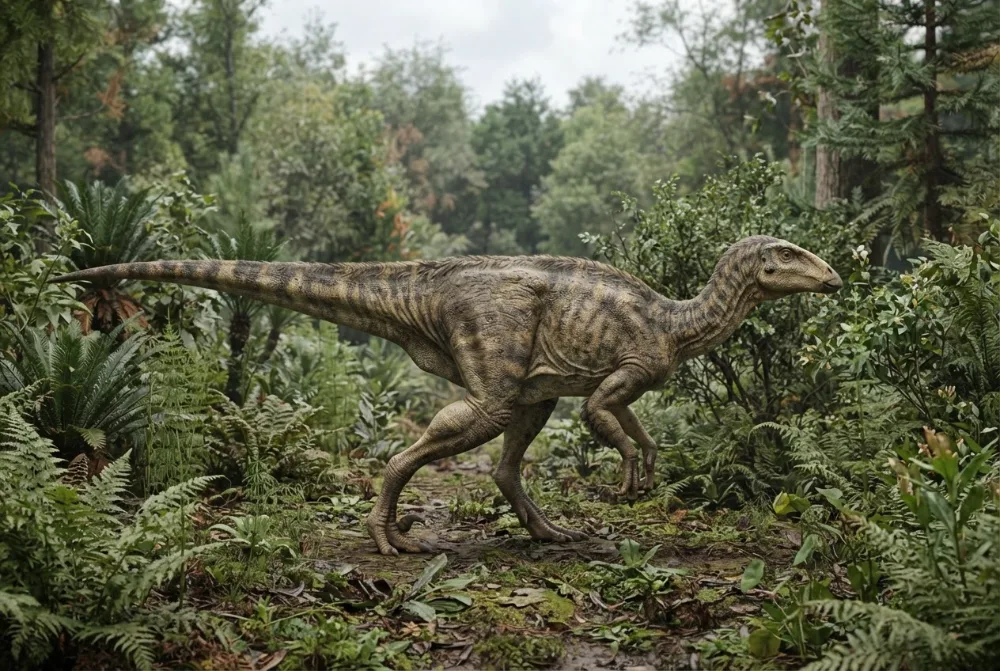
Yunganglong was a plant-eating dinosaur that lived in what is now China. It walked on two legs or all fours and had a beak like a duck. It was an early relative of the duck-billed dinosaurs.2
E phetse neng?
E ne e le kgolo hakae?
E ne e le telele hakae?
E ne e le boima hakae?
 telele jwaloka dikoloi tse 2 tse pakilweng ka mola🍌telele jwaloka dibanana tse 56 di behilwe ka mola
 e batla e le boima jwaloka tlou🍉boima jwaloka mahapu a 940🎒boima jwaloka ditlelase tse feletseng tse 6 tsa bana ba sekolo🐻❄️boima jwaloka dibere tse tshweu tse 10🏃e ne e ka matha dimitara tse 100 ka metsotswana e 17 (motho ya lebelo ka ho fetisisa o hloka 9,6)
Yunganglong e ne e le kgolo hakae ha e bapiswa le WENA?
Ke dipalo feela ho browser ya hao. Ha ho letho le bolokwang kapa le romelwang kae kapa kae.
E ne e le lebelo hakae?


Dintlha tse monate
Yunganglong lived about 100 to 84 million years ago, during the early Late Cretaceous.3
The only known skeleton is a partial one, including parts of the skull, backbone, hips, and leg bones.1
Yunganglong was a basal hadrosauroid, meaning it was an early cousin of the duck-billed dinosaurs like Edmontosaurus.2
The skull of Yunganglong was wide and low, with a width of 37 cm (14.6 in) between its paroccipital processes.2
Its fossils were found alongside remains of ankylosaurs and ceratopsians, other plant-eating dinosaurs.1
The name Yunganglong honors the Yungang Grottoes, ancient Buddhist cave temples about 50 km east of the fossil site.1
Bakeng sa ditsebi tsa didinosaure
- Lebitso la saense
- Yunganglong
- E rehilwe ke
- Wang et al. 20135
- Sehlopha
- Dija-dimela tse nang le melomo
- Lelapa / leloko
- Hadrosauroidea5
- Tlhophiso
- Ornithischia > Ornithopoda > Iguanodontia5
- Dilemo tsa mafika
- dilemo tse dimilione tse 100 ho isa ho 84 (Cenomanian / Santonian)5
- Dibopeho tsa mafika
- Zhumapu5
- Dinaha
- Tjhaena5
- Direkoto tsa difosili
- 1 ho The Paleobiology Database5
- Ho sibollwa
- Yunganglong was named in 2013 by a team of Chinese scientists led by Run-Fu Wang. The fossils were found in 2011 during a project to find dinosaurs for the Shanxi Museum of Geology.1
- E sa ntse e phehwa kgang
- Scientists are not sure exactly how old the rocks are that contained Yunganglong, because no radiometric dates have been obtained for the Zhumapu Formation.2
Moo dintlha di tswang teng
- Yunganglong (en.wikipedia.org)
- A New Hadrosauroid Dinosaur from the Early Late Cretaceous of Shanxi Province, China | PLOS One (journals.plos.org)
- PBDB Taxon (paleobiodb.org)
- Yunganglong datongensis | Dinosaur Database by DinoAnimals.com (dinoanimals.com)
- Yunganglong in The Paleobiology Database (CC BY 4.0): dilemo, dibaka, dibopeho tsa mafika, tlhophiso.
Ntlha e nngwe le e nngwe leqepheng lena e na le nomoro e supang mohlodi wa yona. Haeba re fositse ho hong, re kopa tshwarelo, re balatedi ba didinosaure, ha re koranta ya saense. Re bolelle ho [email protected] mme re tla e lokisa.
 Rex o lapile! Dino Wiki ke projeke ya ntate bakeng sa mora wa hae ya ratang didinosaure, ke mahala, ha ho dipapatso, ha ho disebedi. Batho ba baholo ba ka fepa Rex seneke ho thusa hore e dule e le inthaneteng.Fepa Rex
 Iguanodon
 Tenontosaurus
 Thescelosaurus
 Zalmoxes
 Camptosaurus
 Rhabdodon
 Tyrannosaurus
 Triceratops
 Velociraptor
 Spinosaurus
 Ankylosaurus
 Parasaurolophus