 Kwisi: O dinosaure efe?
 Ntwa ya didinosaure
 Peiso ya didinosaure
 Dipapadi tse nyane tsa didinosaure
 Albamo ya ditikara
 Manane a TOP a didinosaure
 Nkgethele!
Zhanghenglong
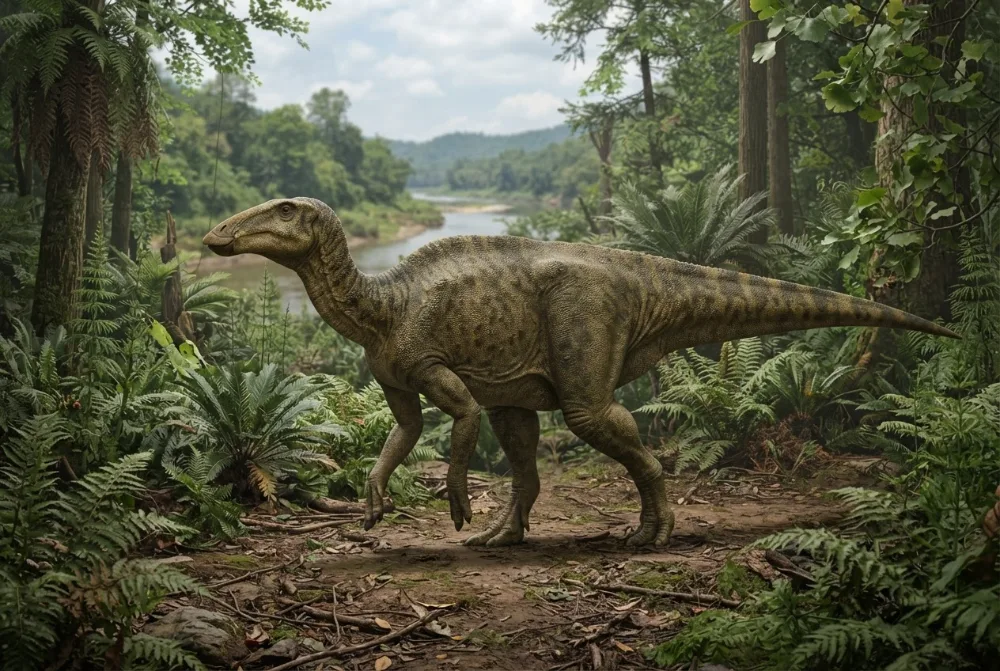
Zhanghenglong was a plant-eating dinosaur that lived about 85 million years ago in what is now China. It had a beak and lots of teeth for chewing tough plants. It was a medium-sized dinosaur that walked on two or four legs.14
E phetse neng?
E ne e le kgolo hakae?
E ne e le telele hakae?
E ne e phahame hakae?
kakanyo
 telele jwaloka dintja tse 6 ho tloha nkong ho isa mohatleng🍌telele jwaloka dibanana tse 33 di behilwe ka mola🏃e ne e ka matha dimitara tse 100 ka metsotswana e 10 (motho ya lebelo ka ho fetisisa o hloka 9,6)
Zhanghenglong e ne e le kgolo hakae ha e bapiswa le WENA?
Ke dipalo feela ho browser ya hao. Ha ho letho le bolokwang kapa le romelwang kae kapa kae.
E ne e le lebelo hakae?


Dintlha tse monate
Zhanghenglong had five holes in its upper jaw, four small ones in a row and one big one near the cheek bone. This is a mix of features seen in older and newer duck-billed dinosaurs.2
Its teeth had two ridges, one in the middle and one off to the side. This is a transitional feature between early and later hadrosauroids.2
The lower jaw had 26 tooth positions, and each position could have up to four teeth stacked up. That means it had a lot of spare teeth for chewing.2
Zhanghenglong is named after Zhang Heng, a famous Chinese astronomer and inventor from about 1,800 years ago. The name also includes 'long', which means dragon in Chinese.1
The fossils were found near a village called Zhoujiagou, not far from a dinosaur relics park in Xixia County.2
Scientists think Zhanghenglong was a close relative of the true duck-billed dinosaurs, and it may help show that duck-billed dinosaurs came from Asia.2
Dipotso tse botswang haholo ka Zhanghenglong
?What did Zhanghenglong eat?
Zhanghenglong was a plant-eater. It had a beak and many teeth for chewing tough plants.1
?How big was Zhanghenglong?
Zhanghenglong was a medium-sized dinosaur, but its exact size is not known from the fossils found.1
?When did Zhanghenglong live?
Zhanghenglong lived about 85 million years ago, during the Late Cretaceous period.1
Bakeng sa ditsebi tsa didinosaure
- Lebitso la saense
- Zhanghenglong
- E rehilwe ke
- Xing et al. 20144
- Sehlopha
- Dija-dimela tse nang le melomo
- Lelapa / leloko
- Hadrosauroidea4
- Tlhophiso
- Ornithischia > Ornithopoda > Iguanodontia4
- Dilemo tsa mafika
- dilemo tse dimilione tse 86 ho isa ho 84 (Santonian)4
- Dibopeho tsa mafika
- Majiacun4
- Dinaha
- Tjhaena4
- Direkoto tsa difosili
- 1 ho The Paleobiology Database4
- Ho sibollwa
- Zhanghenglong was named in 2014 by a team of scientists led by Xing Hai. The fossils were found in the Majiacun Formation in Henan Province, China.1
- E sa ntse e phehwa kgang
- Scientists are still debating exactly where Zhanghenglong sits on the family tree. Some think it was very close to true duck-billed dinosaurs, but others think it was a bit more primitive.2
Moo dintlha di tswang teng
- Zhanghenglong (en.wikipedia.org)
- A New Basal Hadrosauroid Dinosaur (Dinosauria: Ornithopoda) with Transitional Features from the Late Cretaceous of Henan Province, China | PLOS One (journals.plos.org)
- PaleoCodex :: Zhanghenglong (paleocodex.com)
- Zhanghenglong in The Paleobiology Database (CC BY 4.0): dilemo, dibaka, dibopeho tsa mafika, tlhophiso.
Ntlha e nngwe le e nngwe leqepheng lena e na le nomoro e supang mohlodi wa yona. Haeba re fositse ho hong, re kopa tshwarelo, re balatedi ba didinosaure, ha re koranta ya saense. Re bolelle ho [email protected] mme re tla e lokisa.
 Rex o lapile! Dino Wiki ke projeke ya ntate bakeng sa mora wa hae ya ratang didinosaure, ke mahala, ha ho dipapatso, ha ho disebedi. Batho ba baholo ba ka fepa Rex seneke ho thusa hore e dule e le inthaneteng.Fepa Rex
 Iguanodon
 Tenontosaurus
 Thescelosaurus
 Zalmoxes
 Camptosaurus
 Rhabdodon
 Tyrannosaurus
 Triceratops
 Velociraptor
 Spinosaurus
 Ankylosaurus
 Parasaurolophus