 O dino efe? Kwisi
 Ntwa ya didino
 Peiso ya didino
 Metshamekwana ya didino
 Alebamo ya disetikara
 Manane a TOP a didino
 Ngakgamatsa!
E tshetse leng?

E ne e le kgolo go le kae?
E ne e le telele go le kae?
E ne e le bokete go le kae?

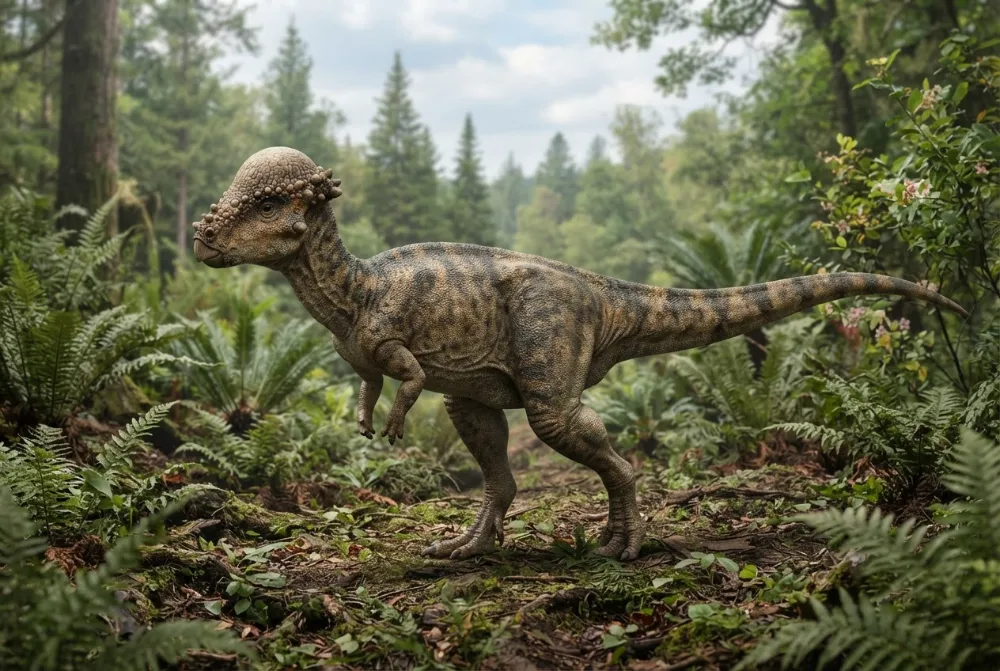
 telele jaaka dikatse tsa mo gae di le 4 go tswa kwa nkong go ya kwa mogatleng🍌telele jaaka dibanana di le 10 di latelanabokete jaaka dikatse tsa mo gae di le 10🍉bokete jaaka magapu a le 8🧸bokete jaaka bana ba kreše ba le 2🎒bokete jaaka bana ba sekolo ba le 1🏃e ne e ka taboga dimetara di le 100 mo metsotswaneng e le 8.2 (motho yo o bonako go gaisa o tlhoka 9,6)
Acrotholus e ne e le kgolo go le kae fa e bapisiwa le WENA?
Ke dipalo fela mo sebatling sa gago. Ga go sepe se se bolokwang kgotsa se se romelwang gope.
E ne e le bonako go le kae?


Dintlha tse di monate
Acrotholus is the oldest known pachycephalosaur from North America, and possibly the world.2
Its dome was very thick, up to 55 millimetres (about 2 inches) above the brain, which is almost half the total length of the dome.2
The dome was fully developed even though Acrotholus lived earlier than other pachycephalosaurs, showing that this feature evolved earlier than scientists thought.2
The name Acrotholus means 'highest dome' in Greek, referring to its thick skull roof.1
The species name audeti honors Roy Audet, a rancher who allowed scientists to dig on his land where the first skull was found.12
Acrotholus had a smooth dome without the bumps or grooves seen in some other pachycephalosaurs, which suggests the known fossils are from adults.2
Dipotso tse di botswang thata ka ga Acrotholus
?How big was Acrotholus?
Acrotholus was a small dinosaur, weighing 40 kg (88 lb) or less. Its skull dome was about 55 mm (2.2 in) thick.12
?What did Acrotholus eat?
Acrotholus was a plant-eating dinosaur, like other pachycephalosaurs.1
?Why did Acrotholus have a dome on its head?
The dome was probably used for head-butting contests between rivals, though scientists debate exactly how they used it.1
?When did Acrotholus live?
Acrotholus lived about 84 to 83.5 million years ago, during the Late Cretaceous period.1
Mothubi wa ditlhamane
Tlhamane: Some people think Acrotholus used its dome to butt heads like bighorn sheep.
Boammaaruri: Scientists are not sure. The dome might have been for display or for fighting, but there is no direct evidence of head-butting in Acrotholus.1
Ya baitseanape ba didino
- Leina la saense
- Acrotholus
- Leina le neilwe ke
- Evans et al. 20134
- Setlhopha
- Ditlhogo-dikgolokwe
- Lelapa / clade
- Pachycephalosauridae4
- Thulaganyo
- Ornithischia > Pachycephalosauria4
- Bogolo jwa matlapa
- 86 go ya go 84 dimilione tsa dingwaga (Santonian)4
- Dibopego tsa matlapa
- Milk River4
- Dinaga
- Khanata4
- Direkoto tsa difosili
- 1 mo The Paleobiology Database4
- Go fitlhelwa
- The first fossil, a nearly complete skull dome, was found on Roy Audet's ranch in Alberta, Canada, and was named by David Evans and colleagues in 2013.12
- Go sa ntse go ganetsanwa
- Scientists still debate whether the dome was used for fighting between males or for showing off to mates, since no complete skeleton has been found.1
Kwa dintlha di tswang teng
- Acrotholus (en.wikipedia.org)
- The oldest North American pachycephalosaurid and the hidden diversity of small-bodied ornithischian dinosaurs | Nature Communications (nature.com)
- Study of new 'bone-head' hints at higher diversity of small dinosaurs | EurekAlert! (eurekalert.org)
- Acrotholus in The Paleobiology Database (CC BY 4.0): dingwaga, mafelo, dibopego tsa matlapa, thulaganyo.
Ntlha nngwe le nngwe mo tsebeng eno e na le nomoro e e supang motswedi wa yona. Fa re dirile phoso, maitshwarelo, re barati ba didino, ga re lokwalodikgang lwa saense. Re bolelele kwa [email protected] mme re tla e baakanya.
 Rex o tshwerwe ke tlala! Dino Wiki ke porojeke ya rre e a e diretseng morwawe yo o ratang didino, ke mahala, ga e na dipapatso e bile ga e na dilatedi. Batho ba bagolo ba ka fepa Rex senyamo go thusa gore e nne mo inthaneteng.Fepa Rex
 Pachycephalosaurus
 Stegoceras
 Prenocephale
 Sphaerotholus
 Foraminacephale
 Brontotholus
 Tyrannosaurus
 Triceratops
 Velociraptor
 Spinosaurus
 Ankylosaurus
 Parasaurolophus