 O dino efe? Kwisi
 Ntwa ya didino
 Peiso ya didino
 Metshamekwana ya didino
 Alebamo ya disetikara
 Manane a TOP a didino
 Ngakgamatsa!
Ajnabia
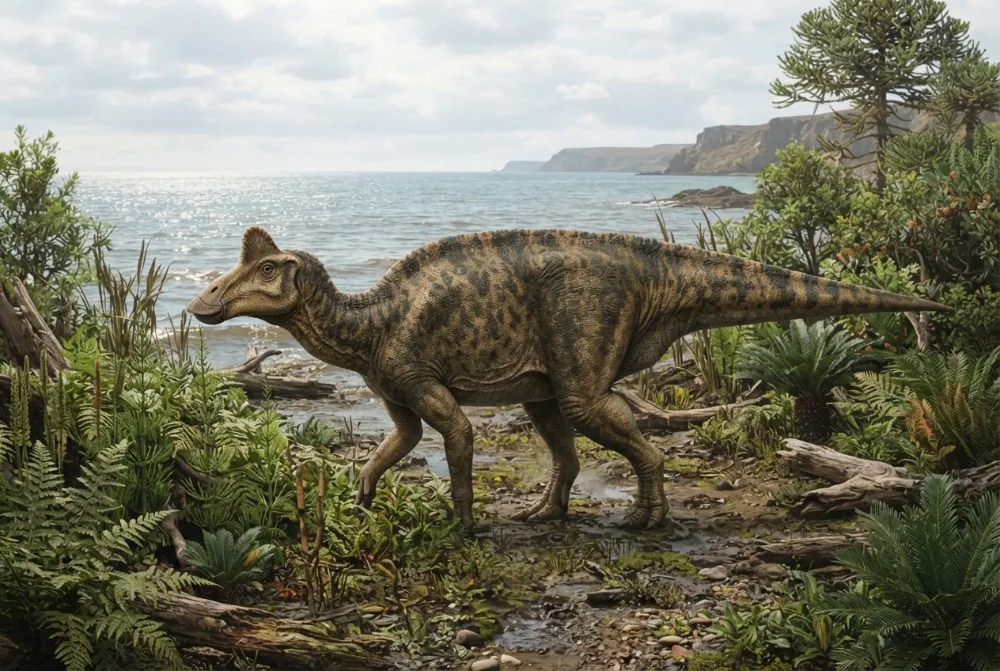
Ajnabia was a small duck-billed dinosaur that lived in Africa at the very end of the Cretaceous. It was a surprise to scientists because duck-billed dinosaurs were not known from Africa before. Ajnabia probably swam or rafted across the sea from Europe to reach its home.2
E tshetse leng?
E ne e le kgolo go le kae?
E ne e le telele go le kae?
E ne e le kwa godimo go le kae?
kakanyo
E ne e le bokete go le kae?
 telele jaaka dintšwa di le 4 go tswa kwa nkong go ya kwa mogatleng🍌telele jaaka dibanana di le 19 di latelana🍉bokete jaaka magapu a le 50🧸bokete jaaka bana ba kreše ba le 13🎒bokete jaaka bana ba sekolo ba le 8🏃e ne e ka taboga dimetara di le 100 mo metsotswaneng e le 8.4 (motho yo o bonako go gaisa o tlhoka 9,6)
Ajnabia e ne e le kgolo go le kae fa e bapisiwa le WENA?
Ke dipalo fela mo sebatling sa gago. Ga go sepe se se bolokwang kgotsa se se romelwang gope.
E ne e le bonako go le kae?


Dintlha tse di monate
Ajnabia is a lambeosaurine hadrosaur, a group of duck-billed dinosaurs that often had fancy head crests.2
It was one of the smallest duck-billed dinosaurs, only about 3.5 metres (11 feet) long.2
Ajnabia lived around 68 to 66 million years ago, just before the mass extinction that ended the age of dinosaurs.1
Its fossils were found in phosphate mines, which were once a shallow sea. The bones probably washed in from land.2
Ajnabia is related to European duck-billed dinosaurs, suggesting its ancestors crossed the sea from Europe to Africa.2
Only a few bones of Ajnabia have been found: part of the upper jaw, a piece of the lower jaw, and some teeth.1
Dipotso tse di botswang thata ka ga Ajnabia
?What did Ajnabia eat?
It was a herbivore, eating plants. As a duck-billed dinosaur, it had many teeth for chewing tough vegetation.1
?Did Ajnabia have a crest?
It probably did. Ajnabia was a lambeosaurine hadrosaur, a group known for having fancy head crests, though its fossils don't include the skull top.1
?How did Ajnabia get to Africa?
Scientists think it swam or rafted across the sea from Europe, because Africa was isolated by water at the time.12
?When did Ajnabia live?
About 68 to 66 million years ago, in the very latest Cretaceous, just before the asteroid impact that ended the dinosaurs.1
?Is Ajnabia a dinosaur?
Yes, it is a dinosaur. Specifically, it is a duck-billed dinosaur (hadrosaur) from the group Lambeosaurinae.1
Ya baitseanape ba didino
- Leina la saense
- Ajnabia
- Leina le neilwe ke
- Longrich et al. 20214
- Setlhopha
- Melomo-pidipidi
- Lelapa / clade
- Hadrosauridae4
- Thulaganyo
- Ornithischia > Ornithopoda > Iguanodontia > Hadrosauridae4
- Bogolo jwa matlapa
- 72 go ya go 66 dimilione tsa dingwaga (Maastrichtian)4
- Dibopego tsa matlapa
- Couche III4
- Dinaga
- Moroko4
- Direkoto tsa difosili
- 1 mo The Paleobiology Database4
- Go fitlhelwa
- Ajnabia was named in 2021 by Longrich and colleagues. The fossils came from phosphate mines in Morocco and were described as a new species of duck-billed dinosaur.3
- Go sa ntse go ganetsanwa
- Scientists are not sure exactly how Ajnabia got to Africa. It may have swum or rafted across the sea from Europe, but the details of this journey are still debated.2
Kwa dintlha di tswang teng
- Ajnabia (en.wikipedia.org)
- A new small duckbilled dinosaur (Hadrosauridae: Lambeosaurinae) from Morocco and dinosaur diversity in the late Maastrichtian of North Africa | Scientific Reports (nature.com)
- PBDB Taxon (paleobiodb.org)
- Ajnabia in The Paleobiology Database (CC BY 4.0): dingwaga, mafelo, dibopego tsa matlapa, thulaganyo.
Ntlha nngwe le nngwe mo tsebeng eno e na le nomoro e e supang motswedi wa yona. Fa re dirile phoso, maitshwarelo, re barati ba didino, ga re lokwalodikgang lwa saense. Re bolelele kwa [email protected] mme re tla e baakanya.
 Rex o tshwerwe ke tlala! Dino Wiki ke porojeke ya rre e a e diretseng morwawe yo o ratang didino, ke mahala, ga e na dipapatso e bile ga e na dilatedi. Batho ba bagolo ba ka fepa Rex senyamo go thusa gore e nne mo inthaneteng.Fepa Rex
 Parasaurolophus
 Edmontosaurus
 Saurolophus
 Hypacrosaurus
 Corythosaurus
 Kritosaurus
 Tyrannosaurus
 Triceratops
 Velociraptor
 Spinosaurus
 Ankylosaurus
 Pteranodon