 O dino efe? Kwisi
 Ntwa ya didino
 Peiso ya didino
 Metshamekwana ya didino
 Alebamo ya disetikara
 Manane a TOP a didino
 Ngakgamatsa!
E tshetse leng?

E ne e le kgolo go le kae?
E ne e le telele go le kae?
E ne e le kwa godimo go le kae?
E ne e le bokete go le kae?
 telele jaaka dikoloi di le 2 di emisitswe mo moleng🍌telele jaaka dibanana di le 56 di latelana
 e ka nna bokete jaaka tlou🍉bokete jaaka magapu a le 1100🎒bokete jaaka diphaposiborutelo tse di tletseng bana di le 7🐻❄️bokete jaaka dibere tse ditshweu di le 12🏃e ne e ka taboga dimetara di le 100 mo metsotswaneng e le 20 (motho yo o bonako go gaisa o tlhoka 9,6)
Antetonitrus e ne e le kgolo go le kae fa e bapisiwa le WENA?
Ke dipalo fela mo sebatling sa gago. Ga go sepe se se bolokwang kgotsa se se romelwang gope.
E ne e le bonako go le kae?


Dintlha tse di monate
Antetonitrus lived about 201 to 193 million years ago, during the Early Jurassic.2
Its name means 'before thunder' because it lived before the famous sauropod Brontosaurus, whose name means 'thunder lizard'.1
Unlike later sauropods, Antetonitrus had a flexible thumb that could grasp, not just support weight.1
Its fossils were first found in 1981 and were originally thought to belong to another dinosaur called Euskelosaurus.1
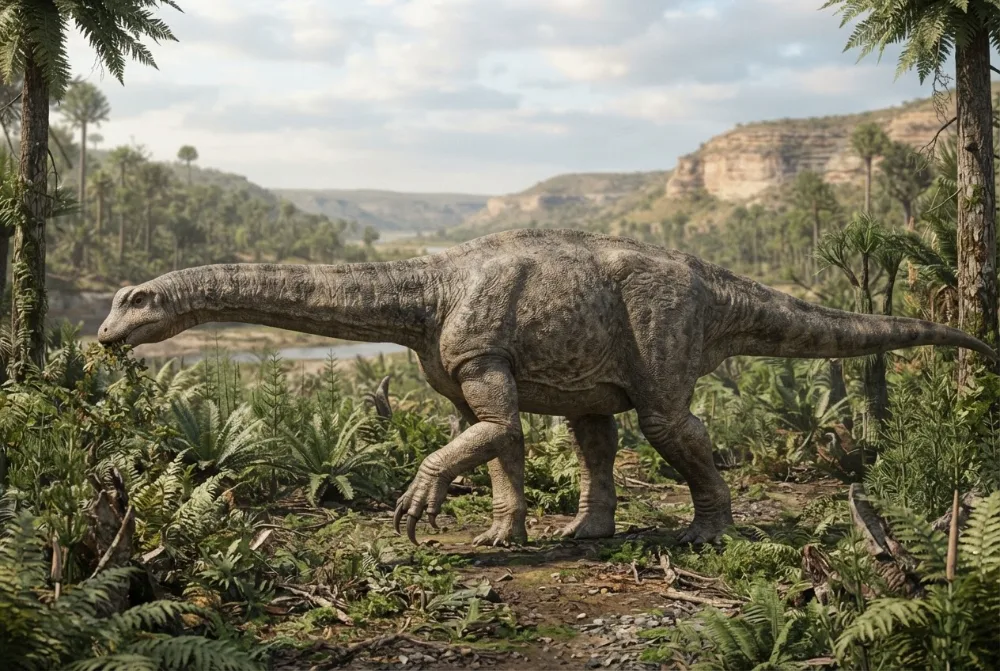
Antetonitrus was about 8 to 10 metres long and weighed as much as a large elephant.1
Its thigh bone was slightly S-shaped when viewed from the side, unlike the straight thigh bones of later sauropods.1
Antetonitrus is one of the oldest known sauropods, tied with other early sauropods from the same formation in South Africa.1
Dipotso tse di botswang thata ka ga Antetonitrus
?How big was Antetonitrus?
Antetonitrus was about 8 to 10 metres (26 to 33 feet) long, stood 1.5 to 2 metres (5 to 6.5 feet) tall at the hip, and weighed around 5.6 metric tons (6.2 short tons). It may not have been fully grown yet.34
?Could Antetonitrus grab things with its hands?
Yes. Unlike later sauropods, Antetonitrus had a flexible thumb that could grasp, not just support weight. Its wrist bones were not locked into a permanent weight-supporting position.35
Ya baitseanape ba didino
- Leina la saense
- Antetonitrus
- Leina le neilwe ke
- Yates and Kitching 20036
- Setlhopha
- Melala-meleele
- Lelapa / clade
- Lessemsauridae6
- Thulaganyo
- Sauropodomorpha > Sauropoda6
- Bogolo jwa matlapa
- 201 go ya go 193 dimilione tsa dingwaga (Hettangian / Sinemurian)6
- Dibopego tsa matlapa
- Elliot6
- Dinaga
- Aforika Borwa6
- Direkoto tsa difosili
- 2 mo The Paleobiology Database6
- Go fitlhelwa
- Antetonitrus was named in 2003 by Adam Yates and James Kitching. The fossils were discovered by Kitching in 1981 in the Free State of South Africa and were stored as Euskelosaurus until Yates recognized them as a new dinosaur.1
- Go sa ntse go ganetsanwa
- Scientists are not sure if Antetonitrus was a true sauropod or a very close relative, because it had both primitive and advanced features.1
Kwa dintlha di tswang teng
- Antetonitrus (en.wikipedia.org)
- PBDB Taxon (paleobiodb.org)
- Antetonitrus (en.wikipedia.org)
- A Giant Dinosaur from the Earliest Jurassic of South Africa and the Transition to Quadrupedality in Early Sauropodomorphs: Current Biology (cell.com)
- The earliest known sauropod dinosaur and the first steps towards sauropod locomotion (royalsocietypublishing.org)
- Antetonitrus in The Paleobiology Database (CC BY 4.0): dingwaga, mafelo, dibopego tsa matlapa, thulaganyo.
Ntlha nngwe le nngwe mo tsebeng eno e na le nomoro e e supang motswedi wa yona. Fa re dirile phoso, maitshwarelo, re barati ba didino, ga re lokwalodikgang lwa saense. Re bolelele kwa [email protected] mme re tla e baakanya.
 Rex o tshwerwe ke tlala! Dino Wiki ke porojeke ya rre e a e diretseng morwawe yo o ratang didino, ke mahala, ga e na dipapatso e bile ga e na dilatedi. Batho ba bagolo ba ka fepa Rex senyamo go thusa gore e nne mo inthaneteng.Fepa Rex
 Brachiosaurus
 Diplodocus
 Brontosaurus
 Argentinosaurus
 Camarasaurus
 Morosaurus
 Dilophosaurus
 Stenopterygius
 Dorygnathus
 Scutellosaurus
 Sinosaurus
 Temnodontosaurus