 O dino efe? Kwisi
 Ntwa ya didino
 Peiso ya didino
 Metshamekwana ya didino
 Alebamo ya disetikara
 Manane a TOP a didino
 Ngakgamatsa!
E tshetse leng?

E ne e le kgolo go le kae?
E ne e le telele go le kae?
E ne e le kwa godimo go le kae?
kakanyo
E ne e le bokete go le kae?

 telele jaaka dikatse tsa mo gae di le 3 go tswa kwa nkong go ya kwa mogatleng🍌telele jaaka dibanana di le 8 di latelanabokete jaaka dikatse tsa mo gae di le 11🍉bokete jaaka magapu a le 9🧸bokete jaaka bana ba kreše ba le 2.5🎒bokete jaaka bana ba sekolo ba le 1.5🏃e ne e ka taboga dimetara di le 100 mo metsotswaneng e le 10 (motho yo o bonako go gaisa o tlhoka 9,6)
Bagaceratops e ne e le kgolo go le kae fa e bapisiwa le WENA?
Ke dipalo fela mo sebatling sa gago. Ga go sepe se se bolokwang kgotsa se se romelwang gope.
E ne e le bonako go le kae?


Dintlha tse di monate
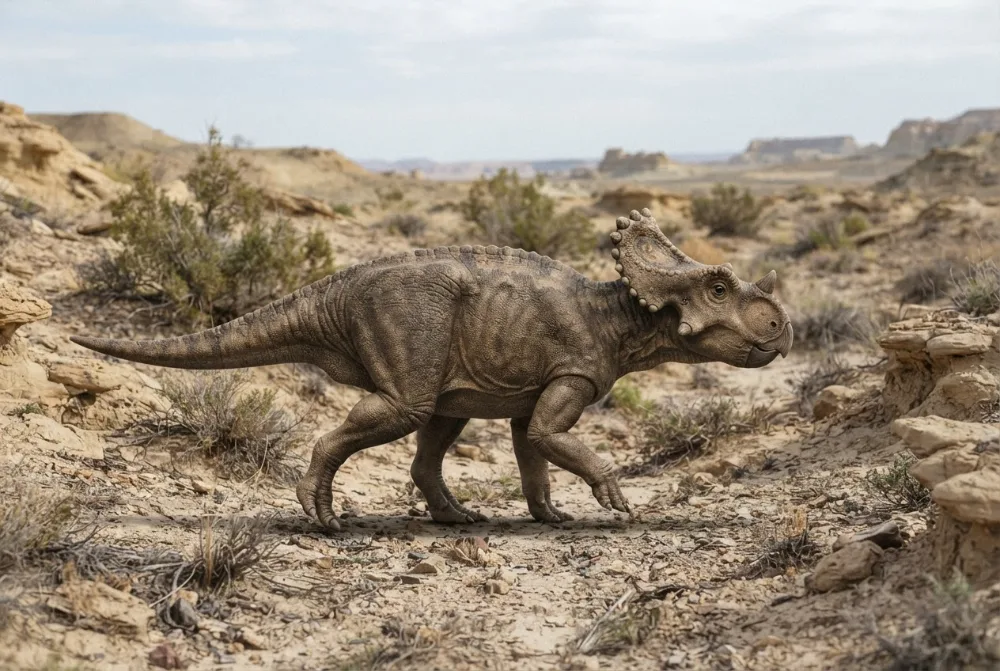
Bagaceratops had no teeth at the front of its upper jaw, unlike its relative Protoceratops.1
It lived about 72 to 71 million years ago, near the end of the age of dinosaurs.1
Scientists once thought that fossils of Bagaceratops were several different dinosaurs, like Gobiceratops and Magnirostris, but now they think those are just Bagaceratops.1
Bagaceratops had a small frill on its head, much smaller than the frills of later horned dinosaurs.1
Its skull was more triangular than that of its close cousin Protoceratops.1
Dipotso tse di botswang thata ka ga Bagaceratops
?How big was Bagaceratops?
Bagaceratops was about 1 to 1.5 metres (3.3 to 4.9 feet) long and weighed around 22 to 45 kilograms (49 to 99 pounds). It was one of the smallest horned dinosaurs.12
?What did Bagaceratops eat?
Bagaceratops was an herbivore, meaning it ate plants. It used its parrot-like beak to chomp on plants and had about ten grinding teeth per jaw to chew them.12
?Where did Bagaceratops live?
Bagaceratops lived in Asia, in what is now the Gobi Desert in Mongolia. Its fossils have been found in the Barun Goyot Formation and Bayan Mandahu Formation.12
?When did Bagaceratops live?
Bagaceratops lived during the Late Cretaceous Period, about 72 to 71 million years ago. That was near the very end of the age of dinosaurs.12
?Did Bagaceratops have horns?
Bagaceratops did not have large horns like Triceratops. Its name means 'small-horned face,' and it had a small frill on its head but no big horns.1
Ya baitseanape ba didino
- Leina la saense
- Bagaceratops
- Leina le neilwe ke
- Maryanska and Osmólska 19753
- Setlhopha
- Didino tse di nang le dinaka
- Lelapa / clade
- Protoceratopsidae3
- Thulaganyo
- Ornithischia > Ceratopsia3
- Bogolo jwa matlapa
- 84 go ya go 66 dimilione tsa dingwaga (Campanian / Maastrichtian)3
- Dibopego tsa matlapa
- Baruungoyot, Djadokhta, Bayan Mandahu3
- Dinaga
- Mongolia, Tšhaena3
- Direkoto tsa difosili
- 18 mo The Paleobiology Database3
- E itsiwe gape e le
- Gobiceratops, Lamaceratops, Magnirostris, Platyceratops (maina a bogologolo jaanong a balwa jaaka phologolo e le nngwe)3
- Go fitlhelwa
- Bagaceratops was named in 1975 by Polish paleontologists Teresa Maryańska and Halszka Osmólska, based on fossils found in the Gobi Desert during the Polish-Mongolian expeditions.12
- Go sa ntse go ganetsanwa
- Scientists are still debating whether some other ceratopsians, like Breviceratops, are really a separate genus or just Bagaceratops.1
Kwa dintlha di tswang teng
- Bagaceratops (en.wikipedia.org)
- Bagaceratops | Natural History Museum (nhm.ac.uk)
- Bagaceratops in The Paleobiology Database (CC BY 4.0): dingwaga, mafelo, dibopego tsa matlapa, thulaganyo.
Ntlha nngwe le nngwe mo tsebeng eno e na le nomoro e e supang motswedi wa yona. Fa re dirile phoso, maitshwarelo, re barati ba didino, ga re lokwalodikgang lwa saense. Re bolelele kwa [email protected] mme re tla e baakanya.
 Rex o tshwerwe ke tlala! Dino Wiki ke porojeke ya rre e a e diretseng morwawe yo o ratang didino, ke mahala, ga e na dipapatso e bile ga e na dilatedi. Batho ba bagolo ba ka fepa Rex senyamo go thusa gore e nne mo inthaneteng.Fepa Rex
 Triceratops
 Protoceratops
 Ojoceratops
 Tatankaceratops
 Psittacosaurus
 Centrosaurus
 Tyrannosaurus
 Velociraptor
 Spinosaurus
 Ankylosaurus
 Parasaurolophus
 Pteranodon