 O dino efe? Kwisi
 Ntwa ya didino
 Peiso ya didino
 Metshamekwana ya didino
 Alebamo ya disetikara
 Manane a TOP a didino
 Ngakgamatsa!
Balaenognathus
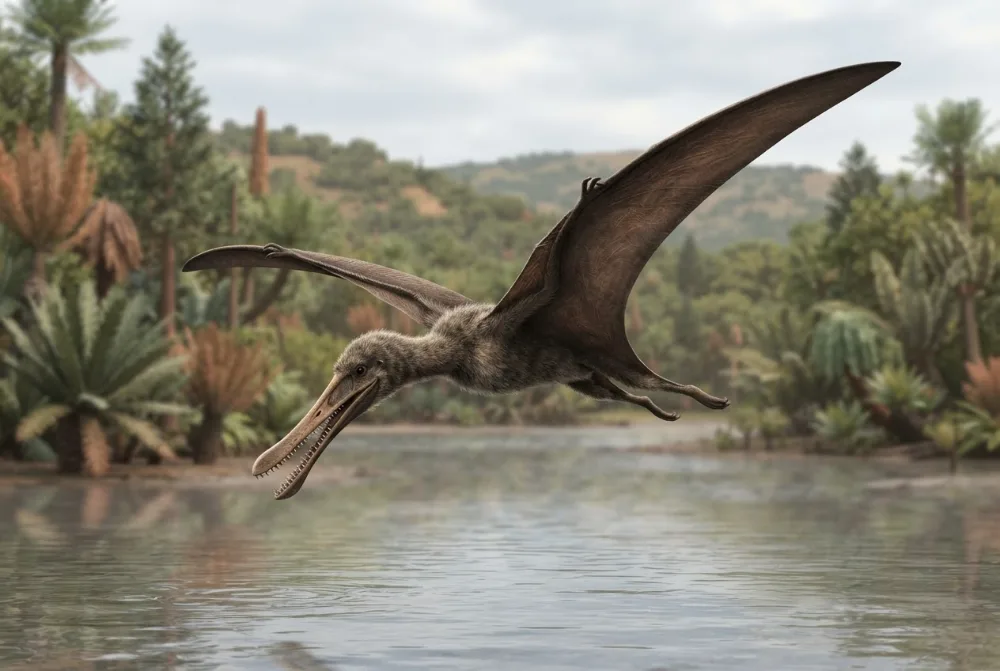
Balaenognathus was a flying reptile that lived about 150 million years ago. It had a strange, spoon-shaped snout with hundreds of tiny hooked teeth. It used its beak like a strainer to scoop up tiny shrimp from the water, just like a modern flamingo.12
E tshetse leng?
E ne e le kgolo go le kae?
E ne e le telele go le kae?
 telele jaaka dikatse tsa mo gae di le 2 go tswa kwa nkong go ya kwa mogatleng🍌telele jaaka dibanana di le 6 di latelana⚽e ne e ka fofa go kgabaganya lebala lotlhe la kgwele ya dinao mo metsotswaneng e le 9.9
Balaenognathus e ne e le kgolo go le kae fa e bapisiwa le WENA?
Ke dipalo fela mo sebatling sa gago. Ga go sepe se se bolokwang kgotsa se se romelwang gope.
E ne e le bonako go le kae?


Dintlha tse di monate
Balaenognathus had at least 480 teeth, more than most other pterosaurs.1
The tips of its teeth had tiny hooks, which have never been seen in any other pterosaur. These hooks helped trap shrimp so they couldn't escape.12
The front of its snout was shaped like a spatula and had no teeth, so water could flow in easily.1
Its upper jaw was more curved than its lower jaw, so its mouth stayed slightly open at the front even when closed.1
The fossil was found by accident in a quarry in Germany, inside a block of stone that also contained bones of a crocodile-like animal.12
Balaenognathus lived during the Late Jurassic period, about 152 to 149 million years ago.3
It had long legs, which helped it wade through shallow seas while feeding.2
Dipotso tse di botswang thata ka ga Balaenognathus
?What did Balaenognathus eat?
It ate tiny shrimp and other small plankton. It used its spoon-shaped beak and hundreds of tiny hooked teeth to strain them out of the water.12
?How big was Balaenognathus?
It was a medium-sized pterosaur with a wingspan of 1.17 metres (3.8 feet). Its body was about 1 metre long.5
Ya baitseanape ba didino
- Leina la saense
- Balaenognathus
- Leina le neilwe ke
- Martill et al. 20236
- Setlhopha
- Digagabi tse di fofang
- Lelapa / clade
- Ctenochasmatidae6
- Thulaganyo
- Pterosauria > Pterodactyloidea6
- Bogolo jwa matlapa
- 152 go ya go 149 dimilione tsa dingwaga (Kimmeridgian)6
- Dinaga
- Jeremane6
- Direkoto tsa difosili
- 1 mo The Paleobiology Database6
- Go fitlhelwa
- Balaenognathus was named by David Martill and colleagues in 2023. The only known fossil was found in September 2011 in a quarry near Wattendorf, Bavaria, Germany, by workers collecting a block of limestone.1
- Go sa ntse go ganetsanwa
- Scientists are not sure exactly how Balaenognathus used its hooked teeth and spatula-like snout to filter food, but they think it may have pumped water in and out by moving its long neck.1
Kwa dintlha di tswang teng
- A new pterodactyloid pterosaur with a unique filter-feeding apparatus from the Late Jurassic of Germany | PalZ | Springer Nature Link (link.springer.com)
- Bizarre filter-feeding pterosaur described from Germany | Natural History Museum (nhm.ac.uk)
- PBDB Taxon (paleobiodb.org)
- Balaenognathus (en.m.wikipedia.org)
- Balaenognathus (Wikipedia) (Wikipedia)
- Balaenognathus in The Paleobiology Database (CC BY 4.0): dingwaga, mafelo, dibopego tsa matlapa, thulaganyo.
Ntlha nngwe le nngwe mo tsebeng eno e na le nomoro e e supang motswedi wa yona. Fa re dirile phoso, maitshwarelo, re barati ba didino, ga re lokwalodikgang lwa saense. Re bolelele kwa [email protected] mme re tla e baakanya.
 Rex o tshwerwe ke tlala! Dino Wiki ke porojeke ya rre e a e diretseng morwawe yo o ratang didino, ke mahala, ga e na dipapatso e bile ga e na dilatedi. Batho ba bagolo ba ka fepa Rex senyamo go thusa gore e nne mo inthaneteng.Fepa Rex
 Pteranodon
 Quetzalcoatlus
 Dorygnathus
 Rhamphorhynchus
 Anhanguera
 Pterodactylus
 Brachiosaurus
 Diplodocus
 Allosaurus
 Brontosaurus
 Compsognathus
 Camarasaurus