 O dino efe? Kwisi
 Ntwa ya didino
 Peiso ya didino
 Metshamekwana ya didino
 Alebamo ya disetikara
 Manane a TOP a didino
 Ngakgamatsa!
Brasileodactylus
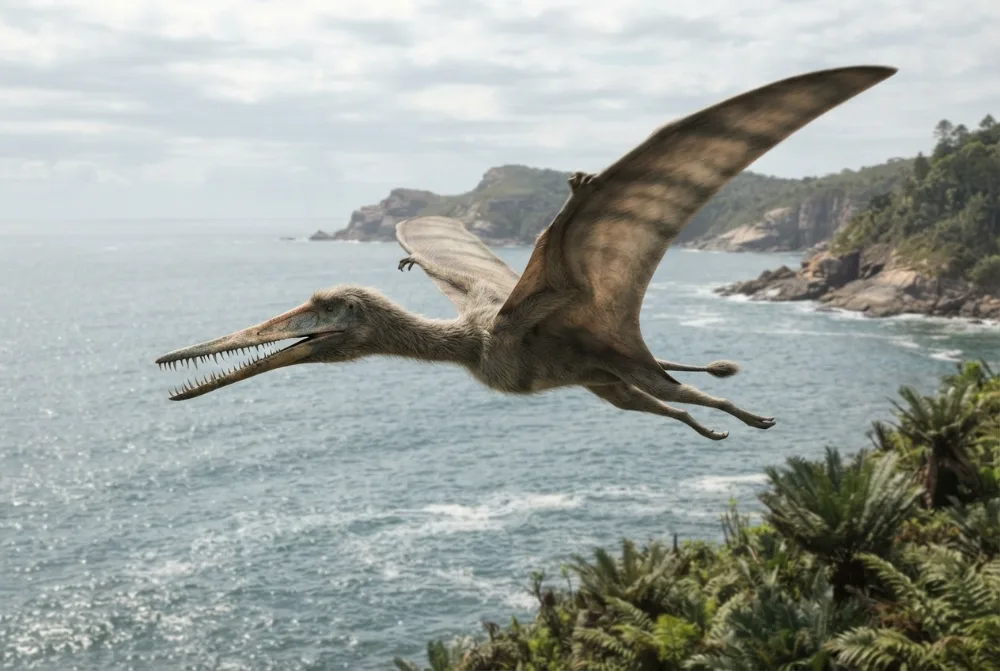
Brasileodactylus was a flying reptile that soared over the warm seas of Early Cretaceous Brazil. It had a long pointed snout full of sharp, forward-pointing teeth, perfect for catching fish. Unlike many of its relatives, it had no crest on its snout or lower jaw.1
E tshetse leng?
E ne e le kgolo go le kae?
Diphuka tsa yona di ne di namegile go le kae?
E ne e le bokete go le kae?

 diphuka di le bophara jaaka dibaesekele di le 2 di latelana🍌bokete jaaka dibanana di le 83⚽e ne e ka fofa go kgabaganya lebala lotlhe la kgwele ya dinao mo metsotswaneng e le 6
Brasileodactylus e ne e le kgolo go le kae fa e bapisiwa le WENA?
Ke dipalo fela mo sebatling sa gago. Ga go sepe se se bolokwang kgotsa se se romelwang gope.
E ne e le bonako go le kae?


Dintlha tse di monate
Brasileodactylus lived about 112 million years ago during the Early Cretaceous.1
Its wingspan was about 4 meters (13 feet), and it weighed around 10 kilograms (22 pounds).1
The first fossil found was just the front part of a lower jaw, discovered by paleontologist Alexander Kellner in 1984.1
Some scientists think Brasileodactylus might be the same animal as Cearadactylus, another pterosaur from the same time and place.1
It had no crest on its snout or lower jaw, but it might have had a small crest on the back of its skull.1
Brasileodactylus is known from several fossils, including a nearly complete skull and a partial skeleton.1
Dipotso tse di botswang thata ka ga Brasileodactylus
?What did Brasileodactylus eat?
It ate fish. Its long pointed snout and sharp, forward-pointing teeth were perfect for catching fish in the warm seas of Early Cretaceous Brazil.1
?Did Brasileodactylus have any crests?
No, it had no crest on its snout or lower jaw. However, it might have had a small crest on the back of its skull.1
?Is Brasileodactylus a dinosaur?
No, it is not a dinosaur. Brasileodactylus is a pterosaur, which is a flying reptile that lived alongside the dinosaurs.1
Ya baitseanape ba didino
- Leina la saense
- Brasileodactylus
- Leina le neilwe ke
- Kellner 19843
- Setlhopha
- Digagabi tse di fofang
- Lelapa / clade
- Ornithocheiroidea3
- Thulaganyo
- Pterosauria > Pterodactyloidea3
- Bogolo jwa matlapa
- 120 go ya go 113 dimilione tsa dingwaga (Aptian)3
- Dibopego tsa matlapa
- Romualdo3
- Dinaga
- Borasele3
- Direkoto tsa difosili
- 2 mo The Paleobiology Database3
- Go fitlhelwa
- Brasileodactylus was named by Brazilian paleontologist Alexander Kellner in 1984 based on a front part of a lower jaw found in the Santana Formation of Brazil.13
- Go sa ntse go ganetsanwa
- Scientists are not sure which family Brasileodactylus belongs to. Some place it in Anhangueridae, others in Ornithocheiridae, and some think it might be a separate group.12
Kwa dintlha di tswang teng
- Brasileodactylus (en.wikipedia.org)
- Description of Pterosaurian (Pterodactyloidea: Anhangueridae, Brasileodactylus) remains from the Lower Cretaceous of Brazil (natuurtijdschriften.nl)
- Brasileodactylus in The Paleobiology Database (CC BY 4.0): dingwaga, mafelo, dibopego tsa matlapa, thulaganyo.
Ntlha nngwe le nngwe mo tsebeng eno e na le nomoro e e supang motswedi wa yona. Fa re dirile phoso, maitshwarelo, re barati ba didino, ga re lokwalodikgang lwa saense. Re bolelele kwa [email protected] mme re tla e baakanya.
 Rex o tshwerwe ke tlala! Dino Wiki ke porojeke ya rre e a e diretseng morwawe yo o ratang didino, ke mahala, ga e na dipapatso e bile ga e na dilatedi. Batho ba bagolo ba ka fepa Rex senyamo go thusa gore e nne mo inthaneteng.Fepa Rex
 Pteranodon
 Quetzalcoatlus
 Dorygnathus
 Rhamphorhynchus
 Anhanguera
 Pterodactylus
 Stegosaurus
 Iguanodon
 Archaeopteryx
 Giganotosaurus
 Microraptor
 Deinonychus