 O dino efe? Kwisi
 Ntwa ya didino
 Peiso ya didino
 Metshamekwana ya didino
 Alebamo ya disetikara
 Manane a TOP a didino
 Ngakgamatsa!
Calamosaurus
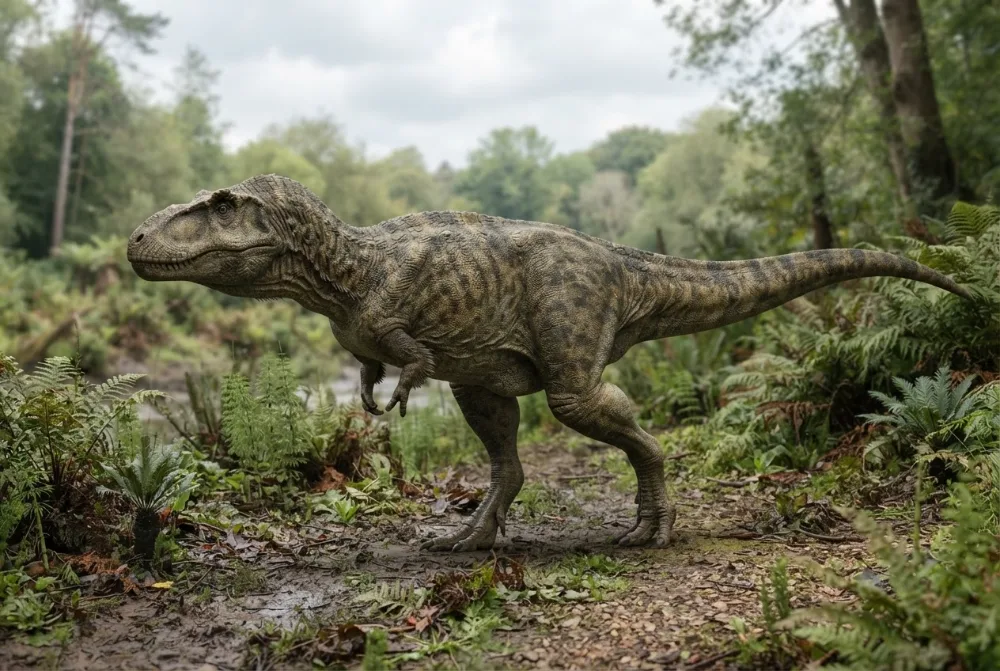
Calamosaurus was a small, meat-eating dinosaur that lived on the Isle of Wight in England during the Early Cretaceous. It was a relative of the mighty Tyrannosaurus rex, but much smaller and lighter. Scientists know it from just a few neck bones, so it is still a bit mysterious.13
E tshetse leng?
E ne e le kgolo go le kae?
E ne e le telele go le kae?
E ne e le kwa godimo go le kae?
kakanyo
 telele jaaka dintšwa di le 4 go tswa kwa nkong go ya kwa mogatleng🍌telele jaaka dibanana di le 19 di latelana🏃e ne e ka taboga dimetara di le 100 mo metsotswaneng e le 7.2 (motho yo o bonako go gaisa o tlhoka 9,6)
Calamosaurus e ne e le kgolo go le kae fa e bapisiwa le WENA?
Ke dipalo fela mo sebatling sa gago. Ga go sepe se se bolokwang kgotsa se se romelwang gope.
E ne e le bonako go le kae?


Dintlha tse di monate
Calamosaurus is known from only two neck vertebrae, which are about 40 mm (1.6 inches) long each.1
The name Calamosaurus means 'reed lizard', because the vertebrae look light and slender like a reed.1
Scientists think Calamosaurus might be a very early relative of Tyrannosaurus rex, belonging to a group called tyrannosauroids.12
The fossils were collected by Reverend William Fox, a fossil hunter, in the 1800s.1
Calamosaurus lived in a floodplain environment with rivers and lakes, and sometimes wildfires.1
Some scientists think Calamosaurus might be a basal alvarezsauroid instead of a tyrannosauroid, showing that its family tree is still debated.1
Dipotso tse di botswang thata ka ga Calamosaurus
?How big was Calamosaurus?
It was about 3.5 metres long, which is roughly the size of a small car.1
?Is Calamosaurus a dinosaur?
Yes, it is a small theropod dinosaur from the Early Cretaceous period.1
?Why is Calamosaurus called 'reed lizard'?
Its name means 'reed lizard' because its neck bones are light and slender, like a reed.1
Mothubi wa ditlhamane
Tlhamane: Calamosaurus was a large, powerful predator like Tyrannosaurus rex.
Boammaaruri: Calamosaurus was actually a small dinosaur, only about 3.5 metres (11 feet) long, and lightly built. It was a distant relative, not a giant.1
Ya baitseanape ba didino
- Leina la saense
- Calamosaurus
- Leina le neilwe ke
- Lydekker 18913
- Setlhopha
- Ditiranosoro
- Lelapa / clade
- Tyrannosauroidea3
- Thulaganyo
- Theropoda > Tyrannosauroidea3
- Bogolo jwa matlapa
- 126 go ya go 120 dimilione tsa dingwaga (Barremian / Aptian)3
- Dinaga
- Bogosi jo bo Kopaneng3
- Direkoto tsa difosili
- 1 mo The Paleobiology Database3
- Go fitlhelwa
- The fossils were collected by Reverend William Fox on the Isle of Wight. Richard Lydekker named them Calamospondylus foxi in 1889, but later changed the name to Calamosaurus foxi in 1891 because the first name was already used.1
- Go sa ntse go ganetsanwa
- Scientists are not sure whether Calamosaurus belongs to the tyrannosauroid group or the alvarezsauroid group. More fossils are needed to settle the debate.1
Kwa dintlha di tswang teng
- Calamosaurus (en.wikipedia.org)
- Calamosaurus, an Isle of Wight tyrannosauroid - DinoWight (dinowight.org.uk)
- Calamosaurus in The Paleobiology Database (CC BY 4.0): dingwaga, mafelo, dibopego tsa matlapa, thulaganyo.
Ntlha nngwe le nngwe mo tsebeng eno e na le nomoro e e supang motswedi wa yona. Fa re dirile phoso, maitshwarelo, re barati ba didino, ga re lokwalodikgang lwa saense. Re bolelele kwa [email protected] mme re tla e baakanya.
 Rex o tshwerwe ke tlala! Dino Wiki ke porojeke ya rre e a e diretseng morwawe yo o ratang didino, ke mahala, ga e na dipapatso e bile ga e na dilatedi. Batho ba bagolo ba ka fepa Rex senyamo go thusa gore e nne mo inthaneteng.Fepa Rex
 Tyrannosaurus
 Tarbosaurus
 Albertosaurus
 Daspletosaurus
 Gorgosaurus
 Alectrosaurus
 Stegosaurus
 Iguanodon
 Archaeopteryx
 Giganotosaurus
 Microraptor
 Deinonychus