 O dino efe? Kwisi
 Ntwa ya didino
 Peiso ya didino
 Metshamekwana ya didino
 Alebamo ya disetikara
 Manane a TOP a didino
 Ngakgamatsa!
E tshetse leng?

E ne e le kgolo go le kae?
E ne e le telele go le kae?
E ne e le kwa godimo go le kae?
kakanyo
E ne e le bokete go le kae?
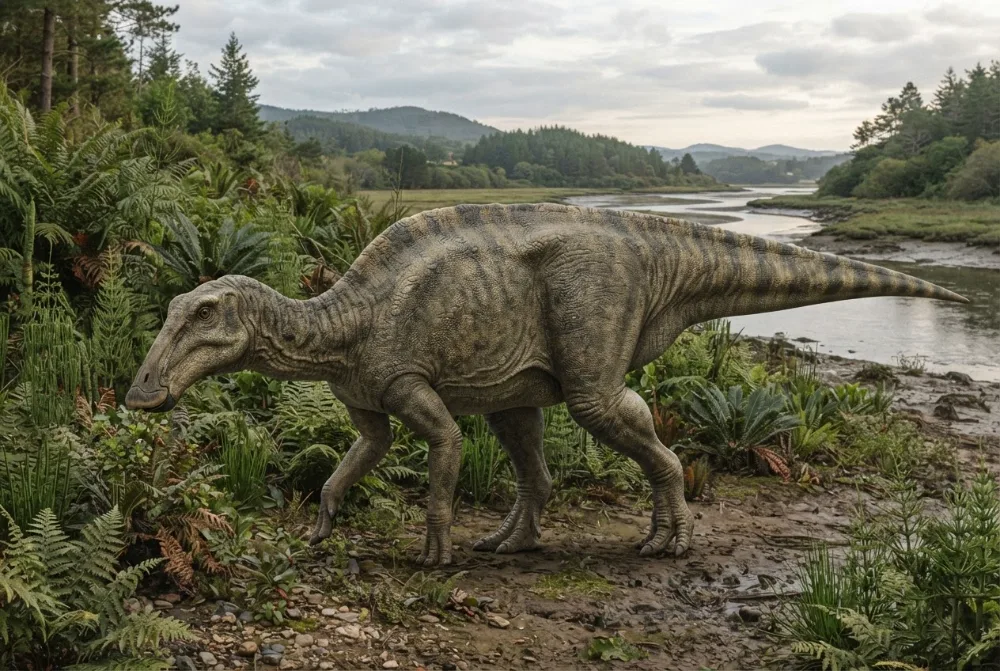
 telele jaaka dintšwa di le 4 go tswa kwa nkong go ya kwa mogatleng🍌telele jaaka dibanana di le 21 di latelana🍉bokete jaaka magapu a le 54🧸bokete jaaka bana ba kreše ba le 14🎒bokete jaaka bana ba sekolo ba le 8🏃e ne e ka taboga dimetara di le 100 mo metsotswaneng e le 8.6 (motho yo o bonako go gaisa o tlhoka 9,6)
Canardia e ne e le kgolo go le kae fa e bapisiwa le WENA?
Ke dipalo fela mo sebatling sa gago. Ga go sepe se se bolokwang kgotsa se se romelwang gope.
E ne e le bonako go le kae?


Dintlha tse di monate
Canardia is known only from juvenile specimens, so scientists think the fossils found so far are from young animals.1
Its name comes from the French word 'canard', which means 'duck', because it belongs to the duck-billed dinosaur group.1
Canardia lived between 67.5 and 66 million years ago, right up to the end of the Cretaceous Period.1
The first fossils of Canardia were discovered in 1999 near the village of Marignac-Laspeyres in France.1
Some scientists think Canardia is closely related to Aralosaurus from Central Asia, while others place it in a group with other European and North African duck-billed dinosaurs.1
One Canardia fossil was found just one metre below the layer that marks the dinosaur extinction event, showing it was one of the very last non-bird dinosaurs in Europe.1
Dipotso tse di botswang thata ka ga Canardia
?How big was Canardia?
Scientists are not sure of its full adult size because all known fossils are from juveniles. The biggest bones found are a maxilla 16.9 cm long, a scapula 21.8 cm long, and a humerus 19.4 cm long.1
?Did Canardia have a crest?
Nobody knows for sure. No complete skull has been found, so scientists cannot tell if it had a hollow bony crest like many other lambeosaurines.1
?What did Canardia eat?
Like other duck-billed dinosaurs, Canardia was a plant-eater. It had teeth with ridges for grinding plants, and its duck-like beak helped it bite off leaves.1
?When did Canardia live?
Canardia lived between 67.5 and 66 million years ago, during the very end of the Cretaceous Period. It was one of the last non-bird dinosaurs before the big extinction.1
?Where was Canardia found?
All Canardia fossils have been found in southwestern France, in the Haute-Garonne department. The first ones were discovered in 1999 near the village of Marignac-Laspeyres.1
?Is Canardia a dinosaur?
Yes, Canardia is a dinosaur. It is a type of duck-billed dinosaur called a lambeosaurine hadrosaurid.1
Ya baitseanape ba didino
- Leina la saense
- Canardia
- Leina le neilwe ke
- Prieto-Marquez et al. 20133
- Setlhopha
- Melomo-pidipidi
- Lelapa / clade
- Hadrosauridae3
- Thulaganyo
- Ornithischia > Ornithopoda > Iguanodontia > Hadrosauridae3
- Bogolo jwa matlapa
- 72 go ya go 66 dimilione tsa dingwaga (Maastrichtian)3
- Dibopego tsa matlapa
- Marno-calcaires jaunes de Gensac, Marnes d'Auzas3
- Dinaga
- Fora3
- Direkoto tsa difosili
- 2 mo The Paleobiology Database3
- Go fitlhelwa
- Canardia was named in 2013 by Albert Prieto-Márquez and colleagues. The first fossils were found in 1999 by a team from the Musée des Dinosaures d'Espéraza in southwestern France.1
- Go sa ntse go ganetsanwa
- Scientists are not sure exactly where Canardia fits in the duck-billed dinosaur family tree. Some think it belongs to a group called Aralosaurini, while others place it in Arenysaurini.1
Kwa dintlha di tswang teng
- Canardia (en.wikipedia.org)
- Canardia garonnensis | Dinosaur Database by DinoAnimals.com (dinoanimals.com)
- Canardia in The Paleobiology Database (CC BY 4.0): dingwaga, mafelo, dibopego tsa matlapa, thulaganyo.
Ntlha nngwe le nngwe mo tsebeng eno e na le nomoro e e supang motswedi wa yona. Fa re dirile phoso, maitshwarelo, re barati ba didino, ga re lokwalodikgang lwa saense. Re bolelele kwa [email protected] mme re tla e baakanya.
 Rex o tshwerwe ke tlala! Dino Wiki ke porojeke ya rre e a e diretseng morwawe yo o ratang didino, ke mahala, ga e na dipapatso e bile ga e na dilatedi. Batho ba bagolo ba ka fepa Rex senyamo go thusa gore e nne mo inthaneteng.Fepa Rex
 Parasaurolophus
 Edmontosaurus
 Saurolophus
 Hypacrosaurus
 Corythosaurus
 Kritosaurus
 Tyrannosaurus
 Triceratops
 Velociraptor
 Spinosaurus
 Ankylosaurus
 Pteranodon