 O dino efe? Kwisi
 Ntwa ya didino
 Peiso ya didino
 Metshamekwana ya didino
 Alebamo ya disetikara
 Manane a TOP a didino
 Ngakgamatsa!
Cimoliopterus
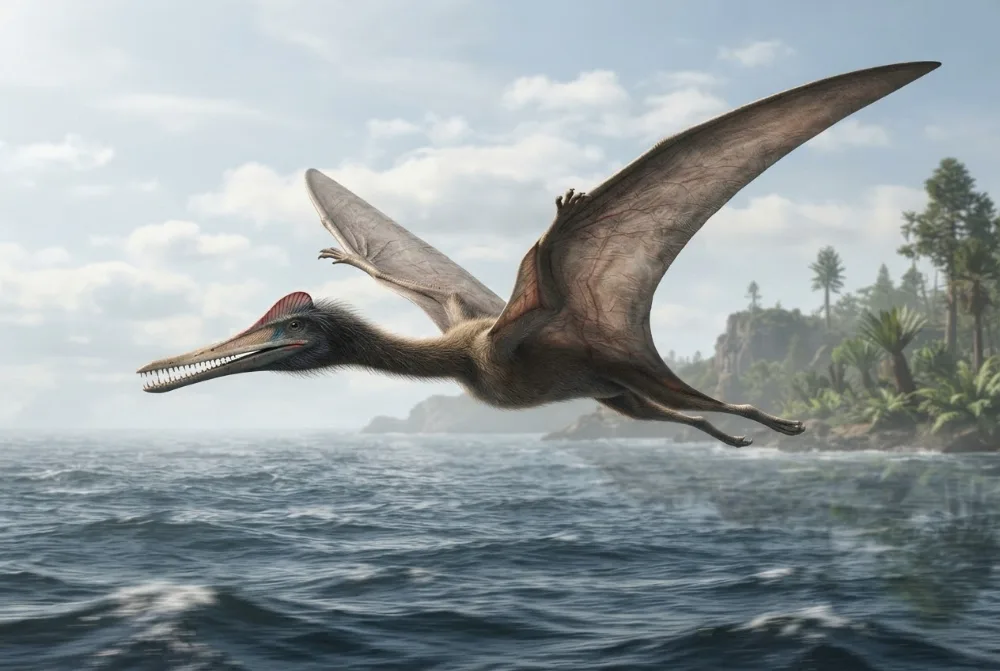
Cimoliopterus was a flying reptile that soared over the seas during the time of the dinosaurs. It had a long, toothy snout and a thin crest on its beak. It probably caught fish by swooping down and snatching them from the water.51
E tshetse leng?
E ne e le kgolo go le kae?
Diphuka tsa yona di ne di namegile go le kae?
 diphuka di le bophara jaaka dibaesekele di le 3 di latelana⚽e ne e ka fofa go kgabaganya lebala lotlhe la kgwele ya dinao mo metsotswaneng e le 5.5
Cimoliopterus e ne e le kgolo go le kae fa e bapisiwa le WENA?
Ke dipalo fela mo sebatling sa gago. Ga go sepe se se bolokwang kgotsa se se romelwang gope.
E ne e le bonako go le kae?


Dintlha tse di monate
Cimoliopterus had a thin crest on the top of its snout that started above the fourth pair of teeth.1
The tip of its snout was small and blunt, and the front of the upper jaw sloped downward at about a 45-degree angle.1
One species, Cimoliopterus dunni, was discovered in Texas and is the first North American record of this pterosaur genus.1
It had at least 26 teeth in its upper jaw, and the first pair pointed more downward than forward.1
Dipotso tse di botswang thata ka ga Cimoliopterus
?How big was Cimoliopterus?
Cimoliopterus cuvieri had a wingspan of about 3.5 metres (11 feet), and Cimoliopterus dunni was similar in size. One Cimoliopterus specimen had a wingspan of about 5 metres (16 feet).3
?What did Cimoliopterus eat?
It probably ate fish. It may have flown over the water and dipped its long jaws in to catch fish with its interlocking teeth.34
?Could Cimoliopterus fly?
Yes, it was a flying reptile. It was probably good at long-distance soaring over oceans, and its fossils are mostly found in marine rocks.3
?Why did Cimoliopterus have a crest?
Scientists are not sure. Some think the crest helped steady its jaws in the water while fishing, but it may have been for display.3
Ya baitseanape ba didino
- Leina la saense
- Cimoliopterus
- Leina le neilwe ke
- Rodrigues and Kellner 20135
- Setlhopha
- Digagabi tse di fofang
- Lelapa / clade
- Pteranodontoidea5
- Thulaganyo
- Pterosauria > Pterodactyloidea5
- Bogolo jwa matlapa
- 100 go ya go 90 dimilione tsa dingwaga (Cenomanian / Turonian)5
- Dibopego tsa matlapa
- Britton5
- Dinaga
- Bogosi jo bo Kopaneng, Amerika5
- Direkoto tsa difosili
- 2 mo The Paleobiology Database5
- Go fitlhelwa
- The genus Cimoliopterus was named in 2013 by paleontologists Taissa Rodrigues and Alexander Kellner based on fossils from England. A second species, Cimoliopterus dunni, was described in 2015 by Timothy Myers from a partial snout found in Texas.51
- Go sa ntse go ganetsanwa
- Scientists are not sure exactly how large Cimoliopterus grew, because only parts of the skull have been found so far.1
Kwa dintlha di tswang teng
- First North American occurrence of the toothed pteranodontoid pterosaur Cimoliopterus: Journal of Vertebrate Paleontology: Vol 35 , No 6 - Get Access (tandfonline.com)
- PBDB Taxon (paleobiodb.org)
- Cimoliopterus (en.wikipedia.org)
- New North American pterosaur is a Texan -- but flying reptile's closest cousin is English | EurekAlert! (eurekalert.org)
- Cimoliopterus in The Paleobiology Database (CC BY 4.0): dingwaga, mafelo, dibopego tsa matlapa, thulaganyo.
Ntlha nngwe le nngwe mo tsebeng eno e na le nomoro e e supang motswedi wa yona. Fa re dirile phoso, maitshwarelo, re barati ba didino, ga re lokwalodikgang lwa saense. Re bolelele kwa [email protected] mme re tla e baakanya.
 Rex o tshwerwe ke tlala! Dino Wiki ke porojeke ya rre e a e diretseng morwawe yo o ratang didino, ke mahala, ga e na dipapatso e bile ga e na dilatedi. Batho ba bagolo ba ka fepa Rex senyamo go thusa gore e nne mo inthaneteng.Fepa Rex
 Pteranodon
 Quetzalcoatlus
 Dorygnathus
 Rhamphorhynchus
 Anhanguera
 Pterodactylus
 Tyrannosaurus
 Triceratops
 Velociraptor
 Spinosaurus
 Ankylosaurus
 Parasaurolophus