 O dino efe? Kwisi
 Ntwa ya didino
 Peiso ya didino
 Metshamekwana ya didino
 Alebamo ya disetikara
 Manane a TOP a didino
 Ngakgamatsa!
Coahuilaceratops
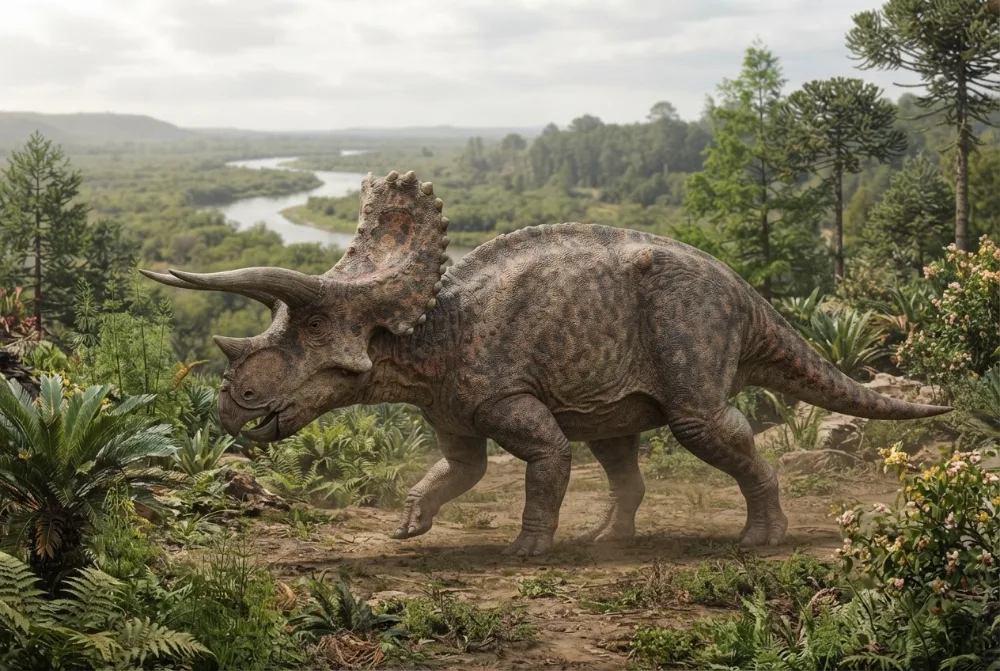
Coahuilaceratops was a horned dinosaur that lived in what is now Mexico. It had huge horns on its face, as big as those of Triceratops. This dinosaur was a plant-eater that roamed the land about 71 to 70 million years ago.12
E tshetse leng?
E ne e le kgolo go le kae?
E ne e le telele go le kae?
E ne e le kwa godimo go le kae?
E ne e le bokete go le kae?

 telele jaaka dintšwa di le 7 go tswa kwa nkong go ya kwa mogatleng🍌telele jaaka dibanana di le 37 di latelana
 e ka nna bokete jaaka tlou🍉bokete jaaka magapu a le 1000🎒bokete jaaka diphaposiborutelo tse di tletseng bana di le 6🐻❄️bokete jaaka dibere tse ditshweu di le 11🏃e ne e ka taboga dimetara di le 100 mo metsotswaneng e le 11 (motho yo o bonako go gaisa o tlhoka 9,6)
Coahuilaceratops e ne e le kgolo go le kae fa e bapisiwa le WENA?
Ke dipalo fela mo sebatling sa gago. Ga go sepe se se bolokwang kgotsa se se romelwang gope.
E ne e le bonako go le kae?


Dintlha tse di monate
Coahuilaceratops had horns that were about 0.91 to 1.22 meters (3 to 4 feet) long, as big as those of Triceratops.1
Its name means 'horned face from Coahuila', after the Mexican state where it was found.1
Its fossils were discovered in 2001 by Claudio de Leon near Porvenir de Jalpa, Coahuila.1
Scientists think Coahuilaceratops may be an early relative of Triceratops.3
Dipotso tse di botswang thata ka ga Coahuilaceratops
?How big was Coahuilaceratops?
An adult was about 6.7 meters (22 feet) long, 1.8 to 2.1 meters (6 to 7 feet) tall at the shoulders and hips, and probably weighed about 4 to 5 metric tons. Another estimate says it was about 4 meters (13 feet) long and weighed 1 to 1.5 metric tons.14
?What did Coahuilaceratops eat?
It was a plant-eater, like other horned dinosaurs.4
?When did Coahuilaceratops live?
It lived about 71.5 to 70.5 million years ago, during the Late Cretaceous period.1
?Where was Coahuilaceratops found?
Its fossils were found in Coahuila, Mexico, near the town of Porvenir de Jalpa.1
?Why did Coahuilaceratops have such big horns?
Scientists are not sure, but the most widely accepted idea is that the horns were used to attract mates and fight with rivals of the same species.4
Ya baitseanape ba didino
- Leina la saense
- Coahuilaceratops
- Leina le neilwe ke
- Loewen et al. 20105
- Setlhopha
- Didino tse di nang le dinaka
- Lelapa / clade
- Ceratopsidae5
- Thulaganyo
- Ornithischia > Ceratopsia > Ceratopsidae5
- Bogolo jwa matlapa
- 72 go ya go 66 dimilione tsa dingwaga (Maastrichtian)5
- Dinaga
- Mekesiko5
- Direkoto tsa difosili
- 1 mo The Paleobiology Database5
- Go fitlhelwa
- Coahuilaceratops was named by Mark A. Loewen and colleagues in 2010. The fossils were found in 2001 and dug up in 2003 in Coahuila, Mexico.12
- Go sa ntse go ganetsanwa
- Scientists are not sure exactly how big Coahuilaceratops was, because different estimates give lengths from 4 to 6.7 meters.1
Kwa dintlha di tswang teng
- Coahuilaceratops (en.wikipedia.org)
- PBDB Taxon (paleobiodb.org)
- Stratigraphic Reassessment of the Mexican Chasmosaurine Coahuilaceratops magnacuerna as the First Diagnostic Dinosaur Remains from the Cerro Huerta Formation (Lower Maastrichtian) Supporting the Southern Origin of the Triceratopsini (dinosaurier-info.de)
- First horned dinosaur from Mexico (phys.org)
- Coahuilaceratops in The Paleobiology Database (CC BY 4.0): dingwaga, mafelo, dibopego tsa matlapa, thulaganyo.
Ntlha nngwe le nngwe mo tsebeng eno e na le nomoro e e supang motswedi wa yona. Fa re dirile phoso, maitshwarelo, re barati ba didino, ga re lokwalodikgang lwa saense. Re bolelele kwa [email protected] mme re tla e baakanya.
 Rex o tshwerwe ke tlala! Dino Wiki ke porojeke ya rre e a e diretseng morwawe yo o ratang didino, ke mahala, ga e na dipapatso e bile ga e na dilatedi. Batho ba bagolo ba ka fepa Rex senyamo go thusa gore e nne mo inthaneteng.Fepa Rex
 Triceratops
 Protoceratops
 Ojoceratops
 Tatankaceratops
 Psittacosaurus
 Centrosaurus
 Tyrannosaurus
 Velociraptor
 Spinosaurus
 Ankylosaurus
 Parasaurolophus
 Pteranodon