 O dino efe? Kwisi
 Ntwa ya didino
 Peiso ya didino
 Metshamekwana ya didino
 Alebamo ya disetikara
 Manane a TOP a didino
 Ngakgamatsa!
E tshetse leng?

E ne e le kgolo go le kae?
E ne e le telele go le kae?
E ne e le kwa godimo go le kae?
kakanyo
E ne e le bokete go le kae?

 telele jaaka dintšwa di le 5 go tswa kwa nkong go ya kwa mogatleng🍌telele jaaka dibanana di le 28 di latelanabokete jaaka dintšwa di le 100🍉bokete jaaka magapu a le 400🎒bokete jaaka diphaposiborutelo tse di tletseng bana di le 2.5🐻❄️bokete jaaka dibere tse ditshweu di le 4🏃e ne e ka taboga dimetara di le 100 mo metsotswaneng e le 11 (motho yo o bonako go gaisa o tlhoka 9,6)
Coronosaurus e ne e le kgolo go le kae fa e bapisiwa le WENA?
Ke dipalo fela mo sebatling sa gago. Ga go sepe se se bolokwang kgotsa se se romelwang gope.
E ne e le bonako go le kae?


Dintlha tse di monate
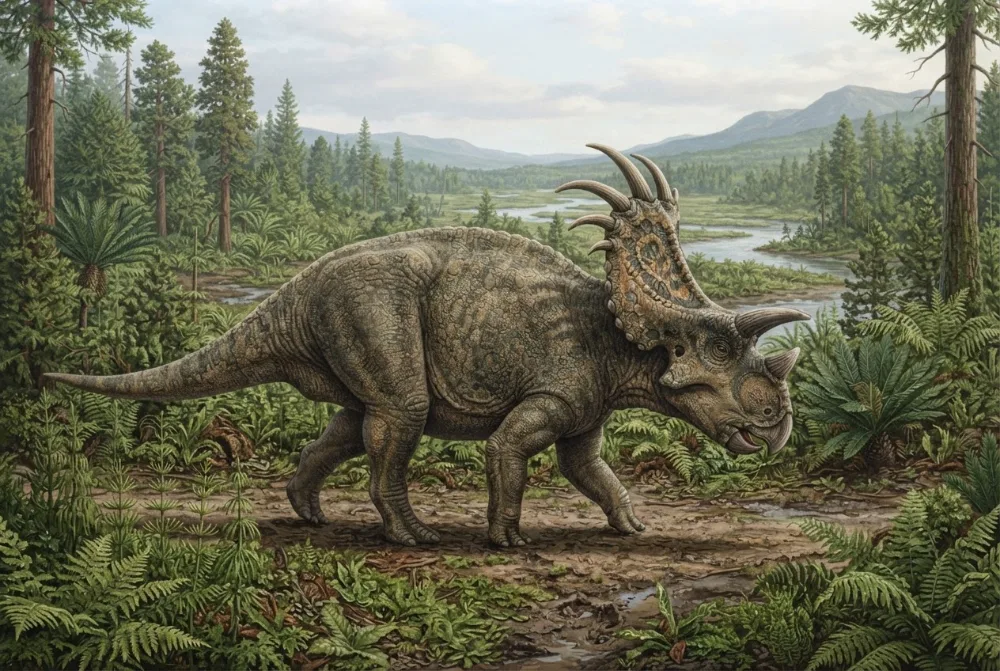
Coronosaurus had a unique crown of spiky bones on its frill, which no other ceratopsian dinosaur had.1
It was originally thought to be a species of Centrosaurus, but scientists later gave it its own name in 2012.1
Its fossils were found in two bone beds in Alberta, Canada, which were discovered by paleontologist Philip Currie.1
Coronosaurus lived about 83 to 72 million years ago, during the Campanian stage of the Late Cretaceous.2
It was a medium-sized ceratopsid, about 5 metres (16 feet) long and weighing around 2 tonnes (2.2 short tons).1
The dinosaur's name comes from the Latin word 'corona', meaning crown, because of the crown-like horns on its frill.1
Coronosaurus shared its home with other dinosaurs like Daspletosaurus, Troodon, and Parasaurolophus.1
Dipotso tse di botswang thata ka ga Coronosaurus
?How big was Coronosaurus?
About 5 metres (16 feet) long and 2 tonnes (2.2 short tons) in weight. It was a medium sized dinosaur for its kind.1
?What did Coronosaurus eat?
It ate plants. It was a herbivore that walked on four legs and had a beak for cropping vegetation.12
?Why did Coronosaurus have a crown of spikes?
Scientists think the crown of spiky bones on its frill was used for display, maybe to attract mates or scare off rivals. It is unique among ceratopsians.1
?Where was Coronosaurus found?
Its fossils were found in two bone beds in Alberta, Canada, in the Oldman Formation. They were discovered by paleontologist Philip Currie.1
Ya baitseanape ba didino
- Leina la saense
- Coronosaurus
- Leina le neilwe ke
- Ryan et al. 20122
- Setlhopha
- Didino tse di nang le dinaka
- Lelapa / clade
- Ceratopsidae2
- Thulaganyo
- Ornithischia > Ceratopsia > Ceratopsidae2
- Bogolo jwa matlapa
- 84 go ya go 72 dimilione tsa dingwaga (Campanian)2
- Dibopego tsa matlapa
- Oldman2
- Dinaga
- Khanata2
- Direkoto tsa difosili
- 2 mo The Paleobiology Database2
- Go fitlhelwa
- Coronosaurus was first described in 2005 as a species of Centrosaurus, but in 2012 scientists Michael Ryan, David Evans, and Kieran Shepherd gave it its own genus name because of its unique frill horns.1
- Go sa ntse go ganetsanwa
- Scientists are still debating exactly how Coronosaurus is related to other horned dinosaurs like Styracosaurus and Centrosaurus.1
Kwa dintlha di tswang teng
- Coronosaurus (en.wikipedia.org)
- Coronosaurus in The Paleobiology Database (CC BY 4.0): dingwaga, mafelo, dibopego tsa matlapa, thulaganyo.
Ntlha nngwe le nngwe mo tsebeng eno e na le nomoro e e supang motswedi wa yona. Fa re dirile phoso, maitshwarelo, re barati ba didino, ga re lokwalodikgang lwa saense. Re bolelele kwa [email protected] mme re tla e baakanya.
 Rex o tshwerwe ke tlala! Dino Wiki ke porojeke ya rre e a e diretseng morwawe yo o ratang didino, ke mahala, ga e na dipapatso e bile ga e na dilatedi. Batho ba bagolo ba ka fepa Rex senyamo go thusa gore e nne mo inthaneteng.Fepa Rex
 Triceratops
 Protoceratops
 Ojoceratops
 Tatankaceratops
 Psittacosaurus
 Centrosaurus
 Tyrannosaurus
 Velociraptor
 Spinosaurus
 Ankylosaurus
 Parasaurolophus
 Pteranodon