 O dino efe? Kwisi
 Ntwa ya didino
 Peiso ya didino
 Metshamekwana ya didino
 Alebamo ya disetikara
 Manane a TOP a didino
 Ngakgamatsa!
Cryodrakon
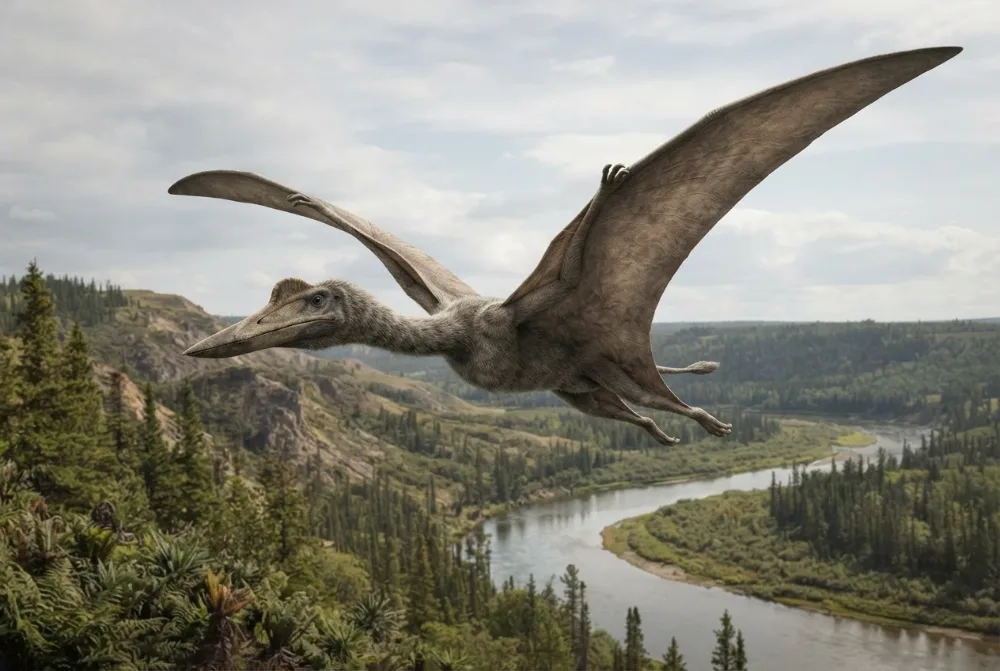
Cryodrakon was a huge flying reptile that soared over Canada about 76 million years ago. It was not a dinosaur, but a pterosaur with a wingspan as wide as a small airplane. This cold dragon ruled the skies and snatched fish from ancient rivers.51
E tshetse leng?
E ne e le kgolo go le kae?
Diphuka tsa yona di ne di namegile go le kae?
E ne e le bokete go le kae?

 diphuka di le bophara jaaka dikoloi di le 2 di latelana🍉bokete jaaka magapu a le 110🧸bokete jaaka bana ba kreše ba le 29🎒bokete jaaka bana ba sekolo ba le 17⚽e ne e ka fofa go kgabaganya lebala lotlhe la kgwele ya dinao mo metsotswaneng e le 4.2
Cryodrakon e ne e le kgolo go le kae fa e bapisiwa le WENA?
Ke dipalo fela mo sebatling sa gago. Ga go sepe se se bolokwang kgotsa se se romelwang gope.
E ne e le bonako go le kae?


Dintlha tse di monate
Cryodrakon was first described in 2019, making it a very recently discovered pterosaur.5
It lived during the Campanian age of the Late Cretaceous, between 83.6 and 72.2 million years ago.1
The type specimen of Cryodrakon is a set of postcranial bones, meaning skull and jaws are not yet known.5
Cryodrakon belonged to a group called Azhdarchidae, which includes some of the largest flying animals ever.1
Its fossils come from two locations in Alberta, Canada, both from the same rock formation.5
Dipotso tse di botswang thata ka ga Cryodrakon
?How big was Cryodrakon?
Adult Cryodrakon had a wingspan of about 10 metres (33 feet), as wide as a small airplane. Younger individuals were smaller, with wingspans around 5 metres (16 feet).24
?What did Cryodrakon eat?
Cryodrakon was a carnivore that likely ate small animals like fish, amphibians, reptiles, and maybe small dinosaurs. It had a toothless, chopstick-like beak and probably swallowed its prey whole, similar to a giant stork.2
?When did Cryodrakon live?
Cryodrakon lived during the Late Cretaceous period, about 76.7 to 74.3 million years ago.4
?Where was Cryodrakon found?
Cryodrakon fossils were discovered in Alberta, Canada, in the Dinosaur Park Formation. The first bones were found in 1972, and the most complete skeleton was uncovered in 1992.24
Ya baitseanape ba didino
- Leina la saense
- Cryodrakon
- Leina le neilwe ke
- Hone et al. 20195
- Setlhopha
- Digagabi tse di fofang
- Lelapa / clade
- Azhdarchidae5
- Thulaganyo
- Pterosauria > Pterodactyloidea > Azhdarchidae5
- Bogolo jwa matlapa
- 84 go ya go 72 dimilione tsa dingwaga (Campanian)5
- Dibopego tsa matlapa
- Dinosaur Park5
- Dinaga
- Khanata5
- Direkoto tsa difosili
- 2 mo The Paleobiology Database5
- Go fitlhelwa
- Cryodrakon was named and described by scientists David Hone, Michael Habib, and Francois Therrien in 2019, based on fossils found in Alberta, Canada.51
- Go sa ntse go ganetsanwa
- Because the skull and jaws have not been found, scientists are not sure of the exact shape of Cryodrakon's head or how it captured prey.5
Kwa dintlha di tswang teng
- PBDB Taxon (paleobiodb.org)
- Cryodrakon | The Canadian Encyclopedia (thecanadianencyclopedia.ca)
- Cryodrakon (en.wikipedia.org)
- Cryodrakon (en.wikipedia.org)
- Cryodrakon in The Paleobiology Database (CC BY 4.0): dingwaga, mafelo, dibopego tsa matlapa, thulaganyo.
Ntlha nngwe le nngwe mo tsebeng eno e na le nomoro e e supang motswedi wa yona. Fa re dirile phoso, maitshwarelo, re barati ba didino, ga re lokwalodikgang lwa saense. Re bolelele kwa [email protected] mme re tla e baakanya.
 Rex o tshwerwe ke tlala! Dino Wiki ke porojeke ya rre e a e diretseng morwawe yo o ratang didino, ke mahala, ga e na dipapatso e bile ga e na dilatedi. Batho ba bagolo ba ka fepa Rex senyamo go thusa gore e nne mo inthaneteng.Fepa Rex
 Pteranodon
 Quetzalcoatlus
 Dorygnathus
 Rhamphorhynchus
 Anhanguera
 Pterodactylus
 Tyrannosaurus
 Triceratops
 Velociraptor
 Spinosaurus
 Ankylosaurus
 Parasaurolophus