 O dino efe? Kwisi
 Ntwa ya didino
 Peiso ya didino
 Metshamekwana ya didino
 Alebamo ya disetikara
 Manane a TOP a didino
 Ngakgamatsa!
Ctenochasma
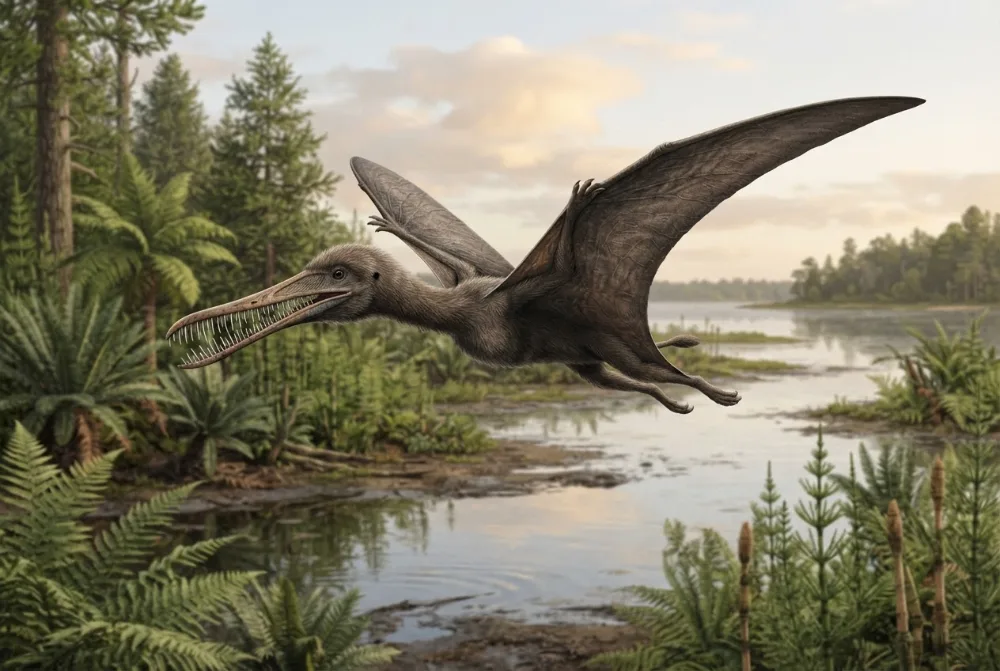
Ctenochasma was a flying reptile with a mouth full of hundreds of long, thin teeth that stuck out like a comb. It used its special beak to scoop up tiny animals from the water, like a spoonbill bird today.1
E tshetse leng?
E ne e le kgolo go le kae?
Diphuka tsa yona di ne di namegile go le kae?
 telele jaaka dikatse tsa mo gae di le 4 go tswa kwa nkong go ya kwa mogatleng⚽e ne e ka fofa go kgabaganya lebala lotlhe la kgwele ya dinao mo metsotswaneng e le 8
Ctenochasma e ne e le kgolo go le kae fa e bapisiwa le WENA?
Ke dipalo fela mo sebatling sa gago. Ga go sepe se se bolokwang kgotsa se se romelwang gope.
E ne e le bonako go le kae?


Dintlha tse di monate
Ctenochasma had over 400 teeth in adults, all long, thin, and tightly packed together.1
Its teeth stuck outward from the jaws, forming a basket-like shape that helped catch small prey.1
Adult Ctenochasma had a bony crest on top of their skull, but young ones did not.1
Scientists think Ctenochasma was nocturnal, like some seabirds today, based on its eye bones.1
The smallest species, Ctenochasma elegans, had a wingspan of about 1.9 metres (6.2 feet) as an adult.1
Ctenochasma lived during the Late Jurassic period, around 150 to 145 million years ago.1
Dipotso tse di botswang thata ka ga Ctenochasma
?Was Ctenochasma a dinosaur?
No, Ctenochasma was a pterosaur, which is a flying reptile and not a dinosaur.1
?How big was Ctenochasma?
The smallest species, Ctenochasma elegans, had a maximum wingspan of about 1.9 metres (6.2 feet) as an adult.1
?What did Ctenochasma eat?
It used its comb-like teeth to strain small invertebrates from the water, similar to how a spoonbill bird feeds today.1
?Did Ctenochasma have a crest?
Yes, adult Ctenochasma had a bony crest along the skull, but young ones did not.1
Ya baitseanape ba didino
- Leina la saense
- Ctenochasma
- Leina le neilwe ke
- Meyer 18512
- Setlhopha
- Digagabi tse di fofang
- Lelapa / clade
- Lophocratia2
- Thulaganyo
- Pterosauria > Pterodactyloidea2
- Bogolo jwa matlapa
- 149 go ya go 137 dimilione tsa dingwaga (Tithonian / Berriasian)2
- Dibopego tsa matlapa
- Solnhofen, Solnhofener Plattenkalk, Calcaires tâchetés2
- Dinaga
- Jeremane, Fora2
- Direkoto tsa difosili
- 7 mo The Paleobiology Database2
- Go fitlhelwa
- German paleontologist Hermann von Meyer named Ctenochasma in 1851, based on a lower jaw full of teeth. He first thought it was a crocodilian, not a pterosaur.1
- Go sa ntse go ganetsanwa
- Scientists debate whether all the different species of Ctenochasma are really just growth stages of one species, but a 2007 study showed three distinct species based on tooth number and shape.1
Kwa dintlha di tswang teng
- Ctenochasma (en.wikipedia.org)
- Ctenochasma in The Paleobiology Database (CC BY 4.0): dingwaga, mafelo, dibopego tsa matlapa, thulaganyo.
Ntlha nngwe le nngwe mo tsebeng eno e na le nomoro e e supang motswedi wa yona. Fa re dirile phoso, maitshwarelo, re barati ba didino, ga re lokwalodikgang lwa saense. Re bolelele kwa [email protected] mme re tla e baakanya.
 Rex o tshwerwe ke tlala! Dino Wiki ke porojeke ya rre e a e diretseng morwawe yo o ratang didino, ke mahala, ga e na dipapatso e bile ga e na dilatedi. Batho ba bagolo ba ka fepa Rex senyamo go thusa gore e nne mo inthaneteng.Fepa Rex
 Pteranodon
 Quetzalcoatlus
 Dorygnathus
 Rhamphorhynchus
 Anhanguera
 Pterodactylus
 Stegosaurus
 Iguanodon
 Archaeopteryx
 Giganotosaurus
 Microraptor
 Deinonychus