 O dino efe? Kwisi
 Ntwa ya didino
 Peiso ya didino
 Metshamekwana ya didino
 Alebamo ya disetikara
 Manane a TOP a didino
 Ngakgamatsa!
Dolichorhynchops
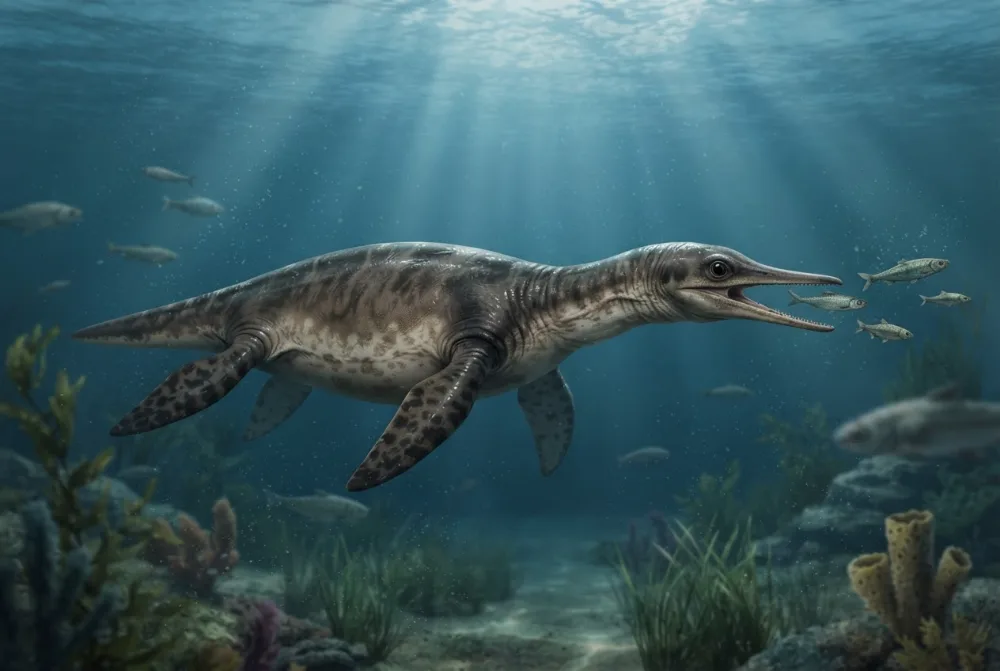
Dolichorhynchops was a small, fast-swimming marine reptile that lived in the Late Cretaceous seas. It had a long snout and a short neck, and it used its four flippers to chase after fish and squid.1
E tshetse leng?
E ne e le kgolo go le kae?
E ne e le telele go le kae?
E ne e le bokete go le kae?
 telele jaaka dintšwa di le 3 go tswa kwa nkong go ya kwa mogatleng🍌telele jaaka dibanana di le 17 di latelana🍉bokete jaaka magapu a le 85🧸bokete jaaka bana ba kreše ba le 22🎒bokete jaaka bana ba sekolo ba le 13🏊e ne e ka thuma boleele jwa letamo le legolo la go thuma (50 m) mo metsotswaneng e le 6.2
Dolichorhynchops e ne e le kgolo go le kae fa e bapisiwa le WENA?
Ke dipalo fela mo sebatling sa gago. Ga go sepe se se bolokwang kgotsa se se romelwang gope.
E ne e le bonako go le kae?


Dintlha tse di monate
Dolichorhynchops was a plesiosaur, but unlike the long-necked plesiosaurs, it had a short neck and a big head.1
The first fossil of Dolichorhynchops was found by a teenager, George Fryer Sternberg, in Kansas around 1900.1
Its name means 'long-nosed face' because of its long, narrow snout.1
Dolichorhynchops lived in the Western Interior Seaway, a shallow sea that split North America in two during the Cretaceous.1
Dipotso tse di botswang thata ka ga Dolichorhynchops
?How big was Dolichorhynchops?
Dolichorhynchops was a relatively small plesiosaur, measuring around 3 metres (9.8 ft) long. Some estimates range from 2.5 to 3 metres (8.2 to 9.8 ft).13
?What did Dolichorhynchops eat?
It ate fish and squid. Its long, narrow jaws were filled with sharp teeth to grab prey, which it swallowed whole.43
?Was Dolichorhynchops a dinosaur?
No, it was a marine reptile called a plesiosaur, not a dinosaur. It lived in the seas during the Late Cretaceous.14
?When did Dolichorhynchops live?
It lived during the Late Cretaceous, about 87 to 72 million years ago. Fossils are found in North America.1
?Could Dolichorhynchops swim fast?
Yes, it was a quick and agile swimmer. It used its long, paddle-like flippers to 'fly' through the water like a penguin.4
?Did Dolichorhynchops give birth to live young?
Yes, fossils have been found with unborn babies inside, strong evidence that it gave birth to live young.4
Ya baitseanape ba didino
- Leina la saense
- Dolichorhynchops
- Leina le neilwe ke
- Williston 19025
- Setlhopha
- Dipleisiosoro
- Lelapa / clade
- Polycotylidae5
- Thulaganyo
- Plesiosauria > Sauropterygia5
- Bogolo jwa matlapa
- 94 go ya go 66 dimilione tsa dingwaga (Turonian / Maastrichtian)5
- Dibopego tsa matlapa
- Niobrara, Pierre Shale, Mesaverde5
- Dinaga
- Amerika, Khanata, Poleke, Rašia5
- Direkoto tsa difosili
- 14 mo The Paleobiology Database5
- Go fitlhelwa
- The first specimen was found by teenage fossil hunter George Fryer Sternberg in Kansas around 1900. It was named Dolichorhynchops osborni by Samuel Wendell Williston in 1902.1
- Go sa ntse go ganetsanwa
- Scientists still debate whether some large polycotylid specimens from Wyoming belong to Dolichorhynchops or to a different genus.1
Kwa dintlha di tswang teng
- Dolichorhynchops (en.wikipedia.org)
- A new genus of small polycotylid plesiosaur from the Upper Cretaceous of the Western Interior Seaway and a clarification of the genus Dolichorhynchops (sciencedirect.com)
- Herschel Short-necked Plesiosaur (royalsaskmuseum.ca)
- Sea Monster Pictures, Dolichorhynchops Photos, Facts, Desktop Wallpaper, Animals Reports, News, Info - National Geographic | National Geographic (nationalgeographic.com)
- Dolichorhynchops in The Paleobiology Database (CC BY 4.0): dingwaga, mafelo, dibopego tsa matlapa, thulaganyo.
Ntlha nngwe le nngwe mo tsebeng eno e na le nomoro e e supang motswedi wa yona. Fa re dirile phoso, maitshwarelo, re barati ba didino, ga re lokwalodikgang lwa saense. Re bolelele kwa [email protected] mme re tla e baakanya.
 Rex o tshwerwe ke tlala! Dino Wiki ke porojeke ya rre e a e diretseng morwawe yo o ratang didino, ke mahala, ga e na dipapatso e bile ga e na dilatedi. Batho ba bagolo ba ka fepa Rex senyamo go thusa gore e nne mo inthaneteng.Fepa Rex
 Elasmosaurus
 Pliosaurus
 Plesiosaurus
 Cimoliasaurus
 Colymbosaurus
 Trinacromerum
 Tyrannosaurus
 Triceratops
 Velociraptor
 Spinosaurus
 Ankylosaurus
 Parasaurolophus