 O dino efe? Kwisi
 Ntwa ya didino
 Peiso ya didino
 Metshamekwana ya didino
 Alebamo ya disetikara
 Manane a TOP a didino
 Ngakgamatsa!
Duriavenator
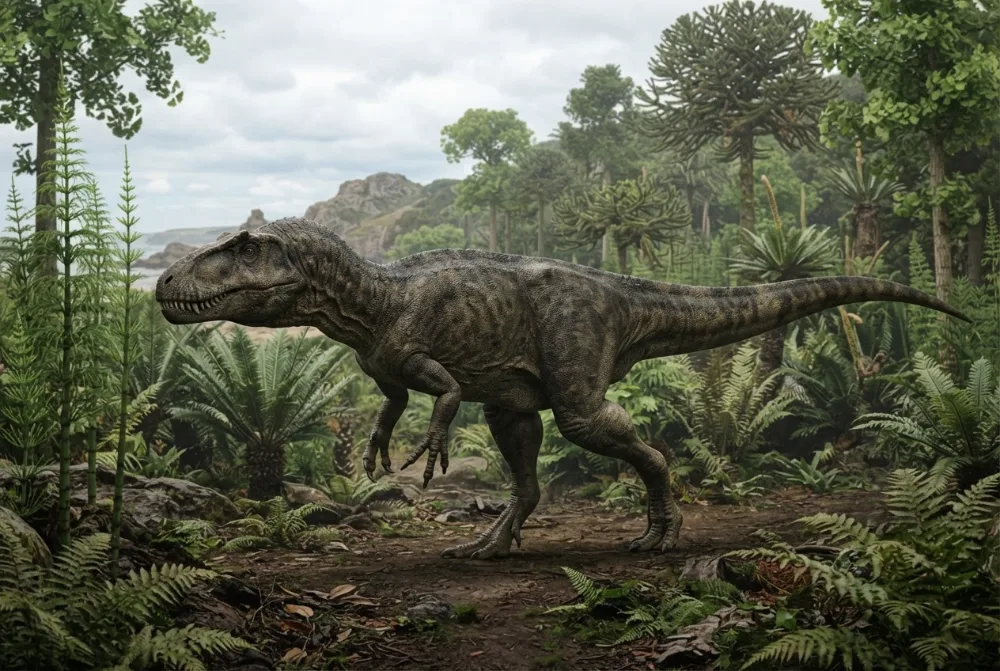
Duriavenator was a meat-eating dinosaur that lived in what is now England about 168 million years ago. It was a medium-sized predator with a big head and strong arms. Scientists think it hunted other dinosaurs like a sneaky ambush predator.1
E tshetse leng?
E ne e le kgolo go le kae?
E ne e le telele go le kae?
E ne e le kwa godimo go le kae?
kakanyo
E ne e le bokete go le kae?
 telele jaaka dintšwa di le 7 go tswa kwa nkong go ya kwa mogatleng🍌telele jaaka dibanana di le 39 di latelana🍉bokete jaaka magapu a le 200🧸bokete jaaka bana ba kreše ba le 53🎒bokete jaaka bana ba sekolo ba le 31🐻❄️bokete jaaka dibere tse ditshweu di le 2🏃e ne e ka taboga dimetara di le 100 mo metsotswaneng e le 10 (motho yo o bonako go gaisa o tlhoka 9,6)
Duriavenator e ne e le kgolo go le kae fa e bapisiwa le WENA?
Ke dipalo fela mo sebatling sa gago. Ga go sepe se se bolokwang kgotsa se se romelwang gope.
E ne e le bonako go le kae?


Dintlha tse di monate
Duriavenator was first thought to be a Megalosaurus, but scientists later gave it its own name in 2008.1
The only known fossils of Duriavenator are parts of its skull and jaws, found in a quarry in 1882.1
Duriavenator had a deep groove on its upper jaw bone with many air-filled holes, which is a unique feature.1
It had about 4 teeth in the front of its upper jaw, 14 to 16 in the back of the upper jaw, and 14 to 15 in the lower jaw.1
The front teeth of Duriavenator were longer and pointed forward, which may have helped it grab food.1
Duriavenator lived during the Middle Jurassic period, about 168 million years ago, making it one of the oldest known tetanuran theropods.1
Dipotso tse di botswang thata ka ga Duriavenator
?How big was Duriavenator?
It was about 5 to 7 metres long (16 to 23 feet) and weighed around 1 tonne (2,200 pounds). That is about as heavy as a small car.1
?What did Duriavenator eat?
It was a meat-eater that probably hunted other dinosaurs, like sauropods and stegosaurs. Scientists think it was an ambush predator.1
?When did Duriavenator live?
It lived about 168 million years ago, during the Middle Jurassic period. That is long before T. rex appeared.1
?Where was Duriavenator found?
Its only known fossils were discovered in a quarry near Sherborne in Dorset, England, in 1882. They are now at the Natural History Museum in London.1
Ya baitseanape ba didino
- Leina la saense
- Duriavenator
- Leina le neilwe ke
- Benson 20082
- Setlhopha
- Didino tse di jang nama
- Lelapa / clade
- Megalosauridae2
- Thulaganyo
- Theropoda2
- Bogolo jwa matlapa
- 169 go ya go 168 dimilione tsa dingwaga (Bajocian)2
- Dibopego tsa matlapa
- Upper Inferior Oolite2
- Dinaga
- Bogosi jo bo Kopaneng2
- Direkoto tsa difosili
- 1 mo The Paleobiology Database2
- Go fitlhelwa
- In 1882, Edward Cleminshaw found skull bones near Sherborne, England. The fossils were first called Megalosaurus, but in 2008 Roger Benson renamed them Duriavenator.1
- Go sa ntse go ganetsanwa
- Scientists are not sure exactly how big Duriavenator was because only a few skull bones have been found. The size estimates are based on related dinosaurs.1
Kwa dintlha di tswang teng
- Duriavenator (en.wikipedia.org)
- Duriavenator in The Paleobiology Database (CC BY 4.0): dingwaga, mafelo, dibopego tsa matlapa, thulaganyo.
Ntlha nngwe le nngwe mo tsebeng eno e na le nomoro e e supang motswedi wa yona. Fa re dirile phoso, maitshwarelo, re barati ba didino, ga re lokwalodikgang lwa saense. Re bolelele kwa [email protected] mme re tla e baakanya.
 Rex o tshwerwe ke tlala! Dino Wiki ke porojeke ya rre e a e diretseng morwawe yo o ratang didino, ke mahala, ga e na dipapatso e bile ga e na dilatedi. Batho ba bagolo ba ka fepa Rex senyamo go thusa gore e nne mo inthaneteng.Fepa Rex
 Allosaurus
 Carnotaurus
 Dilophosaurus
 Giganotosaurus
 Compsognathus
 Paronychodon
 Ichthyosaurus
 Khudiakovia
 Ophthalmosaurus
 Pterodactylus
 Peloneustes
 Rhamphocephalus