 O dino efe? Kwisi
 Ntwa ya didino
 Peiso ya didino
 Metshamekwana ya didino
 Alebamo ya disetikara
 Manane a TOP a didino
 Ngakgamatsa!
E tshetse leng?

E ne e le kgolo go le kae?
E ne e le bokete go le kae?

Gargantuavis e ne e le kgolo go le kae fa e bapisiwa le WENA?
Ke dipalo fela mo sebatling sa gago. Ga go sepe se se bolokwang kgotsa se se romelwang gope.
E ne e le bonako go le kae?


Dintlha tse di monate
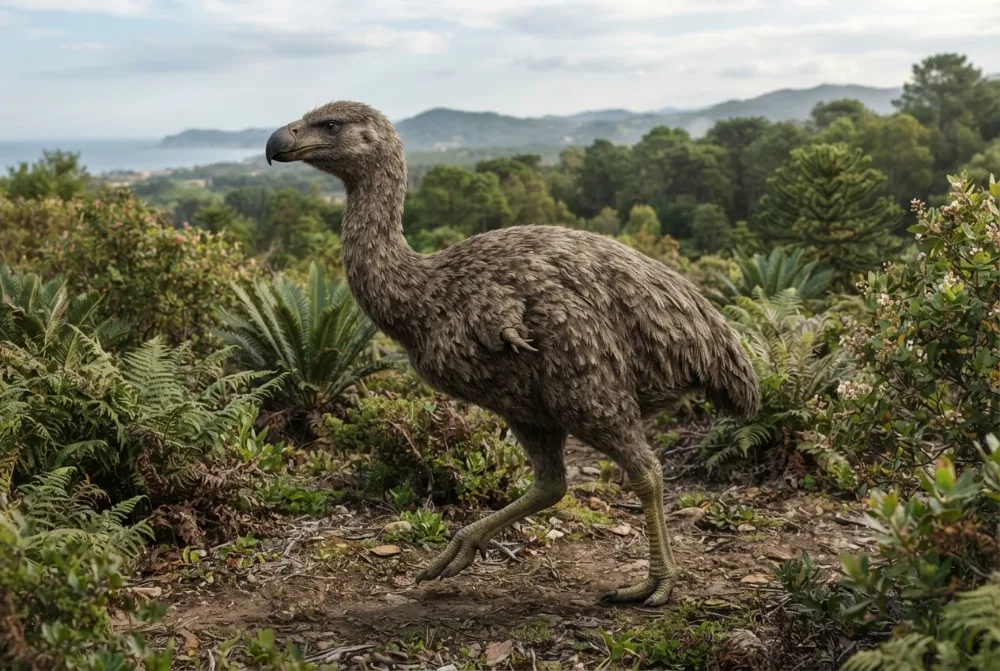
Gargantuavis is the largest known bird from the Mesozoic Era, the time of the dinosaurs.1
Its fossils were first found in 1995 near a vineyard in France, so scientists named it philoinos, which means 'one who likes wine'.1
Gargantuavis lived on islands in Europe when the sea level was higher.1
It had a long, slender neck and probably did not have a big head.1
Gargantuavis grew quickly when young, then took at least 10 years to become fully grown.1
It lived alongside meat-eating dinosaurs like abelisaurids and dromaeosaurids.1
Dipotso tse di botswang thata ka ga Gargantuavis
?Was Gargantuavis a dinosaur?
Yes, Gargantuavis was a bird, and birds are a type of dinosaur called avialan dinosaurs. So it was a dinosaur.1
?How big was Gargantuavis?
Gargantuavis was about the size of a cassowary to an ostrich, and weighed up to 141 kg (311 lb), as heavy as a large adult.1
?Could Gargantuavis fly?
No, Gargantuavis could not fly. Its legs were strong for walking, but it was not built for running fast.1
?What did Gargantuavis eat?
Nobody knows for sure because no skull bones have been found. Scientists are still studying its diet.1
?When did Gargantuavis live?
Gargantuavis lived about 73.5 to 71.5 million years ago, during the Late Cretaceous period.1
?Where was Gargantuavis found?
Its fossils were found in France, Spain, and Romania. The first one was discovered in 1995 near a vineyard in France.1
Ya baitseanape ba didino
- Leina la saense
- Gargantuavis
- Leina le neilwe ke
- Buffetaut and Le Loeuff 19982
- Setlhopha
- Dinonyane tsa ntlha
- Lelapa / clade
- Gargantuaviidae2
- Thulaganyo
- Theropoda > Avialae2
- Bogolo jwa matlapa
- 84 go ya go 66 dimilione tsa dingwaga (Campanian / Maastrichtian)2
- Dibopego tsa matlapa
- Marnes Rouges Inférieures, Grès à Reptiles, Vitoria2
- Dinaga
- Fora, Sepania2
- Direkoto tsa difosili
- 4 mo The Paleobiology Database2
- Go fitlhelwa
- The first Gargantuavis fossil was found in 1995 in Var, southeastern France. It was named by Eric Buffetaut and Jean Le Loeuff in 1998.1
- Go sa ntse go ganetsanwa
- Scientists are not sure what Gargantuavis ate because no skull has been found.1
Kwa dintlha di tswang teng
- Gargantuavis (en.wikipedia.org)
- Gargantuavis in The Paleobiology Database (CC BY 4.0): dingwaga, mafelo, dibopego tsa matlapa, thulaganyo.
Ntlha nngwe le nngwe mo tsebeng eno e na le nomoro e e supang motswedi wa yona. Fa re dirile phoso, maitshwarelo, re barati ba didino, ga re lokwalodikgang lwa saense. Re bolelele kwa [email protected] mme re tla e baakanya.
 Rex o tshwerwe ke tlala! Dino Wiki ke porojeke ya rre e a e diretseng morwawe yo o ratang didino, ke mahala, ga e na dipapatso e bile ga e na dilatedi. Batho ba bagolo ba ka fepa Rex senyamo go thusa gore e nne mo inthaneteng.Fepa Rex
 Archaeopteryx
 Hesperornis
 Ichthyornis
 Baptornis
 Jurapteryx
 Gobipteryx
 Tyrannosaurus
 Triceratops
 Velociraptor
 Spinosaurus
 Ankylosaurus
 Parasaurolophus