 O dino efe? Kwisi
 Ntwa ya didino
 Peiso ya didino
 Metshamekwana ya didino
 Alebamo ya disetikara
 Manane a TOP a didino
 Ngakgamatsa!
Gurilynia
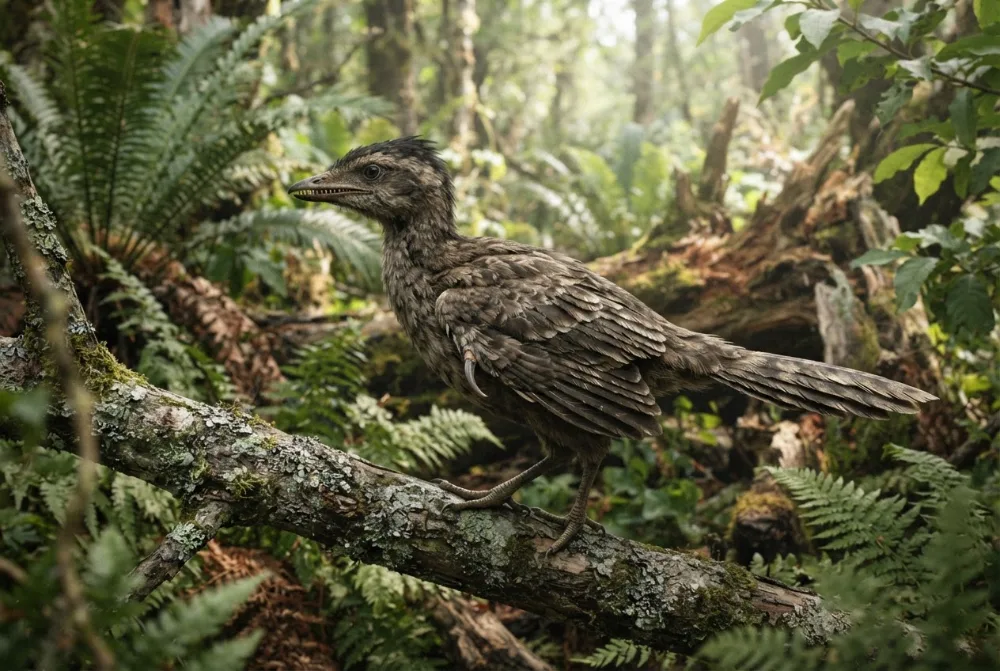
Gurilynia was a big, ancient bird that lived in Mongolia near the end of the Age of Dinosaurs. It was one of the largest birds of its time, about the size of a modern chicken but much heavier. It flew over dry plains and hunted for food.1
E tshetse leng?
E ne e le kgolo go le kae?
E ne e le telele go le kae?
E ne e le kwa godimo go le kae?
E ne e le bokete go le kae?
 e ka nna bokete jaaka katse ya mo gae🍌bokete jaaka dibanana di le 18🧱telele jaaka ditena tsa go tshameka di le 17 mo moleng🪑nnye mo e ka tsamayang ka fa tlase ga setulo⚽e ne e ka fofa go kgabaganya lebala lotlhe la kgwele ya dinao mo metsotswaneng e le 11
Gurilynia e ne e le kgolo go le kae fa e bapisiwa le WENA?
Ke dipalo fela mo sebatling sa gago. Ga go sepe se se bolokwang kgotsa se se romelwang gope.
E ne e le bonako go le kae?


Dintlha tse di monate
Gurilynia is known from only three partial bones: the top end of a right upper arm bone, the bottom end of a left upper arm bone, and the shoulder end of a left coracoid.1
It was the largest bird ever found from the Cretaceous period in Mongolia, weighing about 2.1 kilograms (4.6 pounds).1
The head of its upper arm bone was about 29 millimeters (1.1 inches) wide, much bigger than that of Pengornis, the largest Early Cretaceous enantiornithine.1
Gurilynia belonged to a group of ancient birds called enantiornithines, which had teeth and claws on their wings.1
It lived between 70 and 66 million years ago, right before the mass extinction that wiped out the non-avian dinosaurs.1
The fossils were found in the Nemegt Formation, which was a wet floodplain with rivers and forests during the Late Cretaceous.1
Ya baitseanape ba didino
- Leina la saense
- Gurilynia
- Leina le neilwe ke
- Kurochkin 19993
- Setlhopha
- Dinonyane tsa ntlha
- Lelapa / clade
- Enantiornithidae3
- Thulaganyo
- Theropoda > Avialae3
- Bogolo jwa matlapa
- 72 go ya go 66 dimilione tsa dingwaga (Maastrichtian)3
- Dibopego tsa matlapa
- Nemegt3
- Dinaga
- Mongolia3
- Direkoto tsa difosili
- 1 mo The Paleobiology Database3
- Go fitlhelwa
- Gurilynia was named by Russian paleontologist Evgeny Kurochkin in 1999, based on fossils collected from the Gurilyn Tsav locality in Mongolia. The species name nessovi honors a colleague.12
- Go sa ntse go ganetsanwa
- Scientists are not sure exactly how big Gurilynia was because only a few bone fragments have been found. The size estimates might change if more complete fossils are discovered.1
Kwa dintlha di tswang teng
- Gurilynia (en.wikipedia.org)
- PBDB Taxon (paleobiodb.org)
- Gurilynia in The Paleobiology Database (CC BY 4.0): dingwaga, mafelo, dibopego tsa matlapa, thulaganyo.
Ntlha nngwe le nngwe mo tsebeng eno e na le nomoro e e supang motswedi wa yona. Fa re dirile phoso, maitshwarelo, re barati ba didino, ga re lokwalodikgang lwa saense. Re bolelele kwa [email protected] mme re tla e baakanya.
 Rex o tshwerwe ke tlala! Dino Wiki ke porojeke ya rre e a e diretseng morwawe yo o ratang didino, ke mahala, ga e na dipapatso e bile ga e na dilatedi. Batho ba bagolo ba ka fepa Rex senyamo go thusa gore e nne mo inthaneteng.Fepa Rex
 Archaeopteryx
 Hesperornis
 Ichthyornis
 Baptornis
 Jurapteryx
 Gobipteryx
 Tyrannosaurus
 Triceratops
 Velociraptor
 Spinosaurus
 Ankylosaurus
 Parasaurolophus