 O dino efe? Kwisi
 Ntwa ya didino
 Peiso ya didino
 Metshamekwana ya didino
 Alebamo ya disetikara
 Manane a TOP a didino
 Ngakgamatsa!
Hagryphus
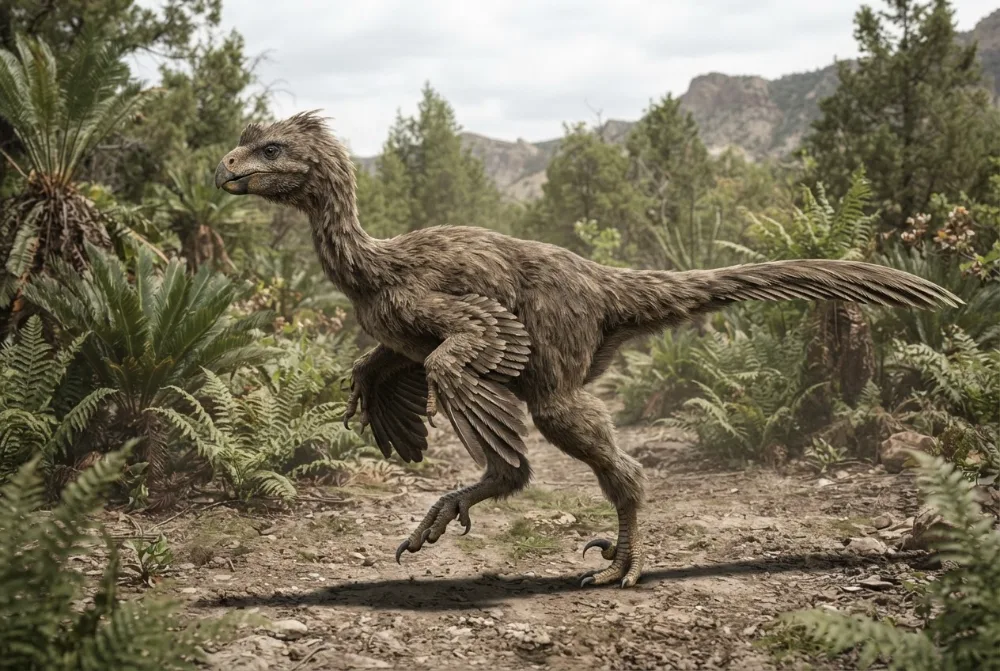
Hagryphus was a big, feathered dinosaur that lived in what is now Utah, USA, about 76 million years ago. It was one of the largest oviraptorosaurs in North America, and it probably used its toothless beak to eat plants and small animals.12
E tshetse leng?
E ne e le kgolo go le kae?
E ne e le telele go le kae?
E ne e le kwa godimo go le kae?
kakanyo
E ne e le bokete go le kae?
 telele jaaka dintšwa di le 3 go tswa kwa nkong go ya kwa mogatleng🍌telele jaaka dibanana di le 17 di latelana
 bokete jaaka dikatse tsa mo gae di le 12🍉bokete jaaka magapu a le 10🧸bokete jaaka bana ba kreše ba le 2.5🎒bokete jaaka bana ba sekolo ba le 1.5🏃e ne e ka taboga dimetara di le 100 mo metsotswaneng e le 7.7 (motho yo o bonako go gaisa o tlhoka 9,6)
Hagryphus e ne e le kgolo go le kae fa e bapisiwa le WENA?
Ke dipalo fela mo sebatling sa gago. Ga go sepe se se bolokwang kgotsa se se romelwang gope.
E ne e le bonako go le kae?


Dintlha tse di monate
Hagryphus was about 30 to 40 percent larger than the next largest North American oviraptorosaur, Chirostenotes.1
The only known fossil includes a nearly complete left hand, which was about a foot long, and some foot bones.1
Hagryphus lived near the shore of a huge inland sea called the Western Interior Seaway, in a wet, humid environment with swamps and lakes.1
It was probably covered in feathers, like other oviraptorosaurs, and some scientists think it might have been a true bird.1
The hand of Hagryphus had a very robust first finger, with a claw that was especially thick and strong.1
Dipotso tse di botswang thata ka ga Hagryphus
?How big was Hagryphus?
About 2.4 to 3 metres long and weighed around 50 kilograms.1
?Did Hagryphus have feathers?
Yes, evidence suggests it was feathered, like other oviraptorosaurs.1
?What did Hagryphus eat?
It had a toothless beak and probably ate plants or small animals, not just eggs.1
?When did Hagryphus live?
It lived about 76 million years ago, during the Late Cretaceous period.1
Mothubi wa ditlhamane
Tlhamane: Some people think Hagryphus ate only eggs because it had no teeth.
Boammaaruri: Scientists now think it likely ate plants and small vertebrates, not just eggs.1
Ya baitseanape ba didino
- Leina la saense
- Hagryphus
- Leina le neilwe ke
- Zanno and Sampson 20052
- Setlhopha
- Didino tse di sa tlwaelegang tsa dintsiba
- Lelapa / clade
- Caenagnathidae2
- Thulaganyo
- Theropoda > Oviraptorosauria2
- Bogolo jwa matlapa
- 84 go ya go 72 dimilione tsa dingwaga (Campanian)2
- Dibopego tsa matlapa
- Kaiparowits2
- Dinaga
- Amerika2
- Direkoto tsa difosili
- 1 mo The Paleobiology Database2
- Go fitlhelwa
- The fossil was found in 2002 by Michael Getty in southern Utah, and it was named Hagryphus giganteus by Lindsay Zanno and Scott Sampson in 2005.1
- Go sa ntse go ganetsanwa
- Scientists still debate whether Hagryphus was a member of the Caenagnathidae family or a more general oviraptorosaur, and whether it was a bird.1
Kwa dintlha di tswang teng
- Hagryphus (en.wikipedia.org)
- Hagryphus in The Paleobiology Database (CC BY 4.0): dingwaga, mafelo, dibopego tsa matlapa, thulaganyo.
Ntlha nngwe le nngwe mo tsebeng eno e na le nomoro e e supang motswedi wa yona. Fa re dirile phoso, maitshwarelo, re barati ba didino, ga re lokwalodikgang lwa saense. Re bolelele kwa [email protected] mme re tla e baakanya.
 Rex o tshwerwe ke tlala! Dino Wiki ke porojeke ya rre e a e diretseng morwawe yo o ratang didino, ke mahala, ga e na dipapatso e bile ga e na dilatedi. Batho ba bagolo ba ka fepa Rex senyamo go thusa gore e nne mo inthaneteng.Fepa Rex
Tse dingwe tsa setlhopha se le sengwe: Didino tse di sa tlwaelegang tsa dintsiba
 TherizinosaurusDidino tse di sa tlwaelegang tsa dintsiba
 OviraptorDidino tse di sa tlwaelegang tsa dintsiba
 ChirostenotesDidino tse di sa tlwaelegang tsa dintsiba
 CitipesDidino tse di sa tlwaelegang tsa dintsiba
 LeptorhynchosDidino tse di sa tlwaelegang tsa dintsiba
 AvimimusDidino tse di sa tlwaelegang tsa dintsiba
 Tyrannosaurus
 Triceratops
 Velociraptor
 Spinosaurus
 Ankylosaurus
 Parasaurolophus