 O dino efe? Kwisi
 Ntwa ya didino
 Peiso ya didino
 Metshamekwana ya didino
 Alebamo ya disetikara
 Manane a TOP a didino
 Ngakgamatsa!
Incisivosaurus
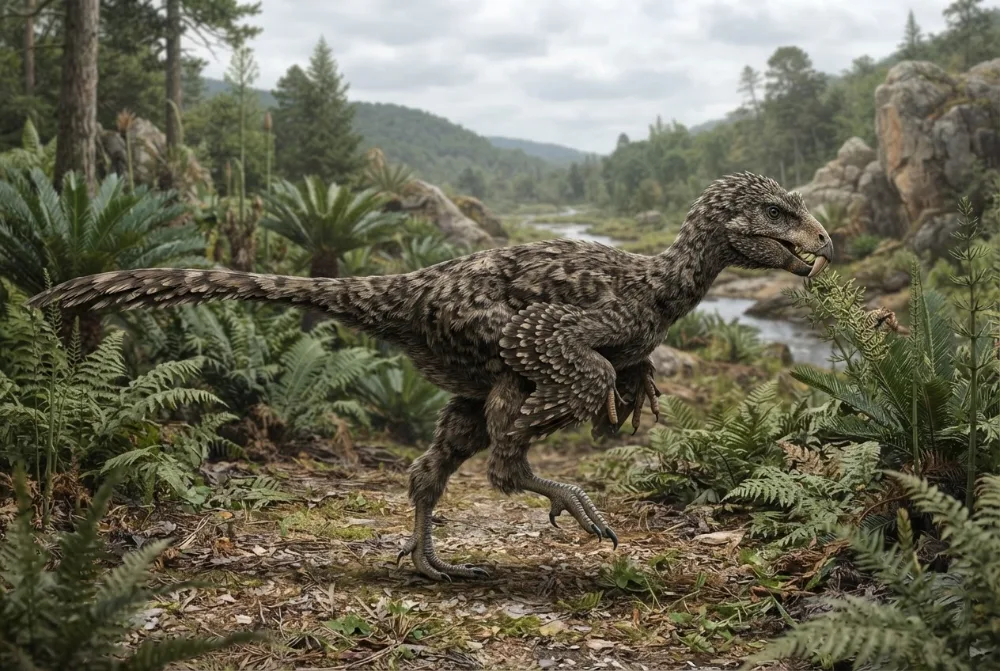
Incisivosaurus was a small, feathered dinosaur with a pair of big front teeth that looked like a rodent's incisors. It used these teeth to gnaw on plants, making it one of the first meat-eating dinosaurs known to eat mostly plants.12
E tshetse leng?
E ne e le kgolo go le kae?
E ne e le telele go le kae?
E ne e le kwa godimo go le kae?
kakanyo
 telele jaaka dikatse tsa mo gae di le 3 go tswa kwa nkong go ya kwa mogatleng🍌telele jaaka dibanana di le 8 di latelana🏃e ne e ka taboga dimetara di le 100 mo metsotswaneng e le 9.5 (motho yo o bonako go gaisa o tlhoka 9,6)
Incisivosaurus e ne e le kgolo go le kae fa e bapisiwa le WENA?
Ke dipalo fela mo sebatling sa gago. Ga go sepe se se bolokwang kgotsa se se romelwang gope.
E ne e le bonako go le kae?


Dintlha tse di monate
Incisivosaurus had a pair of very large, chisel-like front teeth that stuck out forward, just like a beaver or rabbit. No other meat-eating dinosaur had teeth like that.12
Its cheek teeth were small and shaped like lance heads, with big wear facets from chewing plants. This shows Incisivosaurus chewed its food, unlike many other dinosaurs.12
Incisivosaurus lived about 128 million years ago, making it the oldest known oviraptorosaur dinosaur. It was a basal member of this group.12
Its skull was low and had teeth, unlike later oviraptorosaurs which had short, toothless beaks. This helps scientists understand how oviraptorosaurs evolved.12
The name Incisivosaurus means 'incisor lizard' because of its rodent-like front teeth. The species name gauthieri honors paleontologist Jacques Gauthier.12
Incisivosaurus is known from a nearly complete skull and a neck vertebra. Its body size is estimated from the skull, which is about 10 cm long.2
It was a feathered dinosaur, like other oviraptorosaurs, and probably walked on two legs. It was a small dinosaur, about the size of a turkey.4
Dipotso tse di botswang thata ka ga Incisivosaurus
?What did Incisivosaurus eat?
It ate plants. Its rodent-like front teeth and worn cheek teeth show it was adapted for herbivory.31
?Did Incisivosaurus have feathers?
Yes, it had feathers. Two juvenile specimens show long vaned feathers on the hands and tail, and downy feathers on the body.3
Ya baitseanape ba didino
- Leina la saense
- Incisivosaurus
- Leina le neilwe ke
- Xu et al. 20024
- Setlhopha
- Didino tse di sa tlwaelegang tsa dintsiba
- Lelapa / clade
- Oviraptorosauria4
- Thulaganyo
- Theropoda > Oviraptorosauria4
- Bogolo jwa matlapa
- 126 go ya go 100 dimilione tsa dingwaga (Barremian / Albian)4
- Dibopego tsa matlapa
- Fuxin, Yixian, Shahai4
- Dinaga
- Tšhaena4
- Direkoto tsa difosili
- 4 mo The Paleobiology Database4
- Go fitlhelwa
- Incisivosaurus was named in 2002 by Xing Xu and colleagues from a skull and neck vertebra found in Liaoning, China. The fossils came from the Yixian Formation, which is about 128 million years old.12
- Go sa ntse go ganetsanwa
- Scientists are not sure if Incisivosaurus had feathers all over its body or just on some parts, because only the skull and a neck bone have been found.4
Kwa dintlha di tswang teng
- An unusual oviraptorosaurian dinosaur from China | Nature (nature.com)
- An unusual oviraptorosaurian dinosaur from China (ivpp.cas.cn)
- Incisivosaurus (en.wikipedia.org)
- Incisivosaurus in The Paleobiology Database (CC BY 4.0): dingwaga, mafelo, dibopego tsa matlapa, thulaganyo.
Ntlha nngwe le nngwe mo tsebeng eno e na le nomoro e e supang motswedi wa yona. Fa re dirile phoso, maitshwarelo, re barati ba didino, ga re lokwalodikgang lwa saense. Re bolelele kwa [email protected] mme re tla e baakanya.
 Rex o tshwerwe ke tlala! Dino Wiki ke porojeke ya rre e a e diretseng morwawe yo o ratang didino, ke mahala, ga e na dipapatso e bile ga e na dilatedi. Batho ba bagolo ba ka fepa Rex senyamo go thusa gore e nne mo inthaneteng.Fepa Rex
Tse dingwe tsa setlhopha se le sengwe: Didino tse di sa tlwaelegang tsa dintsiba
 TherizinosaurusDidino tse di sa tlwaelegang tsa dintsiba
 OviraptorDidino tse di sa tlwaelegang tsa dintsiba
 ChirostenotesDidino tse di sa tlwaelegang tsa dintsiba
 CitipesDidino tse di sa tlwaelegang tsa dintsiba
 LeptorhynchosDidino tse di sa tlwaelegang tsa dintsiba
 AvimimusDidino tse di sa tlwaelegang tsa dintsiba
 Stegosaurus
 Iguanodon
 Archaeopteryx
 Giganotosaurus
 Microraptor
 Deinonychus