 O dino efe? Kwisi
 Ntwa ya didino
 Peiso ya didino
 Metshamekwana ya didino
 Alebamo ya disetikara
 Manane a TOP a didino
 Ngakgamatsa!
E tshetse leng?

E ne e le kgolo go le kae?
E ne e le telele go le kae?
E ne e le kwa godimo go le kae?
E ne e le bokete go le kae?
 telele jaaka dikatse tsa mo gae di le 2 go tswa kwa nkong go ya kwa mogatleng🍌telele jaaka dibanana di le 6 di latelanae ka nna bokete jaaka katse ya mo gae🍌bokete jaaka dibanana di le 42🏃e ne e ka taboga dimetara di le 100 mo metsotswaneng e le 12 (motho yo o bonako go gaisa o tlhoka 9,6)
Jaculinykus e ne e le kgolo go le kae fa e bapisiwa le WENA?
Ke dipalo fela mo sebatling sa gago. Ga go sepe se se bolokwang kgotsa se se romelwang gope.
E ne e le bonako go le kae?


Dintlha tse di monate
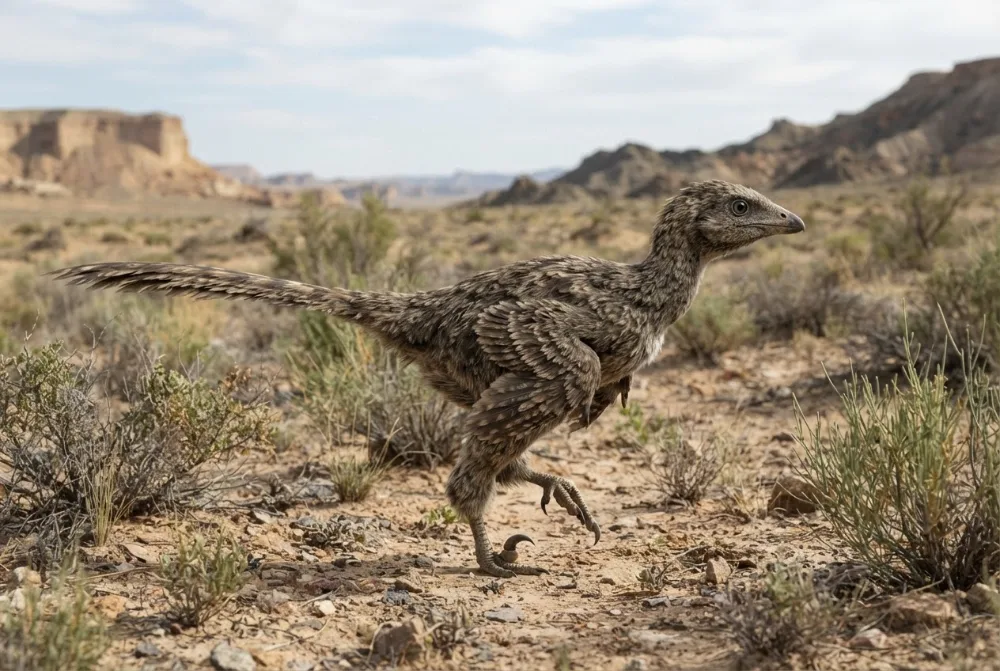
Jaculinykus had only two fingers on each hand. Its first finger was huge with a big claw, and its second finger was tiny.12
The fossil of Jaculinykus was found in a sleeping position. Its neck was curled back and its legs were tucked under its body, just like modern birds.12
Its name means 'speedy dragon' in a mix of Greek and Mongolian. 'Yaruui' means 'speedy' in Mongolian.1
Jaculinykus lived about 83 to 72 million years ago during the Late Cretaceous period.5
Dipotso tse di botswang thata ka ga Jaculinykus
?How big was Jaculinykus?
Jaculinykus was a tiny dinosaur, about the size of a modern turkey or a large chicken. Its nearly complete skeleton is small and delicate.13
?What did Jaculinykus eat?
Jaculinykus probably ate insects. It had a big thumb claw that it used to dig into insect nests, and its flexible skull may have helped it eat larger, struggling bugs.4
?Did Jaculinykus have feathers?
Yes, Jaculinykus was a feathered dinosaur. It was a maniraptoran theropod, a group that includes birds, and scientists think it was covered in feathers.4
Ya baitseanape ba didino
- Leina la saense
- Jaculinykus
- Leina le neilwe ke
- Kubo et al. 20235
- Setlhopha
- Didino tse di sa tlwaelegang tsa dintsiba
- Lelapa / clade
- Alvarezsauridae5
- Thulaganyo
- Theropoda > Alvarezsauridae5
- Bogolo jwa matlapa
- 84 go ya go 72 dimilione tsa dingwaga (Campanian)5
- Dibopego tsa matlapa
- Baruungoyot5
- Dinaga
- Mongolia5
- Direkoto tsa difosili
- 1 mo The Paleobiology Database5
- Go fitlhelwa
- Jaculinykus was named in 2023 by a team of scientists including K. Kubo, Y. Kobayashi, T. Chinzorig, and K. Tsogtbaatar. The nearly complete skeleton was found in the Baruungoyot Formation of Mongolia.15
- Go sa ntse go ganetsanwa
- Scientists are still debating exactly how Jaculinykus used its big thumb claw. It might have been for digging for insects or for tearing open logs.12
Kwa dintlha di tswang teng
- A new alvarezsaurid dinosaur (Theropoda, Alvarezsauria) from the Upper Cretaceous Baruungoyot Formation of Mongolia provides insights for bird-like sleeping behavior in non-avian dinosaurs | PLOS One (journals.plos.org)
- A new alvarezsaurid dinosaur (Theropoda, Alvarezsauria) from the Upper Cretaceous Baruungoyot Formation of Mongolia provides insights for bird-like sleeping behavior in non-avian dinosaurs (pmc.ncbi.nlm.nih.gov)
- Jaculinykus (en.wikipedia.org)
- New species of big-thumbed dinosaur discovered in Mongolia | Natural History Museum (nhm.ac.uk)
- Jaculinykus in The Paleobiology Database (CC BY 4.0): dingwaga, mafelo, dibopego tsa matlapa, thulaganyo.
Ntlha nngwe le nngwe mo tsebeng eno e na le nomoro e e supang motswedi wa yona. Fa re dirile phoso, maitshwarelo, re barati ba didino, ga re lokwalodikgang lwa saense. Re bolelele kwa [email protected] mme re tla e baakanya.
 Rex o tshwerwe ke tlala! Dino Wiki ke porojeke ya rre e a e diretseng morwawe yo o ratang didino, ke mahala, ga e na dipapatso e bile ga e na dilatedi. Batho ba bagolo ba ka fepa Rex senyamo go thusa gore e nne mo inthaneteng.Fepa Rex
Tse dingwe tsa setlhopha se le sengwe: Didino tse di sa tlwaelegang tsa dintsiba
 TherizinosaurusDidino tse di sa tlwaelegang tsa dintsiba
 OviraptorDidino tse di sa tlwaelegang tsa dintsiba
 ChirostenotesDidino tse di sa tlwaelegang tsa dintsiba
 CitipesDidino tse di sa tlwaelegang tsa dintsiba
 LeptorhynchosDidino tse di sa tlwaelegang tsa dintsiba
 AvimimusDidino tse di sa tlwaelegang tsa dintsiba
 Tyrannosaurus
 Triceratops
 Velociraptor
 Spinosaurus
 Ankylosaurus
 Parasaurolophus