 O dino efe? Kwisi
 Ntwa ya didino
 Peiso ya didino
 Metshamekwana ya didino
 Alebamo ya disetikara
 Manane a TOP a didino
 Ngakgamatsa!
E tshetse leng?

E ne e le kgolo go le kae?
Diphuka tsa yona di ne di namegile go le kae?
E ne e le bokete go le kae?
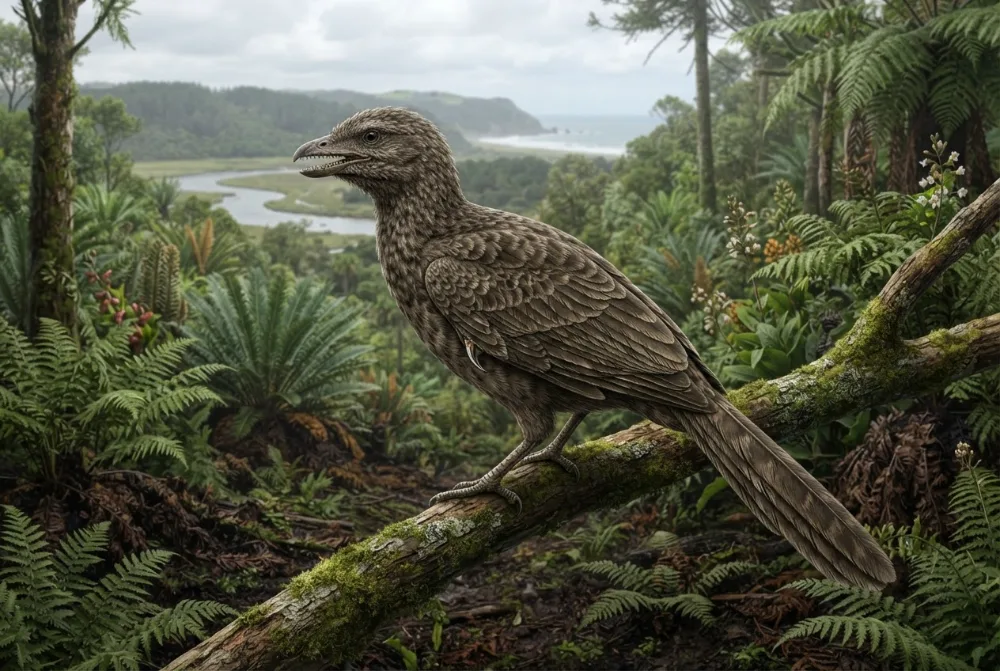
 telele jaaka dikatse tsa mo gae di le 3 go tswa kwa nkong go ya kwa mogatleng🪶bofefo go feta katse ya mo gae🍌bokete jaaka dibanana di le 13⚽e ne e ka fofa go kgabaganya lebala lotlhe la kgwele ya dinao mo metsotswaneng e le 9
Janavis e ne e le kgolo go le kae fa e bapisiwa le WENA?
Ke dipalo fela mo sebatling sa gago. Ga go sepe se se bolokwang kgotsa se se romelwang gope.
E ne e le bonako go le kae?


Dintlha tse di monate
Janavis lived about 66.8 million years ago, just 800,000 years before the asteroid that killed the dinosaurs.1
Its wing bones were hollow and filled with air, like modern birds, making it lighter for flying.1
The fossil was found in a Belgian quarry in 2000 by an amateur fossil hunter named Rudi Dortangs.1
Janavis had a skull that could move its upper jaw up and down, a feature of modern birds called neognathous palate.1
Scientists first thought a piece of its skull was a wing bone, until a CT scan in 2021 showed the truth.1
Janavis was bigger than its relative Ichthyornis, with a wingspan of about 1.5 metres (5 feet).1
Dipotso tse di botswang thata ka ga Janavis
?How big was Janavis?
Janavis was a relatively large bird, with an estimated wingspan of about 1.5 metres (5 feet) and a weight of around 1.5 kilograms (3.3 pounds).12
?Did Janavis have teeth?
Yes, Janavis had teeth. It was one of the last toothed birds to ever live.12
?When did Janavis live?
Janavis lived about 66.8 million years ago, right at the end of the Cretaceous period, just 800,000 years before the asteroid impact.1
?Could Janavis fly?
Yes, Janavis could fly. Its wing bones were hollow and filled with air, like modern birds, making it lighter for flying.1
Mothubi wa ditlhamane
Tlhamane: All ancient birds had rigid skulls like dinosaurs.
Boammaaruri: Janavis had a flexible skull like modern chickens and ducks, showing that movable skulls evolved early.1
Ya baitseanape ba didino
- Leina la saense
- Janavis
- Leina le neilwe ke
- Benito et al. 20223
- Setlhopha
- Dinonyane tsa ntlha
- Lelapa / clade
- Ichthyornithes3
- Thulaganyo
- Theropoda > Avialae3
- Bogolo jwa matlapa
- 72 go ya go 66 dimilione tsa dingwaga (Maastrichtian)3
- Dibopego tsa matlapa
- Maastricht3
- Dinaga
- Belejiamo3
- Direkoto tsa difosili
- 1 mo The Paleobiology Database3
- Go fitlhelwa
- The fossil was collected in 2000 by amateur palaeontologist Rudi Dortangs in Belgium. It was first reported in 2002, and in 2022 scientists named it Janavis finalidens after CT scans revealed its true identity.1
- Go sa ntse go ganetsanwa
- Scientists debate whether Janavis could fly as well as modern birds, because its wing bones were very air-filled but its shoulder blade lacked a normal hook.1
Kwa dintlha di tswang teng
- Janavis (en.wikipedia.org)
- Bird beak evolved before dinosaur extinction | University of Cambridge (cam.ac.uk)
- Janavis in The Paleobiology Database (CC BY 4.0): dingwaga, mafelo, dibopego tsa matlapa, thulaganyo.
Ntlha nngwe le nngwe mo tsebeng eno e na le nomoro e e supang motswedi wa yona. Fa re dirile phoso, maitshwarelo, re barati ba didino, ga re lokwalodikgang lwa saense. Re bolelele kwa [email protected] mme re tla e baakanya.
 Rex o tshwerwe ke tlala! Dino Wiki ke porojeke ya rre e a e diretseng morwawe yo o ratang didino, ke mahala, ga e na dipapatso e bile ga e na dilatedi. Batho ba bagolo ba ka fepa Rex senyamo go thusa gore e nne mo inthaneteng.Fepa Rex
 Archaeopteryx
 Hesperornis
 Ichthyornis
 Baptornis
 Jurapteryx
 Gobipteryx
 Tyrannosaurus
 Triceratops
 Velociraptor
 Spinosaurus
 Ankylosaurus
 Parasaurolophus