 O dino efe? Kwisi
 Ntwa ya didino
 Peiso ya didino
 Metshamekwana ya didino
 Alebamo ya disetikara
 Manane a TOP a didino
 Ngakgamatsa!
Jobaria
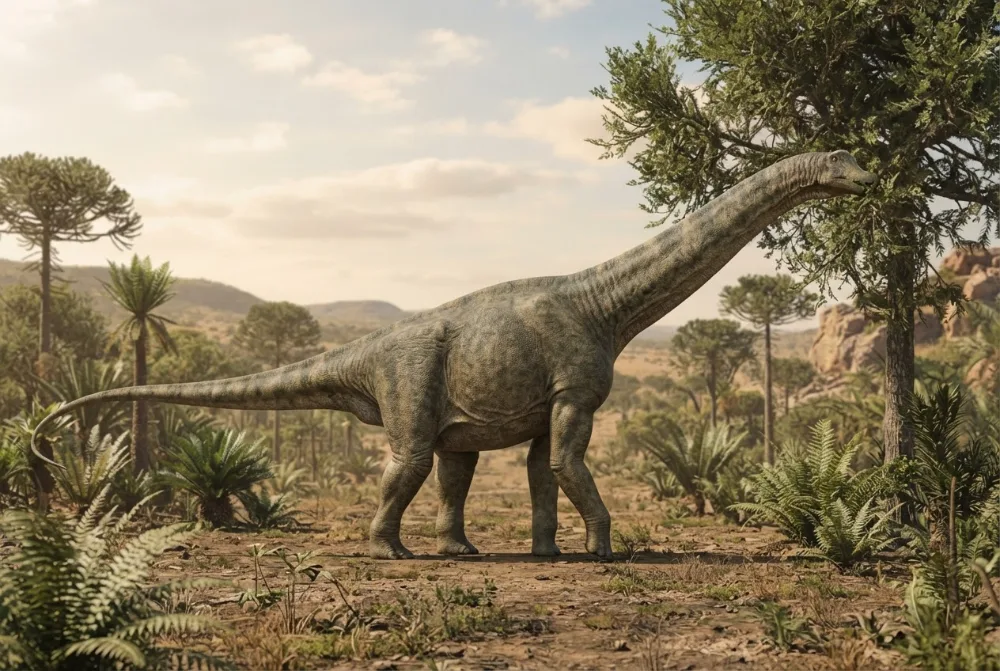
Jobaria was a huge, long-necked plant eater that stomped through the Sahara Desert millions of years ago. It was one of the most complete sauropod skeletons ever found, so scientists know a lot about it!1
E tshetse leng?
E ne e le kgolo go le kae?
E ne e le telele go le kae?
E ne e le kwa godimo go le kae?
E ne e le bokete go le kae?

 telele jaaka dikoloi di le 5 di emisitswe mo moleng🍌telele jaaka dibanana di le 120 di latelanabokete jaaka dikoloi di le 15🍉bokete jaaka magapu a le 4500🎒bokete jaaka diphaposiborutelo tse di tletseng bana di le 28🐻❄️bokete jaaka dibere tse ditshweu di le 50🏢kwa godimo mo e ka kgalalelang mo fensetereng ya mokato wa 2🏃e ne e ka taboga dimetara di le 100 mo metsotswaneng e le 30 (motho yo o bonako go gaisa o tlhoka 9,6)
Jobaria e ne e le kgolo go le kae fa e bapisiwa le WENA?
Ke dipalo fela mo sebatling sa gago. Ga go sepe se se bolokwang kgotsa se se romelwang gope.
E ne e le bonako go le kae?


Dintlha tse di monate
Jobaria is one of the most complete sauropods ever found, with over 95% of its skeleton preserved.1
Its backbone and tail were simpler than those of later sauropods like Diplodocus, which had complex vertebrae and a whiplash tail.1
Scientists think Jobaria could rear up on its hind legs, like elephants can, because its weight was supported more by its back legs.1
Jobaria lived during the Middle Jurassic, about 167 to 161 million years ago, though some sources say Early Cretaceous.12
The name Jobaria comes from a mythical giant beast called Jobar, whose bones some Tuareg people thought the fossils were.1
Jobaria was discovered in 1997 during a four-month expedition led by paleontologist Paul Sereno.1
Dipotso tse di botswang thata ka ga Jobaria
?How big was Jobaria?
About 18.2 metres (60 feet) long and weighing around 22.4 tonnes (24.7 short tons), though some scientists give a smaller estimate of 16 metres (52 feet) and 16 tonnes (18 short tons).1
?What did Jobaria eat?
It was a plant eater, or herbivore, chomping on leaves and other vegetation.2
?Could Jobaria rear up on its hind legs?
Yes, scientists think it could, like elephants do, because its weight was supported more by its back legs.1
?When did Jobaria live?
It lived during the Middle Jurassic Period, about 167 to 161 million years ago, though some older sources say Early Cretaceous.1
Mothubi wa ditlhamane
Tlhamane: Some people think Jobaria lived during the Early Cretaceous, about 132 million years ago.
Boammaaruri: Scientists now think the rocks where it was found are actually Middle Jurassic, about 167 to 161 million years old.1
Ya baitseanape ba didino
- Leina la saense
- Jobaria
- Leina le neilwe ke
- Sereno et al. 19995
- Setlhopha
- Melala-meleele
- Lelapa / clade
- Eusauropoda5
- Thulaganyo
- Sauropodomorpha > Sauropoda5
- Bogolo jwa matlapa
- 162 go ya go 143 dimilione tsa dingwaga (Oxfordian / Tithonian)5
- Dibopego tsa matlapa
- Tiourarén5
- Dinaga
- Niger5
- Direkoto tsa difosili
- 2 mo The Paleobiology Database5
- Go fitlhelwa
- Jobaria was discovered in 1997 by a team led by Paul Sereno, during an expedition in the Sahara Desert. It was found in a mass-death site in Niger, and the species was named Jobaria tiguidensis in 1999.15
- Go sa ntse go ganetsanwa
- Scientists are still debating exactly where Jobaria fits in the sauropod family tree. Some think it is a basal macronarian, while others think it is a non-neosauropod eusauropod.1
Kwa dintlha di tswang teng
- Jobaria (en.wikipedia.org)
- Jobaria | Natural History Museum (nhm.ac.uk)
- Discoveries | Paul Sereno - Paleontologist | The University of Chicago (paulsereno.uchicago.edu)
- paulsereno.uchicago.edu (paulsereno.uchicago.edu)
- Jobaria in The Paleobiology Database (CC BY 4.0): dingwaga, mafelo, dibopego tsa matlapa, thulaganyo.
Ntlha nngwe le nngwe mo tsebeng eno e na le nomoro e e supang motswedi wa yona. Fa re dirile phoso, maitshwarelo, re barati ba didino, ga re lokwalodikgang lwa saense. Re bolelele kwa [email protected] mme re tla e baakanya.
 Rex o tshwerwe ke tlala! Dino Wiki ke porojeke ya rre e a e diretseng morwawe yo o ratang didino, ke mahala, ga e na dipapatso e bile ga e na dilatedi. Batho ba bagolo ba ka fepa Rex senyamo go thusa gore e nne mo inthaneteng.Fepa Rex
 Brachiosaurus
 Diplodocus
 Brontosaurus
 Argentinosaurus
 Camarasaurus
 Morosaurus
 Allosaurus
 Compsognathus
 Camptosaurus
 Nanosaurus
 Rhamphorhynchus
 Ceratosaurus