 O dino efe? Kwisi
 Ntwa ya didino
 Peiso ya didino
 Metshamekwana ya didino
 Alebamo ya disetikara
 Manane a TOP a didino
 Ngakgamatsa!
Kank
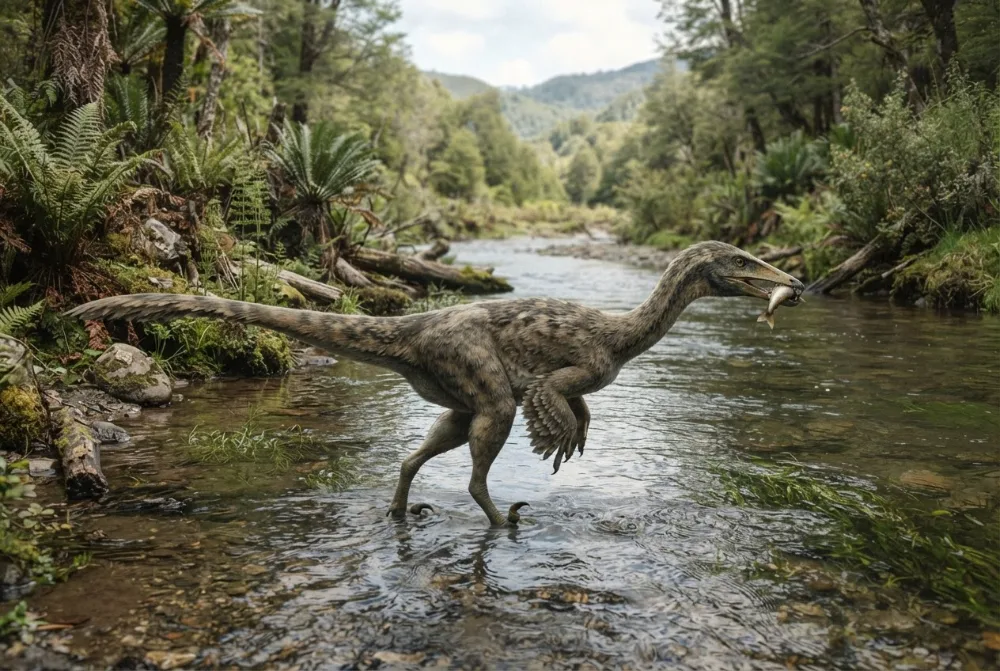
Kank was a fish-eating dinosaur that lived like a modern heron. It waded in rivers and streams in southern Patagonia, using its long neck to snatch fish. This raptor-like dinosaur was about the size of a small car.1
E tshetse leng?
E ne e le kgolo go le kae?
E ne e le telele go le kae?
E ne e le kwa godimo go le kae?
kakanyo
 telele jaaka dintšwa di le 3 go tswa kwa nkong go ya kwa mogatleng🍌telele jaaka dibanana di le 17 di latelana🏃e ne e ka taboga dimetara di le 100 mo metsotswaneng e le 7.2 (motho yo o bonako go gaisa o tlhoka 9,6)
Kank e ne e le kgolo go le kae fa e bapisiwa le WENA?
Ke dipalo fela mo sebatling sa gago. Ga go sepe se se bolokwang kgotsa se se romelwang gope.
E ne e le bonako go le kae?


Dintlha tse di monate
Kank lived about 70 million years ago in a warm, wet place with rivers and ponds.1
Its neck bones had air chambers inside, making them light and strong.1
Kank had a big claw on its second toe, like other raptors, but it probably used it for fishing, not hunting on land.1
The first Kank fossils were found in 2018, but scientists needed more bones to know it was a new species.1
Kank shared its home with giant predators like Maip macrothorax, a megaraptorid over 10 metres long.1
Kank is part of a group called unenlagiids, which are found in South America, Antarctica, Australia and Madagascar.1
Dipotso tse di botswang thata ka ga Kank
?What did Kank eat?
Kank mostly ate fish, like a modern heron. It may have also eaten frogs, lizards, turtles and small mammals that lived in its wetland home.12
?Did Kank have feathers?
Scientists think Kank probably had feathers, because it belongs to a group of dinosaurs called unenlagiids that are closely related to birds. No direct feather fossils of Kank have been found yet.2
?When did Kank live?
Kank lived about 70 million years ago, during the Late Cretaceous period. That was near the very end of the age of dinosaurs.12
?Where was Kank found?
Kank was discovered at La Anita farm near El Calafate in Santa Cruz, Argentina. The fossils come from the Chorrillo Formation in southern Patagonia.12
?Was Kank bigger than Velociraptor?
Yes, Kank was a bit bigger. Velociraptor was about 2 metres long, while Kank grew up to 3 metres long.1
Mothubi wa ditlhamane
Tlhamane: All raptor-like dinosaurs were fast land hunters like Velociraptor.
Boammaaruri: Kank was a fish-eater that behaved like a heron, not a speedy land predator.1
Ya baitseanape ba didino
- Leina la saense
- Kank
- Leina le neilwe ke
- Motta et al. 20263
- Setlhopha
- Didino tse di jang nama
- Lelapa / clade
- Unenlagiidae3
- Thulaganyo
- Theropoda3
- Bogolo jwa matlapa
- 72 go ya go 66 dimilione tsa dingwaga (Maastrichtian)3
- Dibopego tsa matlapa
- Chorrillo3
- Dinaga
- Arejentina3
- Direkoto tsa difosili
- 2 mo The Paleobiology Database3
- Go fitlhelwa
- Kank was named by Matías Motta and his team in 2026, based on fossils found at La Anita farm in Argentina from 2018 to 2024.1
- Go sa ntse go ganetsanwa
- Scientists are not sure if Kank also ate other animals like frogs or mammals, or only fish.1
Kwa dintlha di tswang teng
- Heron-like, fish-eating dinosaur from 70 million years ago discovered in Argentina | EurekAlert! (eurekalert.org)
- Kank (Wikipedia) (Wikipedia)
- Kank in The Paleobiology Database (CC BY 4.0): dingwaga, mafelo, dibopego tsa matlapa, thulaganyo.
Ntlha nngwe le nngwe mo tsebeng eno e na le nomoro e e supang motswedi wa yona. Fa re dirile phoso, maitshwarelo, re barati ba didino, ga re lokwalodikgang lwa saense. Re bolelele kwa [email protected] mme re tla e baakanya.
 Rex o tshwerwe ke tlala! Dino Wiki ke porojeke ya rre e a e diretseng morwawe yo o ratang didino, ke mahala, ga e na dipapatso e bile ga e na dilatedi. Batho ba bagolo ba ka fepa Rex senyamo go thusa gore e nne mo inthaneteng.Fepa Rex
 Allosaurus
 Carnotaurus
 Dilophosaurus
 Giganotosaurus
 Compsognathus
 Paronychodon
 Tyrannosaurus
 Triceratops
 Velociraptor
 Spinosaurus
 Ankylosaurus
 Parasaurolophus