 O dino efe? Kwisi
 Ntwa ya didino
 Peiso ya didino
 Metshamekwana ya didino
 Alebamo ya disetikara
 Manane a TOP a didino
 Ngakgamatsa!
E tshetse leng?

E ne e le kgolo go le kae?
E ne e le telele go le kae?
E ne e le kwa godimo go le kae?
kakanyo
E ne e le bokete go le kae?
 telele jaaka dikoloi di le 2 di emisitswe mo moleng🍌telele jaaka dibanana di le 50 di latelana
 bokete jaaka dintšwa di le 120🍉bokete jaaka magapu a le 500🎒bokete jaaka diphaposiborutelo tse di tletseng bana di le 3🐻❄️bokete jaaka dibere tse ditshweu di le 6🏃e ne e ka taboga dimetara di le 100 mo metsotswaneng e le 16 (motho yo o bonako go gaisa o tlhoka 9,6)
Kotasaurus e ne e le kgolo go le kae fa e bapisiwa le WENA?
Ke dipalo fela mo sebatling sa gago. Ga go sepe se se bolokwang kgotsa se se romelwang gope.
E ne e le bonako go le kae?


Dintlha tse di monate
Kotasaurus is one of the earliest and most primitive sauropods known.1
Fossils from at least 12 different Kotasaurus individuals have been found together in one spot.1
Kotasaurus had a tail club, which it may have used to fight other dinosaurs or defend itself.1
Its thigh bone was straight and oval in cross-section, like later giant sauropods.1
No skull has been found, only two teeth, so scientists are not sure what its head looked like.1
Kotasaurus lived alongside another early sauropod called Barapasaurus.1
Dipotso tse di botswang thata ka ga Kotasaurus
?How big was Kotasaurus?
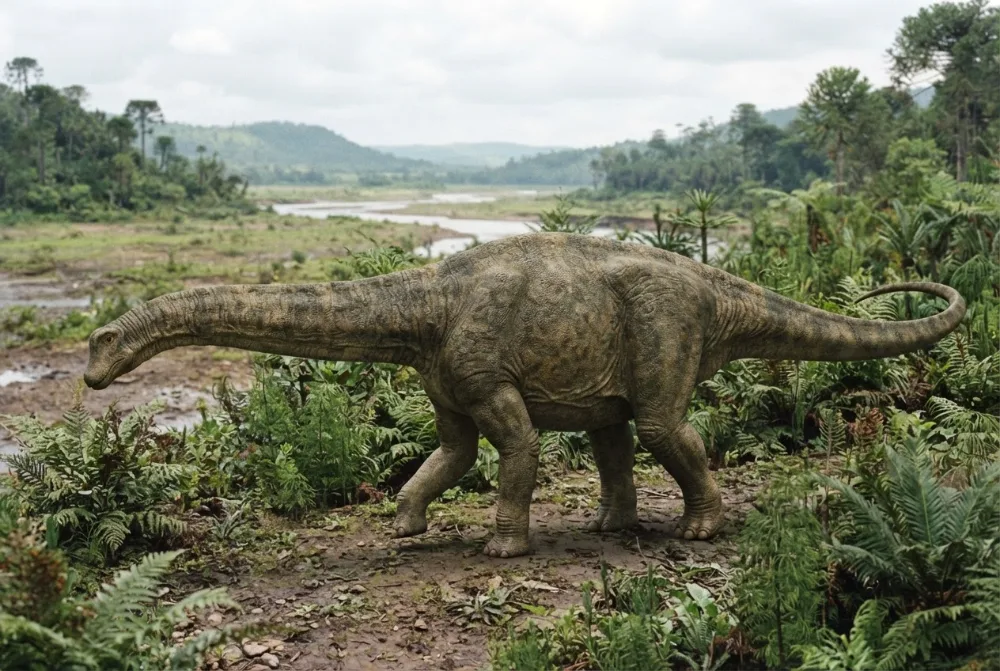
Kotasaurus was about 9 metres (30 feet) long and weighed around 2.5 tonnes (2.8 tons). That is about as heavy as a small elephant.1
?What did Kotasaurus eat?
Kotasaurus was a herbivore, meaning it ate plants. Its spoon-shaped teeth were good for stripping leaves.12
?Where was Kotasaurus found?
Kotasaurus fossils were found near the village of Yamanpalli in Telangana, India, in the Kota Formation. All known fossils come from one spot about 2,400 square metres (26,000 square feet) in size.1
Ya baitseanape ba didino
- Leina la saense
- Kotasaurus
- Leina le neilwe ke
- Yadagiri 19882
- Setlhopha
- Melala-meleele
- Lelapa / clade
- Sauropoda2
- Thulaganyo
- Sauropodomorpha > Sauropoda2
- Bogolo jwa matlapa
- 200 go ya go 184 dimilione tsa dingwaga (Sinemurian / Pliensbachian)2
- Dibopego tsa matlapa
- Kota2
- Dinaga
- India2
- Direkoto tsa difosili
- 2 mo The Paleobiology Database2
- Go fitlhelwa
- Kotasaurus was named and described by P. Yadagiri in 1988. The fossils were found in the late 1970s near the village of Yamanpalli in India.12
- Go sa ntse go ganetsanwa
- Scientists are not sure exactly how Kotasaurus is related to other early sauropods, though it is considered one of the most basal.1
Kwa dintlha di tswang teng
- Kotasaurus (en.wikipedia.org)
- Kotasaurus in The Paleobiology Database (CC BY 4.0): dingwaga, mafelo, dibopego tsa matlapa, thulaganyo.
Ntlha nngwe le nngwe mo tsebeng eno e na le nomoro e e supang motswedi wa yona. Fa re dirile phoso, maitshwarelo, re barati ba didino, ga re lokwalodikgang lwa saense. Re bolelele kwa [email protected] mme re tla e baakanya.
 Rex o tshwerwe ke tlala! Dino Wiki ke porojeke ya rre e a e diretseng morwawe yo o ratang didino, ke mahala, ga e na dipapatso e bile ga e na dilatedi. Batho ba bagolo ba ka fepa Rex senyamo go thusa gore e nne mo inthaneteng.Fepa Rex
 Brachiosaurus
 Diplodocus
 Brontosaurus
 Argentinosaurus
 Camarasaurus
 Morosaurus
 Dilophosaurus
 Stenopterygius
 Dorygnathus
 Scutellosaurus
 Sinosaurus
 Temnodontosaurus