 O dino efe? Kwisi
 Ntwa ya didino
 Peiso ya didino
 Metshamekwana ya didino
 Alebamo ya disetikara
 Manane a TOP a didino
 Ngakgamatsa!
Kunbarrasaurus
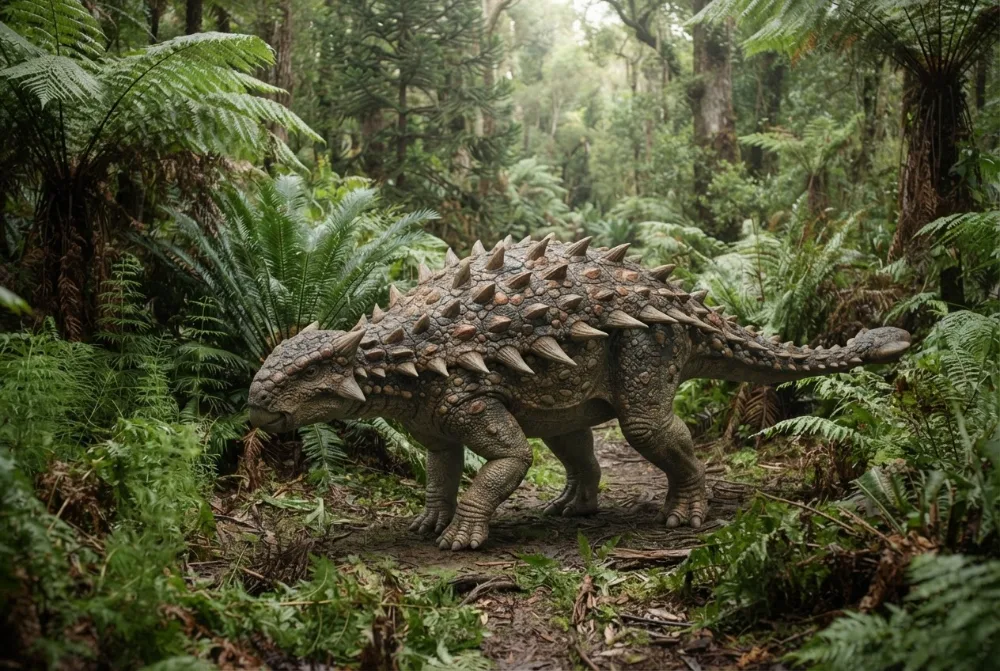
Kunbarrasaurus was a small, armoured dinosaur that walked on four legs and munched on plants. It had bony plates and spikes all over its body, like a walking tank. This dinosaur lived in Australia during the Early Cretaceous, about 105 million years ago.13
E tshetse leng?
E ne e le kgolo go le kae?
E ne e le telele go le kae?
E ne e le kwa godimo go le kae?
kakanyo
 telele jaaka dintšwa di le 4 go tswa kwa nkong go ya kwa mogatleng🍌telele jaaka dibanana di le 19 di latelana🏃e ne e ka taboga dimetara di le 100 mo metsotswaneng e le 16 (motho yo o bonako go gaisa o tlhoka 9,6)
Kunbarrasaurus e ne e le kgolo go le kae fa e bapisiwa le WENA?
Ke dipalo fela mo sebatling sa gago. Ga go sepe se se bolokwang kgotsa se se romelwang gope.
E ne e le bonako go le kae?


Dintlha tse di monate
Kunbarrasaurus is one of the most complete armoured dinosaurs ever found, with most of its skeleton and skull preserved.1
Its gut contents show it ate fibrous plant parts, seeds, and fruiting bodies, and it probably chopped food in its mouth instead of using stomach stones.1
The dinosaur had a ring of scutes around its neck, and its body was covered with small, keeled plates and spikes.1
Kunbarrasaurus had a very large inner ear, unlike any other dinosaur known, which may have helped with balance or hearing.2
The fossil was found in marine rocks, so the dinosaur may have washed out to sea after death.1
It is the second genus of armoured dinosaur from Australia, and its name means 'shield lizard' in the local Aboriginal language.1
Dipotso tse di botswang thata ka ga Kunbarrasaurus
?How big was Kunbarrasaurus?
About 2.5 to 3.5 metres long. That is roughly the size of a large motorcycle.1
?What did Kunbarrasaurus eat?
It ate plants, including fibrous leaves, seeds and fruiting bodies. Scientists know this because its last meal was preserved inside its fossil.1
?Did Kunbarrasaurus have a tail club?
Probably not. Its tail is not fully preserved, but some of its relatives had a flat, blade-like structure at the tail tip instead of a club.1
?Where was Kunbarrasaurus found?
In Queensland, Australia, near Richmond. The fossil was discovered in marine rocks, so the dinosaur may have washed out to sea after death.1
?When did Kunbarrasaurus live?
It lived during the Early Cretaceous, about 105 million years ago.1
?Is Kunbarrasaurus a dinosaur?
Yes, it is a small armoured dinosaur called an ankylosaurian.1
Mothubi wa ditlhamane
Tlhamane: Kunbarrasaurus used its tail like a club to defend itself.
Boammaaruri: There is no evidence of a tail club in Kunbarrasaurus. Its tail had triangular plates and scutes, but no club.1
Ya baitseanape ba didino
- Leina la saense
- Kunbarrasaurus
- Leina le neilwe ke
- Leahey et al. 20153
- Setlhopha
- Didino tse di nang le thebe
- Lelapa / clade
- Parankylosauria3
- Thulaganyo
- Ornithischia > Ankylosauria > Thyreophora3
- Bogolo jwa matlapa
- 106 go ya go 100 dimilione tsa dingwaga (Albian)3
- Dibopego tsa matlapa
- Toolebuc3
- Dinaga
- Ositerelia3
- Direkoto tsa difosili
- 2 mo The Paleobiology Database3
- Go fitlhelwa
- The skeleton was found in 1989 by Ian Ievers on Marathon Station in Queensland, Australia. It was named Kunbarrasaurus ieversi in 2015 by scientists including Lucy Leahey.1
- Go sa ntse go ganetsanwa
- Scientists are still debating whether Kunbarrasaurus is a primitive or derived ankylosaur, because it has a mix of both ancient and advanced features.2
Kwa dintlha di tswang teng
- Kunbarrasaurus (en.wikipedia.org)
- doi:10.7717/peerj.1475 (people.ohio.edu)
- Kunbarrasaurus in The Paleobiology Database (CC BY 4.0): dingwaga, mafelo, dibopego tsa matlapa, thulaganyo.
Ntlha nngwe le nngwe mo tsebeng eno e na le nomoro e e supang motswedi wa yona. Fa re dirile phoso, maitshwarelo, re barati ba didino, ga re lokwalodikgang lwa saense. Re bolelele kwa [email protected] mme re tla e baakanya.
 Rex o tshwerwe ke tlala! Dino Wiki ke porojeke ya rre e a e diretseng morwawe yo o ratang didino, ke mahala, ga e na dipapatso e bile ga e na dilatedi. Batho ba bagolo ba ka fepa Rex senyamo go thusa gore e nne mo inthaneteng.Fepa Rex
 Ankylosaurus
 Sauropelta
 Pinacosaurus
 Scutellosaurus
 Struthiosaurus
 Euoplocephalus
 Stegosaurus
 Iguanodon
 Archaeopteryx
 Giganotosaurus
 Microraptor
 Deinonychus