 O dino efe? Kwisi
 Ntwa ya didino
 Peiso ya didino
 Metshamekwana ya didino
 Alebamo ya disetikara
 Manane a TOP a didino
 Ngakgamatsa!
E tshetse leng?

E ne e le kgolo go le kae?
E ne e le telele go le kae?
E ne e le kwa godimo go le kae?
E ne e le bokete go le kae?
 telele jaaka dintšwa di le 8 go tswa kwa nkong go ya kwa mogatleng🍌telele jaaka dibanana di le 42 di latelana🍉bokete jaaka magapu a le 220🧸bokete jaaka bana ba kreše ba le 58🎒bokete jaaka bana ba sekolo ba le 34🐻❄️bokete jaaka dibere tse ditshweu di le 2.5🏃e ne e ka taboga dimetara di le 100 mo metsotswaneng e le 10 (motho yo o bonako go gaisa o tlhoka 9,6)
Lusovenator e ne e le kgolo go le kae fa e bapisiwa le WENA?
Ke dipalo fela mo sebatling sa gago. Ga go sepe se se bolokwang kgotsa se se romelwang gope.
E ne e le bonako go le kae?


Dintlha tse di monate
Lusovenator lived during the Late Jurassic and Early Cretaceous periods, about 154 to 144 million years ago.1
Its fossils were found in the Lourinhã Formation in Portugal, which is famous for many dinosaur discoveries.1
The first fossils of Lusovenator were discovered in the 1980s by a man named José Joaquim dos Santos, who later donated them to a museum.1
Lusovenator belongs to a group of large meat-eating dinosaurs called carcharodontosaurs, which includes some of the biggest predators ever.1
The known bones of Lusovenator include parts of the spine, hips, and a nearly complete right foot.1
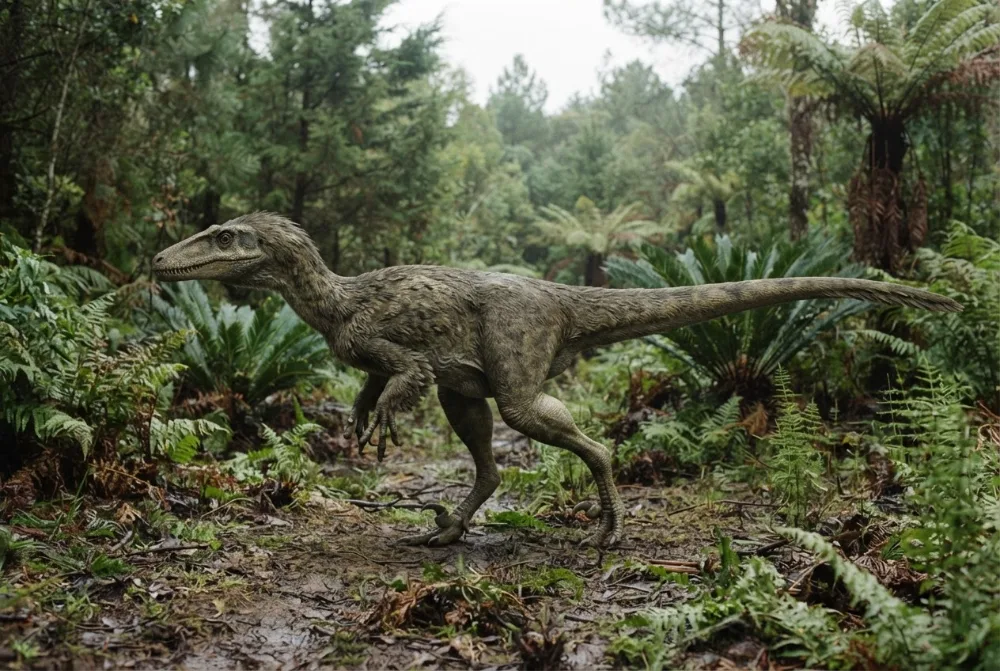
Dipotso tse di botswang thata ka ga Lusovenator
?How big was Lusovenator?
Scientists don't know its exact size because only partial bones were found, but it was a medium to large meat eater, likely around 6 to 8 metres long (20 to 26 feet).4
?What did Lusovenator eat?
Lusovenator was a carnivore, so it ate meat. It probably hunted smaller dinosaurs and other animals in its environment.4
?When did Lusovenator live?
It lived during the Late Jurassic and Early Cretaceous periods, about 154 to 144 million years ago.1
?Where was Lusovenator found?
Its fossils were found in Portugal, in the Lourinhã Formation, which is famous for many dinosaur discoveries.1
?Is Lusovenator a dinosaur?
Yes, it is a dinosaur. It belongs to a group of meat-eating dinosaurs called carcharodontosaurs.1
?Why is it called Lusovenator?
The name means 'Portuguese hunter' because it was found in Portugal and it was a predator.1
Ya baitseanape ba didino
- Leina la saense
- Lusovenator
- Leina le neilwe ke
- Malafaia et al. 20204
- Setlhopha
- Didino tse di jang nama
- Lelapa / clade
- Carcharodontosauria4
- Thulaganyo
- Theropoda > Allosauroidea4
- Bogolo jwa matlapa
- 152 go ya go 143 dimilione tsa dingwaga (Kimmeridgian / Tithonian)4
- Dibopego tsa matlapa
- Freixial, Praia da Amoreira-Porto Novo4
- Dinaga
- Potokale4
- Direkoto tsa difosili
- 2 mo The Paleobiology Database4
- Go fitlhelwa
- Lusovenator was named in 2020 by Malafaia and colleagues. The fossils were found in Portugal by José Joaquim dos Santos in the 1980s and later studied by scientists.14
- Go sa ntse go ganetsanwa
- Scientists are not sure exactly how big Lusovenator grew, because the only skeleton found so far is from a young animal.1
Kwa dintlha di tswang teng
- Lusovenator (en.wikipedia.org)
- Lusovenator santosi: New Predatory Dinosaur Identified in Portugal | Paleontology World (paleontologyworld.com)
- Lusovenator santosi | Dinosaur Database by DinoAnimals.com (dinoanimals.com)
- Lusovenator in The Paleobiology Database (CC BY 4.0): dingwaga, mafelo, dibopego tsa matlapa, thulaganyo.
Ntlha nngwe le nngwe mo tsebeng eno e na le nomoro e e supang motswedi wa yona. Fa re dirile phoso, maitshwarelo, re barati ba didino, ga re lokwalodikgang lwa saense. Re bolelele kwa [email protected] mme re tla e baakanya.
 Rex o tshwerwe ke tlala! Dino Wiki ke porojeke ya rre e a e diretseng morwawe yo o ratang didino, ke mahala, ga e na dipapatso e bile ga e na dilatedi. Batho ba bagolo ba ka fepa Rex senyamo go thusa gore e nne mo inthaneteng.Fepa Rex
 Allosaurus
 Carnotaurus
 Dilophosaurus
 Giganotosaurus
 Compsognathus
 Paronychodon
 Brachiosaurus
 Diplodocus
 Brontosaurus
 Camarasaurus
 Morosaurus
 Apatosaurus