 O dino efe? Kwisi
 Ntwa ya didino
 Peiso ya didino
 Metshamekwana ya didino
 Alebamo ya disetikara
 Manane a TOP a didino
 Ngakgamatsa!
Microvenator
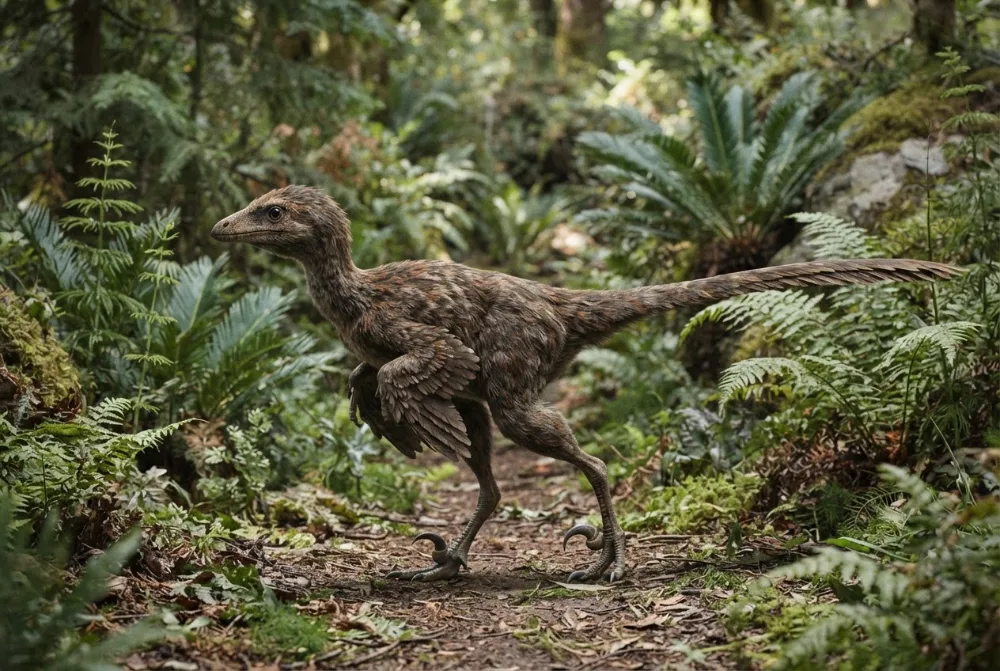
Microvenator was a tiny, fast-running dinosaur that lived in North America during the Early Cretaceous. It had long legs and was probably covered in feathers, making it look a bit like a small, speedy bird.1
E tshetse leng?
E ne e le kgolo go le kae?
E ne e le telele go le kae?
E ne e le bokete go le kae?
 telele jaaka dikatse tsa mo gae di le 2.5 go tswa kwa nkong go ya kwa mogatleng🍌telele jaaka dibanana di le 7 di latelanae ka nna bokete jaaka katse ya mo gae🍌bokete jaaka dibanana di le 25🏃e ne e ka taboga dimetara di le 100 mo metsotswaneng e le 16 (motho yo o bonako go gaisa o tlhoka 9,6)
Microvenator e ne e le kgolo go le kae fa e bapisiwa le WENA?
Ke dipalo fela mo sebatling sa gago. Ga go sepe se se bolokwang kgotsa se se romelwang gope.
E ne e le bonako go le kae?


Dintlha tse di monate
Microvenator means 'small hunter', and its species name 'celer' means 'swift' because of its long, fast legs.1
The only known Microvenator fossil is a partial skeleton of a juvenile, so scientists are not sure how big the adults grew.1
Microvenator lived alongside famous dinosaurs like Deinonychus, Sauropelta, and Acrocanthosaurus in the Cloverly Formation.1
It is one of the earliest oviraptorosaurs known from North America, a group of bird-like dinosaurs that often had beaks and feathers.1
Microvenator fossils are very rare, probably because its bones were fragile and it had no teeth, making them harder to preserve.1
The first Microvenator fossil was collected in 1933 by Barnum Brown, but it was not named until 1970 by John Ostrom.1
Brown originally called it 'Megadontosaurus' (big-toothed lizard) because he mistakenly thought Deinonychus teeth belonged to it.1
Dipotso tse di botswang thata ka ga Microvenator
?How big was Microvenator?
The only known fossil is a juvenile about 1.3 metres (4.3 feet) long. Adults may have been larger, but their size is unknown.1
?Did Microvenator have feathers?
Yes, it was an oviraptorosaur, a group of bird-like dinosaurs that often had feathers. It probably looked like a small, speedy bird.1
?What did Microvenator eat?
It was an omnivore, meaning it ate both plants and meat. Its lack of teeth suggests it may have used a beak.3
?When did Microvenator live?
It lived during the Early Cretaceous period, about 110 million years ago.1
Ya baitseanape ba didino
- Leina la saense
- Microvenator
- Leina le neilwe ke
- Ostrom 19703
- Setlhopha
- Didino tse di sa tlwaelegang tsa dintsiba
- Lelapa / clade
- Caenagnathidae3
- Thulaganyo
- Theropoda > Oviraptorosauria3
- Bogolo jwa matlapa
- 121 go ya go 94 dimilione tsa dingwaga (Aptian / Cenomanian)3
- Dibopego tsa matlapa
- Cloverly3
- Dinaga
- Amerika3
- Direkoto tsa difosili
- 4 mo The Paleobiology Database3
- Go fitlhelwa
- Barnum Brown collected the first Microvenator fossil in 1933 in Montana, but it was not named until 1970 by John Ostrom, who called it Microvenator celer.1
- Go sa ntse go ganetsanwa
- Scientists are still unsure how big adult Microvenator grew, because the only known skeleton is from a juvenile.1
Kwa dintlha di tswang teng
- Microvenator (en.wikipedia.org)
- PBDB Taxon (paleobiodb.org)
- Microvenator in The Paleobiology Database (CC BY 4.0): dingwaga, mafelo, dibopego tsa matlapa, thulaganyo.
Ntlha nngwe le nngwe mo tsebeng eno e na le nomoro e e supang motswedi wa yona. Fa re dirile phoso, maitshwarelo, re barati ba didino, ga re lokwalodikgang lwa saense. Re bolelele kwa [email protected] mme re tla e baakanya.
 Rex o tshwerwe ke tlala! Dino Wiki ke porojeke ya rre e a e diretseng morwawe yo o ratang didino, ke mahala, ga e na dipapatso e bile ga e na dilatedi. Batho ba bagolo ba ka fepa Rex senyamo go thusa gore e nne mo inthaneteng.Fepa Rex
Tse dingwe tsa setlhopha se le sengwe: Didino tse di sa tlwaelegang tsa dintsiba
 TherizinosaurusDidino tse di sa tlwaelegang tsa dintsiba
 OviraptorDidino tse di sa tlwaelegang tsa dintsiba
 ChirostenotesDidino tse di sa tlwaelegang tsa dintsiba
 CitipesDidino tse di sa tlwaelegang tsa dintsiba
 LeptorhynchosDidino tse di sa tlwaelegang tsa dintsiba
 AvimimusDidino tse di sa tlwaelegang tsa dintsiba
 Stegosaurus
 Iguanodon
 Archaeopteryx
 Giganotosaurus
 Microraptor
 Deinonychus