 O dino efe? Kwisi
 Ntwa ya didino
 Peiso ya didino
 Metshamekwana ya didino
 Alebamo ya disetikara
 Manane a TOP a didino
 Ngakgamatsa!
E tshetse leng?

E ne e le kgolo go le kae?
E ne e le telele go le kae?
E ne e le kwa godimo go le kae?
kakanyo
E ne e le bokete go le kae?
 telele jaaka dintšwa di le 4 go tswa kwa nkong go ya kwa mogatleng🍌telele jaaka dibanana di le 19 di latelana🍉bokete jaaka magapu a le 50🧸bokete jaaka bana ba kreše ba le 13🎒bokete jaaka bana ba sekolo ba le 8🏃e ne e ka taboga dimetara di le 100 mo metsotswaneng e le 8.4 (motho yo o bonako go gaisa o tlhoka 9,6)
Minqaria e ne e le kgolo go le kae fa e bapisiwa le WENA?
Ke dipalo fela mo sebatling sa gago. Ga go sepe se se bolokwang kgotsa se se romelwang gope.
E ne e le bonako go le kae?


Dintlha tse di monate
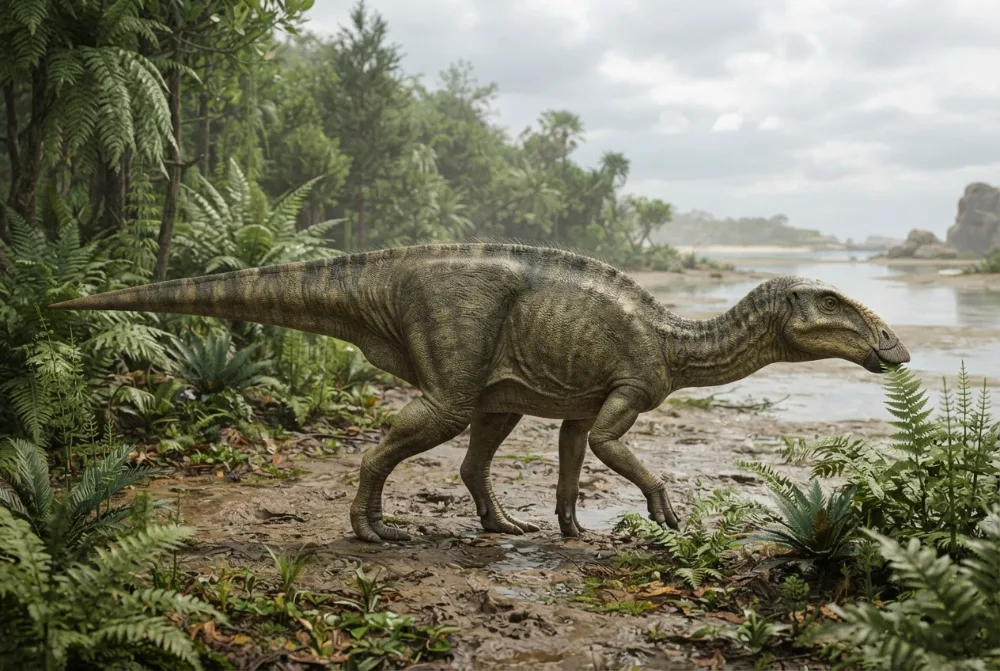
Minqaria was a dwarf dinosaur, only about 3.5 metres (11 feet) long, much smaller than its giant relatives like Edmontosaurus.21
Its skull bones were fused together, which tells scientists it was a fully grown adult, not a baby.21
Minqaria lived alongside other dinosaurs in Morocco, including the duck-billed Ajnabia and the meat-eating Chenanisaurus.2
The name Minqaria comes from the Arabic word for 'beak', and bata means 'duck', so its full name is 'beak duck'.1
Minqaria belonged to a group of duck-billed dinosaurs called lambeosaurines, which often had fancy crests on their heads.21
Fossils of Minqaria were found in marine rocks, meaning its body washed out to sea after death.2
Dipotso tse di botswang thata ka ga Minqaria
?How big was Minqaria?
Minqaria was about 3.5 metres long and weighed about 250 kilograms, similar in size to a large motorcycle.12
?Was Minqaria a baby or an adult?
It was a fully grown adult. Its skull bones were fused together, which shows it was mature even though it was small.12
?What did Minqaria eat?
Minqaria was a duck-billed dinosaur, so it ate plants. It had teeth in its jaws for chewing plant material.1
?When did Minqaria live?
Minqaria lived in the very latest Cretaceous period, about 1 million years before the asteroid impact that wiped out the dinosaurs.1
Ya baitseanape ba didino
- Leina la saense
- Minqaria
- Leina le neilwe ke
- Longrich et al. 20244
- Setlhopha
- Melomo-pidipidi
- Lelapa / clade
- Hadrosauridae4
- Thulaganyo
- Ornithischia > Ornithopoda > Iguanodontia > Hadrosauridae4
- Bogolo jwa matlapa
- 72 go ya go 66 dimilione tsa dingwaga (Maastrichtian)4
- Dibopego tsa matlapa
- Couche III4
- Dinaga
- Moroko4
- Direkoto tsa difosili
- 1 mo The Paleobiology Database4
- Go fitlhelwa
- Minqaria was named in 2024 by paleontologist Nick Longrich and his team. The fossils were found by local miners in the phosphate mines of Sidi Chennane, Morocco.21
- Go sa ntse go ganetsanwa
- Scientists are not sure why Minqaria and other African duck-billed dinosaurs were so small, but they think it might be because giant sauropods outcompeted them for food.2
Kwa dintlha di tswang teng
- Minqaria (en.wikipedia.org)
- A new small duckbilled dinosaur (Hadrosauridae: Lambeosaurinae) from Morocco and dinosaur diversity in the late Maastrichtian of North Africa (pmc.ncbi.nlm.nih.gov)
- PBDB Taxon (paleobiodb.org)
- Minqaria in The Paleobiology Database (CC BY 4.0): dingwaga, mafelo, dibopego tsa matlapa, thulaganyo.
Ntlha nngwe le nngwe mo tsebeng eno e na le nomoro e e supang motswedi wa yona. Fa re dirile phoso, maitshwarelo, re barati ba didino, ga re lokwalodikgang lwa saense. Re bolelele kwa [email protected] mme re tla e baakanya.
 Rex o tshwerwe ke tlala! Dino Wiki ke porojeke ya rre e a e diretseng morwawe yo o ratang didino, ke mahala, ga e na dipapatso e bile ga e na dilatedi. Batho ba bagolo ba ka fepa Rex senyamo go thusa gore e nne mo inthaneteng.Fepa Rex
 Parasaurolophus
 Edmontosaurus
 Saurolophus
 Hypacrosaurus
 Corythosaurus
 Kritosaurus
 Tyrannosaurus
 Triceratops
 Velociraptor
 Spinosaurus
 Ankylosaurus
 Pteranodon