 O dino efe? Kwisi
 Ntwa ya didino
 Peiso ya didino
 Metshamekwana ya didino
 Alebamo ya disetikara
 Manane a TOP a didino
 Ngakgamatsa!
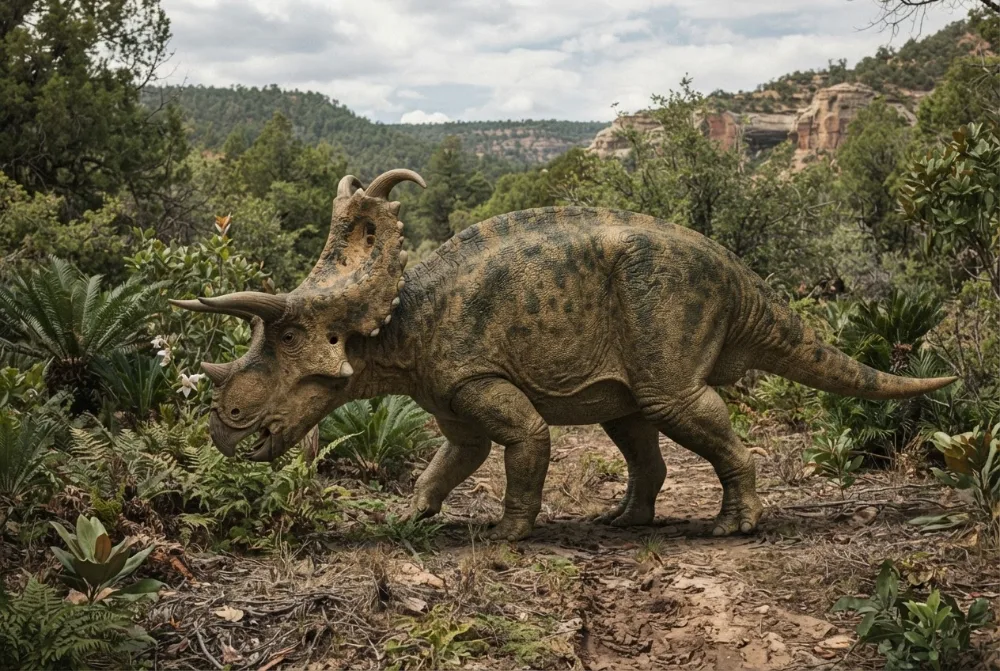
Navajoceratops
Navajoceratops was a horned dinosaur that lived in what is now New Mexico, USA, about 75 million years ago. It had a big frill on its head and a deep notch in the back of its skull that slowly closed up over time as the species evolved.2
E tshetse leng?
E ne e le kgolo go le kae?
E ne e le telele go le kae?
E ne e le kwa godimo go le kae?
E ne e le bokete go le kae?

 telele jaaka dintšwa di le 8 go tswa kwa nkong go ya kwa mogatleng🍌telele jaaka dibanana di le 42 di latelana
 e ka nna bokete jaaka tlou🍉bokete jaaka magapu a le 910🎒bokete jaaka diphaposiborutelo tse di tletseng bana di le 6🐻❄️bokete jaaka dibere tse ditshweu di le 10🏃e ne e ka taboga dimetara di le 100 mo metsotswaneng e le 14 (motho yo o bonako go gaisa o tlhoka 9,6)
Navajoceratops e ne e le kgolo go le kae fa e bapisiwa le WENA?
Ke dipalo fela mo sebatling sa gago. Ga go sepe se se bolokwang kgotsa se se romelwang gope.
E ne e le bonako go le kae?


Dintlha tse di monate
Navajoceratops is known from only a partial skull, including the back part of its frill called the parietal.1
It lived during the Campanian stage of the Late Cretaceous, between about 75.0 and 73.4 million years ago.2
Navajoceratops is a chasmosaurine ceratopsid, meaning it is closely related to famous horned dinosaurs like Triceratops.1
The deep notch in the back of its frill is a key feature that helps scientists understand how chasmosaurine dinosaurs evolved over time.2
Its fossils were found in the Hunter Wash Member of the Kirtland Formation in the San Juan Basin.2
Navajoceratops was named after the Navajo people, who are indigenous to the area where the fossils were discovered.1
Dipotso tse di botswang thata ka ga Navajoceratops
?What did Navajoceratops eat?
Navajoceratops was a herbivore, meaning it ate plants. It lived on the ground and likely fed on low-growing vegetation.5
?How big was Navajoceratops?
Scientists don't know its exact size because only a partial skull has been found. The skull parts suggest it was a medium-sized ceratopsian, but no full body length estimate is available.5
?When did Navajoceratops live?
Navajoceratops lived during the Late Cretaceous Period, about 75 to 73.4 million years ago, in what is now New Mexico, USA.15
?Why is it called Navajoceratops?
It is named after the Navajo people, who are indigenous to the area where the fossils were found. The name means 'Navajo horned face'.1
Ya baitseanape ba didino
- Leina la saense
- Navajoceratops
- Leina le neilwe ke
- Fowler and Freedman Fowler 20205
- Setlhopha
- Didino tse di nang le dinaka
- Lelapa / clade
- Ceratopsidae5
- Thulaganyo
- Ornithischia > Ceratopsia > Ceratopsidae5
- Bogolo jwa matlapa
- 84 go ya go 72 dimilione tsa dingwaga (Campanian)5
- Dibopego tsa matlapa
- Kirtland5
- Dinaga
- Amerika5
- Direkoto tsa difosili
- 1 mo The Paleobiology Database5
- Go fitlhelwa
- Navajoceratops was named in 2020 by Denver W. Fowler and Elizabeth A. Freedman Fowler. The holotype specimen was collected in 2002 by Robert M. Sullivan and others from the Kirtland Formation in New Mexico.12
- Go sa ntse go ganetsanwa
- Scientists are not sure whether Navajoceratops is a separate species or just a growth stage of another ceratopsian, because only a few bones have been found.2
Kwa dintlha di tswang teng
- Navajoceratops (en.wikipedia.org)
- Transitional evolutionary forms in chasmosaurine ceratopsid dinosaurs: evidence from the Campanian of New Mexico (pmc.ncbi.nlm.nih.gov)
- PBDB Taxon (paleobiodb.org)
- Two new dinosaurs found in fossils at State Museum of Pennsylvania - pennlive.com (pennlive.com)
- Navajoceratops in The Paleobiology Database (CC BY 4.0): dingwaga, mafelo, dibopego tsa matlapa, thulaganyo.
Ntlha nngwe le nngwe mo tsebeng eno e na le nomoro e e supang motswedi wa yona. Fa re dirile phoso, maitshwarelo, re barati ba didino, ga re lokwalodikgang lwa saense. Re bolelele kwa [email protected] mme re tla e baakanya.
 Rex o tshwerwe ke tlala! Dino Wiki ke porojeke ya rre e a e diretseng morwawe yo o ratang didino, ke mahala, ga e na dipapatso e bile ga e na dilatedi. Batho ba bagolo ba ka fepa Rex senyamo go thusa gore e nne mo inthaneteng.Fepa Rex
 Triceratops
 Protoceratops
 Ojoceratops
 Tatankaceratops
 Psittacosaurus
 Centrosaurus
 Tyrannosaurus
 Velociraptor
 Spinosaurus
 Ankylosaurus
 Parasaurolophus
 Pteranodon