 O dino efe? Kwisi
 Ntwa ya didino
 Peiso ya didino
 Metshamekwana ya didino
 Alebamo ya disetikara
 Manane a TOP a didino
 Ngakgamatsa!
Nichollsia
Nichollssaura was a small, fast-swimming marine reptile that lived in the sea that once covered Alberta, Canada. It was a plesiosaur, not a dinosaur, and had a long neck and four flippers for paddling through the water. This creature helps scientists fill in a big 40-million-year gap in the plesiosaur fossil record of North America.1
E tshetse leng?
E ne e le kgolo go le kae?
E ne e le telele go le kae?
E ne e le bokete go le kae?
 telele jaaka dintšwa di le 3 go tswa kwa nkong go ya kwa mogatleng🍌telele jaaka dibanana di le 16 di latelana🍉bokete jaaka magapu a le 27🧸bokete jaaka bana ba kreše ba le 7🎒bokete jaaka bana ba sekolo ba le 4🏊e ne e ka thuma boleele jwa letamo le legolo la go thuma (50 m) mo metsotswaneng e le 6.4
Nichollsia e ne e le kgolo go le kae fa e bapisiwa le WENA?
Ke dipalo fela mo sebatling sa gago. Ga go sepe se se bolokwang kgotsa se se romelwang gope.
E ne e le bonako go le kae?


Dintlha tse di monate
The fossil was discovered accidentally by giant electric shovel operators in an oilsand mine. The shovel cut off some bones, but the rest of the skeleton was almost complete.1
This plesiosaur was named after Dr. Betsy Nicholls, a famous paleontologist. The first name Nichollsia was already used for a type of isopod, so scientists changed it to Nichollssaura.1
Nichollssaura had 165 gastroliths (stomach stones) inside it. The stones were smooth and round, probably swallowed to help grind food.1
The stomach stones came from rocks that were 8 to 10 million years older than the plesiosaur itself. This suggests Nichollssaura may have swum west to collect pebbles from ancient beaches.1
It lived about 110 million years ago in the Boreal Sea, a warm shallow sea that covered parts of North America.1
The holotype specimen is on display at the Royal Tyrrell Museum in Alberta, Canada.1
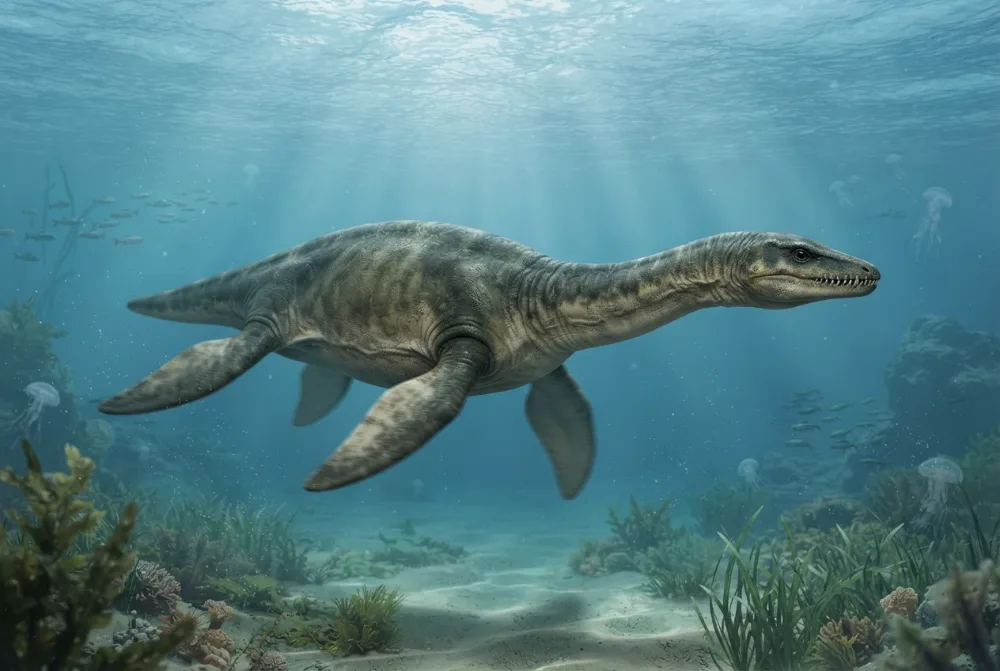
Ya baitseanape ba didino
- Leina la saense
- Nichollsia
- Leina le neilwe ke
- Druckenmiller and Russell 20082
- Setlhopha
- Dipleisiosoro
- Lelapa / clade
- Leptocleididae2
- Thulaganyo
- Plesiosauria > Sauropterygia2
- Bogolo jwa matlapa
- 113 go ya go 100 dimilione tsa dingwaga (Albian)2
- Direkoto tsa difosili
- 1 mo The Paleobiology Database2
- Go fitlhelwa
- The specimen was found in 1994 by shovel operators Greg Fisher and Lorne Cundal at a Syncrude oilsand mine in Alberta. It was named Nichollsia borealis by Druckenmiller and Russell in 2008, but the name was changed to Nichollssaura in 2009 because Nichollsia was already taken.12
Kwa dintlha di tswang teng
- Nichollssaura (en.wikipedia.org)
- Nichollsia in The Paleobiology Database (CC BY 4.0): dingwaga, mafelo, dibopego tsa matlapa, thulaganyo.
Ntlha nngwe le nngwe mo tsebeng eno e na le nomoro e e supang motswedi wa yona. Fa re dirile phoso, maitshwarelo, re barati ba didino, ga re lokwalodikgang lwa saense. Re bolelele kwa [email protected] mme re tla e baakanya.
 Rex o tshwerwe ke tlala! Dino Wiki ke porojeke ya rre e a e diretseng morwawe yo o ratang didino, ke mahala, ga e na dipapatso e bile ga e na dilatedi. Batho ba bagolo ba ka fepa Rex senyamo go thusa gore e nne mo inthaneteng.Fepa Rex
 Elasmosaurus
 Pliosaurus
 Plesiosaurus
 Cimoliasaurus
 Colymbosaurus
 Trinacromerum
 Stegosaurus
 Iguanodon
 Archaeopteryx
 Giganotosaurus
 Microraptor
 Deinonychus