 O dino efe? Kwisi
 Ntwa ya didino
 Peiso ya didino
 Metshamekwana ya didino
 Alebamo ya disetikara
 Manane a TOP a didino
 Ngakgamatsa!
E tshetse leng?

E ne e le kgolo go le kae?
E ne e le telele go le kae?
E ne e le kwa godimo go le kae?
E ne e le bokete go le kae?

 telele jaaka dintšwa di le 6 go tswa kwa nkong go ya kwa mogatleng🍌telele jaaka dibanana di le 33 di latelana
 e ka nna bokete jaaka tlou🍉bokete jaaka magapu a le 900🎒bokete jaaka diphaposiborutelo tse di tletseng bana di le 6🐻❄️bokete jaaka dibere tse ditshweu di le 10🏃e ne e ka taboga dimetara di le 100 mo metsotswaneng e le 28 (motho yo o bonako go gaisa o tlhoka 9,6)
Peloroplites e ne e le kgolo go le kae fa e bapisiwa le WENA?
Ke dipalo fela mo sebatling sa gago. Ga go sepe se se bolokwang kgotsa se se romelwang gope.
E ne e le bonako go le kae?


Dintlha tse di monate
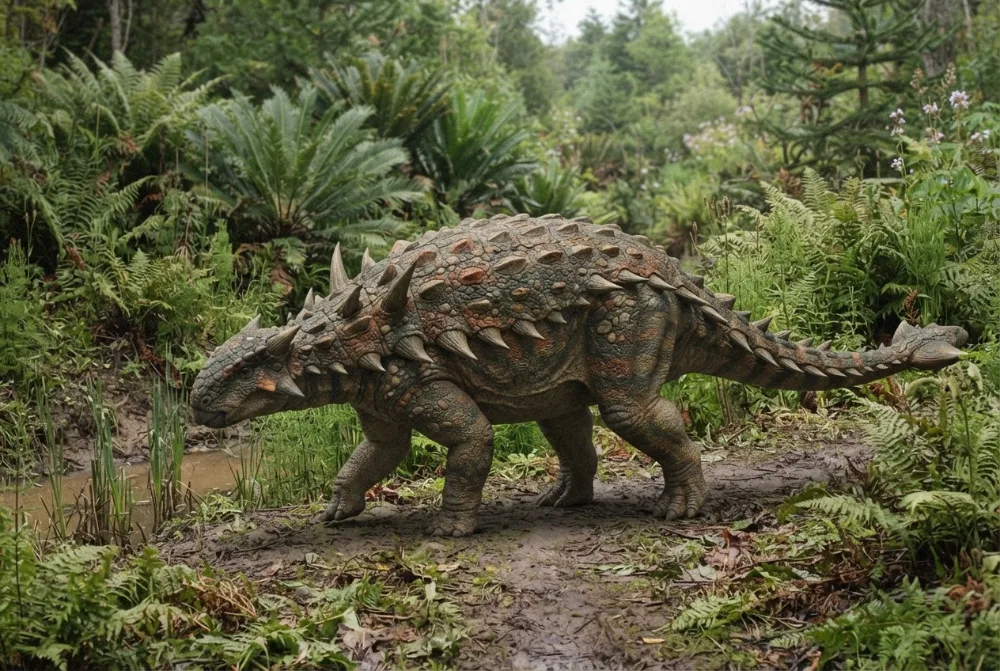
Peloroplites is one of the largest known nodosaurids, a group of armored dinosaurs.1
Its body was covered in bony armor plates and long spikes that protected it from big predators like Acrocanthosaurus.2
The name Peloroplites means 'monstrous heavy one' in Greek, referring to its huge size and heavy armor.1
Only one species is known: Peloroplites cedrimontanus, named after the Cedar Mountain Formation where it was found.1
Its skeleton was put together from bones dug up by staff and volunteers from the USU Prehistoric Museum.2
Utah has more species of armored dinosaurs than any other U.S. state, and Peloroplites is one of them.2
Peloroplites lived in a wet, swampy environment near the edge of the Western Interior Seaway.1
Dipotso tse di botswang thata ka ga Peloroplites
?How big was Peloroplites?
Peloroplites was about 6 metres (20 feet) long and weighed around 2 tonnes (4,410 lbs). That makes it one of the largest known nodosaurids.12
?What did Peloroplites eat?
Peloroplites was a plant-eater. It had small teeth and a wide beak at the front of its mouth to crop low vegetation.23
?When did Peloroplites live?
Peloroplites lived during the Late Cretaceous Period, about 98 to 93 million years ago.1
?Where was Peloroplites found?
Peloroplites was discovered in the Cedar Mountain Formation in Emery County, Utah, USA.12
?Was Peloroplites a dinosaur?
Yes, Peloroplites was a dinosaur. It belongs to a group of armored dinosaurs called nodosaurids.1
Ya baitseanape ba didino
- Leina la saense
- Peloroplites
- Leina le neilwe ke
- Carpenter et al. 20084
- Setlhopha
- Didino tse di nang le thebe
- Lelapa / clade
- Nodosauridae4
- Thulaganyo
- Ornithischia > Ankylosauria > Nodosauridae > Thyreophora4
- Bogolo jwa matlapa
- 121 go ya go 100 dimilione tsa dingwaga (Aptian / Albian)4
- Dibopego tsa matlapa
- Cedar Mountain4
- Dinaga
- Amerika4
- Direkoto tsa difosili
- 1 mo The Paleobiology Database4
- Go fitlhelwa
- Peloroplites was named in 2008 by Kenneth Carpenter and colleagues from a partial skull and other bones found in the Price River II quarry in Utah.1
- Go sa ntse go ganetsanwa
- Scientists are not sure exactly how large Peloroplites grew, because different estimates give lengths from 5 to 6 metres.1
Kwa dintlha di tswang teng
- Peloroplites (en.wikipedia.org)
- Armored Monster Invades USU Eastern Prehistoric Museum (usu.edu)
- Peloroplites cedrimontanus (eastern.usu.edu)
- Peloroplites in The Paleobiology Database (CC BY 4.0): dingwaga, mafelo, dibopego tsa matlapa, thulaganyo.
Ntlha nngwe le nngwe mo tsebeng eno e na le nomoro e e supang motswedi wa yona. Fa re dirile phoso, maitshwarelo, re barati ba didino, ga re lokwalodikgang lwa saense. Re bolelele kwa [email protected] mme re tla e baakanya.
 Rex o tshwerwe ke tlala! Dino Wiki ke porojeke ya rre e a e diretseng morwawe yo o ratang didino, ke mahala, ga e na dipapatso e bile ga e na dilatedi. Batho ba bagolo ba ka fepa Rex senyamo go thusa gore e nne mo inthaneteng.Fepa Rex
 Ankylosaurus
 Sauropelta
 Pinacosaurus
 Scutellosaurus
 Struthiosaurus
 Euoplocephalus
 Stegosaurus
 Iguanodon
 Archaeopteryx
 Giganotosaurus
 Microraptor
 Deinonychus