 O dino efe? Kwisi
 Ntwa ya didino
 Peiso ya didino
 Metshamekwana ya didino
 Alebamo ya disetikara
 Manane a TOP a didino
 Ngakgamatsa!
Rajasaurus
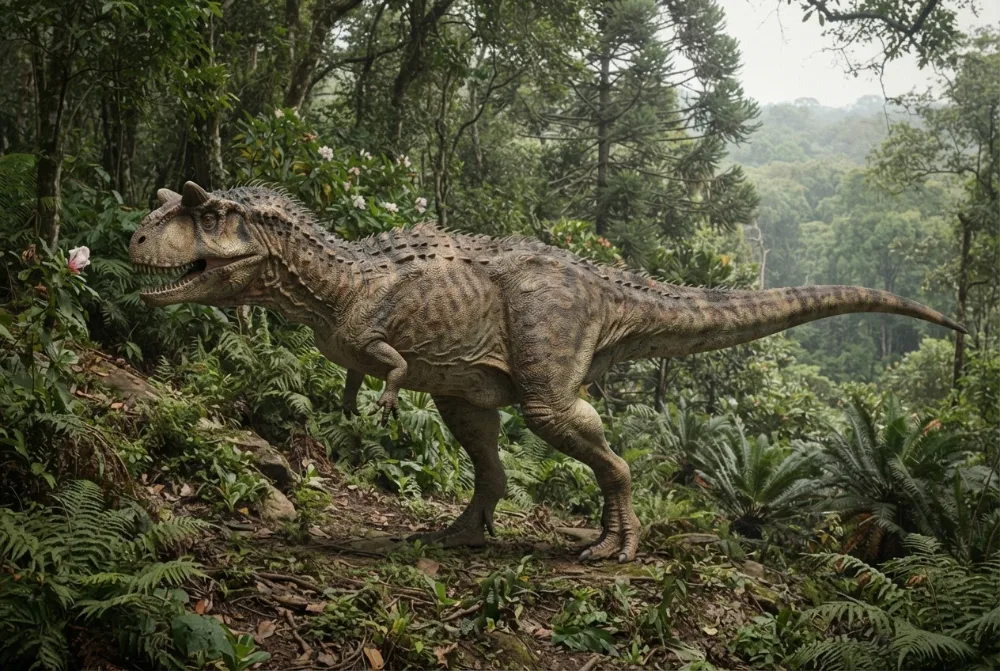
Rajasaurus was a meat-eating dinosaur that lived in India near the end of the Cretaceous Period. It had a single short horn on its forehead and used its strong neck and jaws to catch prey. This dinosaur was an ambush predator, hiding and then pouncing on its food.1
E tshetse leng?
E ne e le kgolo go le kae?
E ne e le telele go le kae?
E ne e le kwa godimo go le kae?
E ne e le bokete go le kae?

 telele jaaka dintšwa di le 7 go tswa kwa nkong go ya kwa mogatleng🍌telele jaaka dibanana di le 37 di latelanabokete jaaka dintšwa di le 200🍉bokete jaaka magapu a le 800🎒bokete jaaka diphaposiborutelo tse di tletseng bana di le 5🐻❄️bokete jaaka dibere tse ditshweu di le 9🏃e ne e ka taboga dimetara di le 100 mo metsotswaneng e le 14 (motho yo o bonako go gaisa o tlhoka 9,6)
Rajasaurus e ne e le kgolo go le kae fa e bapisiwa le WENA?
Ke dipalo fela mo sebatling sa gago. Ga go sepe se se bolokwang kgotsa se se romelwang gope.
E ne e le bonako go le kae?


Dintlha tse di monate
Rajasaurus had a single low horn on its forehead made mostly of nasal bone, unlike the horn of its relative Majungasaurus.2
It was one of the larger abelisaurids, measuring about 6.6 metres (22 feet) long.1
Rajasaurus lived on the island of India during the Late Cretaceous, when India was isolated from other continents.1
Its fossils were found in the Lameta Formation, which was once a river valley with an arid or semi-arid climate.2
The horn on its head might have been used for display or for head-butting other Rajasaurus during fights.12
Rajasaurus had short arms and four fingers, so it relied on its powerful head and jaws to catch prey.2
It is the first Indian theropod dinosaur to have preserved bones from the spine, hips, legs, and tail.2
Dipotso tse di botswang thata ka ga Rajasaurus
?How big was Rajasaurus?
Rajasaurus was about 6.6 metres (22 feet) long, though one scientist estimated it at 11 metres (36 feet). It weighed around 4 metric tons (4.4 short tons).21
?What did Rajasaurus eat?
Rajasaurus was a carnivore that ate meat. It probably hunted large prey like sauropod dinosaurs and may have also scavenged for food.13
?Did Rajasaurus have feathers?
No one knows for sure. The fossils don't show feathers, and most abelisaurids are not known to have had them, but some scientists think many theropods might have had simple feathers.21
?Was Rajasaurus bigger than T. rex?
No, Rajasaurus was smaller. T. rex could reach about 12 metres (40 feet) long, while Rajasaurus was only about 6.6 metres (22 feet) long.12
?Why did Rajasaurus have a horn?
The horn was probably used for display to attract mates or for head-butting other Rajasaurus during fights. It was made mostly of nasal bone.12
?Could Rajasaurus swim?
Probably not. It was a land dinosaur with strong legs for walking and running, not swimming. It lived near rivers but likely stayed on land.21
Ya baitseanape ba didino
- Leina la saense
- Rajasaurus
- Leina le neilwe ke
- Wilson et al. 20034
- Setlhopha
- Didino tse di jang nama
- Lelapa / clade
- Abelisauridae4
- Thulaganyo
- Theropoda > Ceratosauria > Abelisauridae4
- Bogolo jwa matlapa
- 72 go ya go 66 dimilione tsa dingwaga (Maastrichtian)4
- Dibopego tsa matlapa
- Lameta4
- Dinaga
- India4
- Direkoto tsa difosili
- 1 mo The Paleobiology Database4
- Go fitlhelwa
- Rajasaurus was named in 2003 by Jeffrey A. Wilson and colleagues. The fossils were found in the Lameta Formation of Gujarat, India, after dinosaur eggs were discovered there in 1981.24
- Go sa ntse go ganetsanwa
- Scientists are not sure what the horn on its head was used for. It may have been for display or for head-butting, but no one knows for certain.1
Kwa dintlha di tswang teng
- Rajasaurus | Natural History Museum (nhm.ac.uk)
- Rajasaurus (en.wikipedia.org)
- Discoveries | Paul Sereno - Paleontologist | The University of Chicago (paulsereno.uchicago.edu)
- Rajasaurus in The Paleobiology Database (CC BY 4.0): dingwaga, mafelo, dibopego tsa matlapa, thulaganyo.
Ntlha nngwe le nngwe mo tsebeng eno e na le nomoro e e supang motswedi wa yona. Fa re dirile phoso, maitshwarelo, re barati ba didino, ga re lokwalodikgang lwa saense. Re bolelele kwa [email protected] mme re tla e baakanya.
 Rex o tshwerwe ke tlala! Dino Wiki ke porojeke ya rre e a e diretseng morwawe yo o ratang didino, ke mahala, ga e na dipapatso e bile ga e na dilatedi. Batho ba bagolo ba ka fepa Rex senyamo go thusa gore e nne mo inthaneteng.Fepa Rex
 Allosaurus
 Carnotaurus
 Dilophosaurus
 Giganotosaurus
 Compsognathus
 Paronychodon
 Tyrannosaurus
 Triceratops
 Velociraptor
 Spinosaurus
 Ankylosaurus
 Parasaurolophus