 O dino efe? Kwisi
 Ntwa ya didino
 Peiso ya didino
 Metshamekwana ya didino
 Alebamo ya disetikara
 Manane a TOP a didino
 Ngakgamatsa!
Rhomaleopakhus
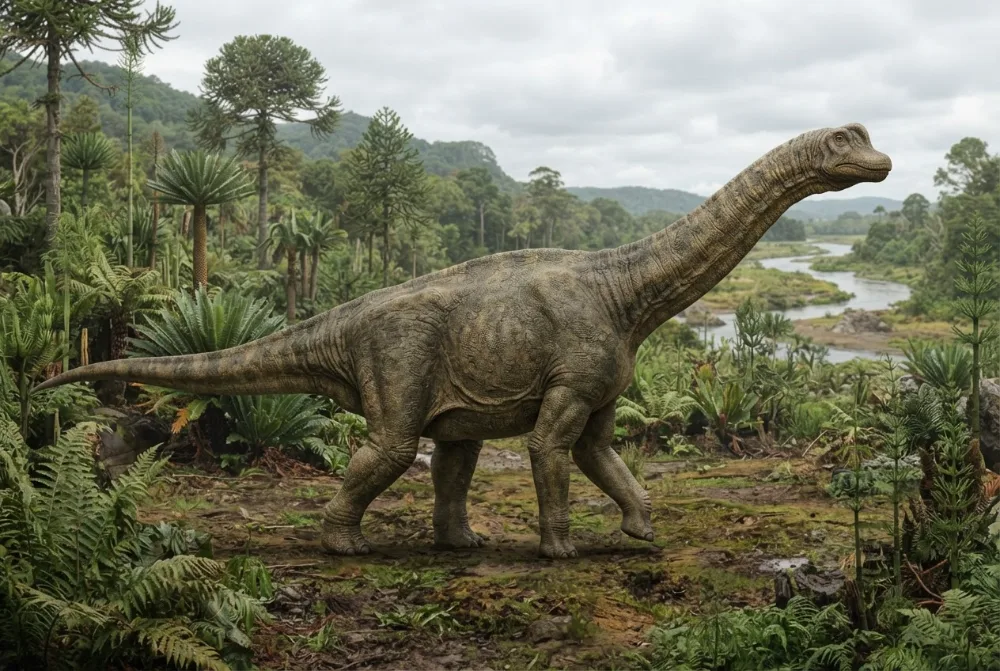
Rhomaleopakhus was a huge, long-necked plant-eater that lived in what is now China. Its front legs were extra strong and stocky, which is why its name means 'strong forearm'. It walked on four legs and used its long neck to reach leaves high up in trees.12
E tshetse leng?
E ne e le kgolo go le kae?
E ne e le telele go le kae?
E ne e le kwa godimo go le kae?
kakanyo
E ne e le bokete go le kae?

 telele jaaka dikoloi di le 4 di emisitswe mo moleng🍌telele jaaka dibanana di le 110 di latelanabokete jaaka dikoloi di le 12🍉bokete jaaka magapu a le 3600🎒bokete jaaka diphaposiborutelo tse di tletseng bana di le 22🐻❄️bokete jaaka dibere tse ditshweu di le 40🏢kwa godimo mo e ka kgalalelang mo fensetereng ya mokato wa 2🏃e ne e ka taboga dimetara di le 100 mo metsotswaneng e le 30 (motho yo o bonako go gaisa o tlhoka 9,6)
Rhomaleopakhus e ne e le kgolo go le kae fa e bapisiwa le WENA?
Ke dipalo fela mo sebatling sa gago. Ga go sepe se se bolokwang kgotsa se se romelwang gope.
E ne e le bonako go le kae?


Dintlha tse di monate
Rhomaleopakhus had one of the most robust (thick and strong) ulna bones of any known sauropod dinosaur.3
Its forearm bones were so strong that scientists think it evolved them separately from other sauropods, a process called convergent evolution.1
The only fossil found so far is a right forelimb, including the upper arm bone, two lower arm bones, a wrist bone, and a nearly complete hand.3
Rhomaleopakhus lived during the Late Jurassic period, about 152 to 143 million years ago.2
Its fossils were originally thought to belong to another dinosaur called Hudiesaurus, but scientists later realized they were from a different animal.1
Ya baitseanape ba didino
- Leina la saense
- Rhomaleopakhus
- Leina le neilwe ke
- Upchurch et al. 20215
- Setlhopha
- Melala-meleele
- Lelapa / clade
- Mamenchisauridae5
- Thulaganyo
- Sauropodomorpha > Sauropoda5
- Bogolo jwa matlapa
- 152 go ya go 143 dimilione tsa dingwaga (Kimmeridgian / Tithonian)5
- Dibopego tsa matlapa
- Kalazha5
- Dinaga
- Tšhaena5
- Direkoto tsa difosili
- 1 mo The Paleobiology Database5
- Go fitlhelwa
- The first fossil of Rhomaleopakhus was found in 1993 by a Chinese-Japanese expedition near Qiketai in Xinjiang, China. It was named Rhomaleopakhus turpanensis in 2021 by Paul Upchurch and colleagues.13
- Go sa ntse go ganetsanwa
- Scientists are not sure exactly how big Rhomaleopakhus was, because only its forelimb has been found. They also debate whether its strong forearms helped it walk or feed in a special way.1
Kwa dintlha di tswang teng
- Rhomaleopakhus (en.wikipedia.org)
- PBDB Taxon (paleobiodb.org)
- Rhomaleopakhus turpanensis Upchurch, Mannion, Xu, and Barrett 2021 (gbif.org)
- Rhomaleopakhus turpanensis | Dinosaur Database by DinoAnimals.com (dinoanimals.com)
- Rhomaleopakhus in The Paleobiology Database (CC BY 4.0): dingwaga, mafelo, dibopego tsa matlapa, thulaganyo.
Ntlha nngwe le nngwe mo tsebeng eno e na le nomoro e e supang motswedi wa yona. Fa re dirile phoso, maitshwarelo, re barati ba didino, ga re lokwalodikgang lwa saense. Re bolelele kwa [email protected] mme re tla e baakanya.
 Rex o tshwerwe ke tlala! Dino Wiki ke porojeke ya rre e a e diretseng morwawe yo o ratang didino, ke mahala, ga e na dipapatso e bile ga e na dilatedi. Batho ba bagolo ba ka fepa Rex senyamo go thusa gore e nne mo inthaneteng.Fepa Rex
 Brachiosaurus
 Diplodocus
 Brontosaurus
 Argentinosaurus
 Camarasaurus
 Morosaurus
 Allosaurus
 Compsognathus
 Camptosaurus
 Nanosaurus
 Rhamphorhynchus
 Ceratosaurus