 O dino efe? Kwisi
 Ntwa ya didino
 Peiso ya didino
 Metshamekwana ya didino
 Alebamo ya disetikara
 Manane a TOP a didino
 Ngakgamatsa!
Samrukia
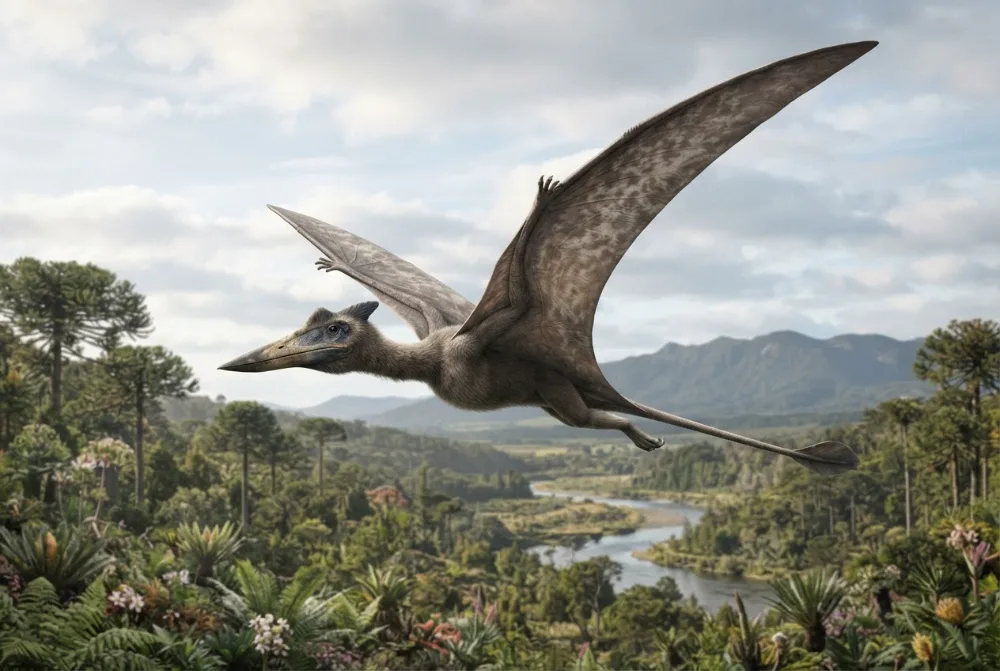
Samrukia was a huge flying reptile that lived in what is now Kazakhstan. It had a very long jaw, and scientists first thought it was a giant bird. Now they think it was a pterosaur, a flying reptile that lived at the same time as dinosaurs.1
E tshetse leng?
E ne e le kgolo go le kae?
Diphuka tsa yona di ne di namegile go le kae?
E ne e le kwa godimo go le kae?
E ne e le bokete go le kae?

 diphuka di le bophara jaaka dibaesekele di le 2 di latelana
 bokete jaaka dikatse tsa mo gae di le 12🍉bokete jaaka magapu a le 10🧸bokete jaaka bana ba kreše ba le 2.5🎒bokete jaaka bana ba sekolo ba le 1.5⚽e ne e ka fofa go kgabaganya lebala lotlhe la kgwele ya dinao mo metsotswaneng e le 6
Samrukia e ne e le kgolo go le kae fa e bapisiwa le WENA?
Ke dipalo fela mo sebatling sa gago. Ga go sepe se se bolokwang kgotsa se se romelwang gope.
E ne e le bonako go le kae?


Dintlha tse di monate
Samrukia is known only from a single lower jaw bone, which is more than 275 millimetres long.2
When first discovered, scientists thought Samrukia was a giant bird, but later studies showed it was a pterosaur.1
Samrukia lived about 84 million years ago, during the Late Cretaceous period.1
If Samrukia could fly, its wingspan might have been about 4 metres (13 feet). If it was flightless, it might have been 2 to 3 metres (6.6 to 9.8 feet) tall.1
The jaw of Samrukia has no teeth, so it probably had a beak.2
Samrukia is named after Samruk, a magical bird from Kazakh mythology.1
Dipotso tse di botswang thata ka ga Samrukia
?Was Samrukia a dinosaur?
No, Samrukia was a pterosaur, a flying reptile that lived at the same time as dinosaurs. It is not a dinosaur.1
?How big was Samrukia?
If it could fly, its wingspan might have been about 4 metres (13 feet). If it was flightless, it might have been 2 to 3 metres (6.6 to 9.8 feet) tall.1
?What did Samrukia eat?
Samrukia had no teeth in its lower jaw, so it probably had a beak. Scientists think it may have eaten fish or other small animals, but no one knows for sure.1
Mothubi wa ditlhamane
Tlhamane: Samrukia was a giant bird.
Boammaaruri: Scientists now agree that Samrukia was a pterosaur, not a bird. The jaw bone has features that are only found in pterosaurs.1
Ya baitseanape ba didino
- Leina la saense
- Samrukia
- Leina le neilwe ke
- Naish et al. 20124
- Setlhopha
- Digagabi tse di fofang
- Lelapa / clade
- Pterosauria4
- Thulaganyo
- Pterosauria4
- Bogolo jwa matlapa
- 86 go ya go 72 dimilione tsa dingwaga (Santonian / Campanian)4
- Dibopego tsa matlapa
- Bostobe4
- Dinaga
- Kazakhstan4
- Direkoto tsa difosili
- 1 mo The Paleobiology Database4
- Go fitlhelwa
- Samrukia was named in 2012 by Darren Naish and his team. The only fossil, a lower jaw, was found in the Bostobynskaya Formation in Kazakhstan.14
- Go sa ntse go ganetsanwa
- Scientists are not sure if Samrukia could fly or if it was flightless, because only its jaw has been found.1
Kwa dintlha di tswang teng
- Samrukia (en.wikipedia.org)
- untitled (darrennaish.wordpress.com)
- Giant 'phoenix' bird rises again | Fossils | The Guardian (theguardian.com)
- Samrukia in The Paleobiology Database (CC BY 4.0): dingwaga, mafelo, dibopego tsa matlapa, thulaganyo.
Ntlha nngwe le nngwe mo tsebeng eno e na le nomoro e e supang motswedi wa yona. Fa re dirile phoso, maitshwarelo, re barati ba didino, ga re lokwalodikgang lwa saense. Re bolelele kwa [email protected] mme re tla e baakanya.
 Rex o tshwerwe ke tlala! Dino Wiki ke porojeke ya rre e a e diretseng morwawe yo o ratang didino, ke mahala, ga e na dipapatso e bile ga e na dilatedi. Batho ba bagolo ba ka fepa Rex senyamo go thusa gore e nne mo inthaneteng.Fepa Rex
 Pteranodon
 Quetzalcoatlus
 Dorygnathus
 Rhamphorhynchus
 Anhanguera
 Pterodactylus
 Tyrannosaurus
 Triceratops
 Velociraptor
 Spinosaurus
 Ankylosaurus
 Parasaurolophus