 O dino efe? Kwisi
 Ntwa ya didino
 Peiso ya didino
 Metshamekwana ya didino
 Alebamo ya disetikara
 Manane a TOP a didino
 Ngakgamatsa!
E tshetse leng?

E ne e le kgolo go le kae?
E ne e le telele go le kae?
E ne e le kwa godimo go le kae?
kakanyo
E ne e le bokete go le kae?
 telele jaaka dintšwa di le 3 go tswa kwa nkong go ya kwa mogatleng🍌telele jaaka dibanana di le 18 di latelana🍉bokete jaaka magapu a le 70🧸bokete jaaka bana ba kreše ba le 18🎒bokete jaaka bana ba sekolo ba le 11🏃e ne e ka taboga dimetara di le 100 mo metsotswaneng e le 11 (motho yo o bonako go gaisa o tlhoka 9,6)
Serendipaceratops e ne e le kgolo go le kae fa e bapisiwa le WENA?
Ke dipalo fela mo sebatling sa gago. Ga go sepe se se bolokwang kgotsa se se romelwang gope.
E ne e le bonako go le kae?


Dintlha tse di monate
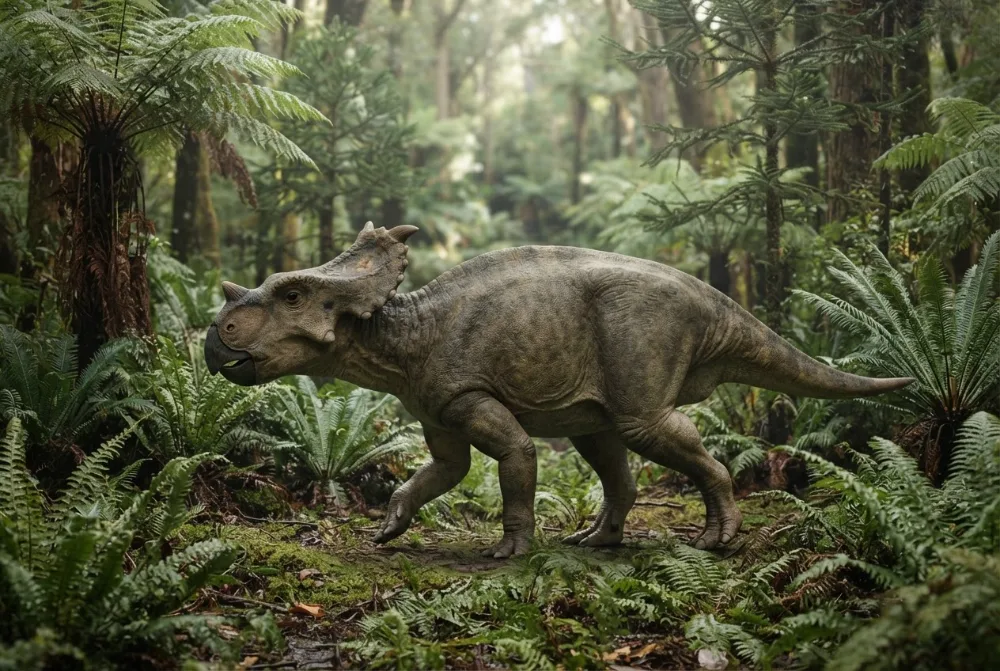
Serendipaceratops is known from just one bone, a left ulna (lower arm bone) that is about 16 centimetres long.1
The bone was discovered in 1993 during the Dinosaur Cove project, in a small area of sea-floor protected by a dam.1
Scientists first thought the bone might be from a theropod, but later noticed it looked like the arm bone of a horned dinosaur called Leptoceratops.1
The species name, arthurcclarkei, honors science fiction writer Arthur C. Clarke, who was a friend of the scientists that named it.1
Some scientists think Serendipaceratops might actually be an ankylosaur, not a horned dinosaur, because the arm bone is robust.1
The fossil was found in the Wonthaggi Formation, which is about 115 million years old.1
Dipotso tse di botswang thata ka ga Serendipaceratops
?What did Serendipaceratops eat?
Serendipaceratops was a herbivore, meaning it ate plants.1
?How big was Serendipaceratops?
Nobody knows for sure, because only one arm bone has been found. That bone is about 16 centimetres (6 inches) long.1
?When did Serendipaceratops live?
It lived during the Early Cretaceous Period, about 115 million years ago.1
?Was Serendipaceratops a dinosaur?
It is a type of ornithischian dinosaur, possibly an ankylosaur.1
?Why is it called Serendipaceratops?
The name means 'serendipitous horned face', because scientists were surprised to find a horned dinosaur bone in Australia. It was named by luck or serendipity.1
?Was Serendipaceratops a ceratopsian?
Scientists disagree. Some think it was a ceratopsian, but others think it was an ankylosaur because the arm bone is robust.1
Mothubi wa ditlhamane
Tlhamane: Some people think Serendipaceratops was definitely a horned dinosaur like Triceratops.
Boammaaruri: Scientists are not sure. Some studies say it is a ceratopsian, but others say it might be an ankylosaur because the arm bone is robust.1
Ya baitseanape ba didino
- Leina la saense
- Serendipaceratops
- Leina le neilwe ke
- Rich and Vickers-Rich 20033
- Setlhopha
- Didino tse di nang le dinaka
- Lelapa / clade
- Ceratopsia3
- Thulaganyo
- Ornithischia > Ceratopsia3
- Bogolo jwa matlapa
- 121 go ya go 120 dimilione tsa dingwaga (Aptian)3
- Dibopego tsa matlapa
- Wonthaggi3
- Dinaga
- Ositerelia3
- Direkoto tsa difosili
- 1 mo The Paleobiology Database3
- Go fitlhelwa
- The bone was found in 1993 near Kilcunda, Australia, and the dinosaur was named by Tom Rich and Patricia Vickers-Rich in 2003. The name came after a colleague pointed out the bone looked like a horned dinosaur's arm bone.1
- Go sa ntse go ganetsanwa
- Scientists still debate whether Serendipaceratops is a ceratopsian or an ankylosaur, because only one bone is known and it may be deformed.1
Kwa dintlha di tswang teng
- Serendipaceratops (en.wikipedia.org)
- Serendipaceratops arthurcclarkei | Dinosaur Database by DinoAnimals.com (dinoanimals.com)
- Serendipaceratops in The Paleobiology Database (CC BY 4.0): dingwaga, mafelo, dibopego tsa matlapa, thulaganyo.
Ntlha nngwe le nngwe mo tsebeng eno e na le nomoro e e supang motswedi wa yona. Fa re dirile phoso, maitshwarelo, re barati ba didino, ga re lokwalodikgang lwa saense. Re bolelele kwa [email protected] mme re tla e baakanya.
 Rex o tshwerwe ke tlala! Dino Wiki ke porojeke ya rre e a e diretseng morwawe yo o ratang didino, ke mahala, ga e na dipapatso e bile ga e na dilatedi. Batho ba bagolo ba ka fepa Rex senyamo go thusa gore e nne mo inthaneteng.Fepa Rex
 Triceratops
 Protoceratops
 Ojoceratops
 Tatankaceratops
 Psittacosaurus
 Centrosaurus
 Stegosaurus
 Iguanodon
 Archaeopteryx
 Giganotosaurus
 Microraptor
 Deinonychus