 O dino efe? Kwisi
 Ntwa ya didino
 Peiso ya didino
 Metshamekwana ya didino
 Alebamo ya disetikara
 Manane a TOP a didino
 Ngakgamatsa!
Tamarro
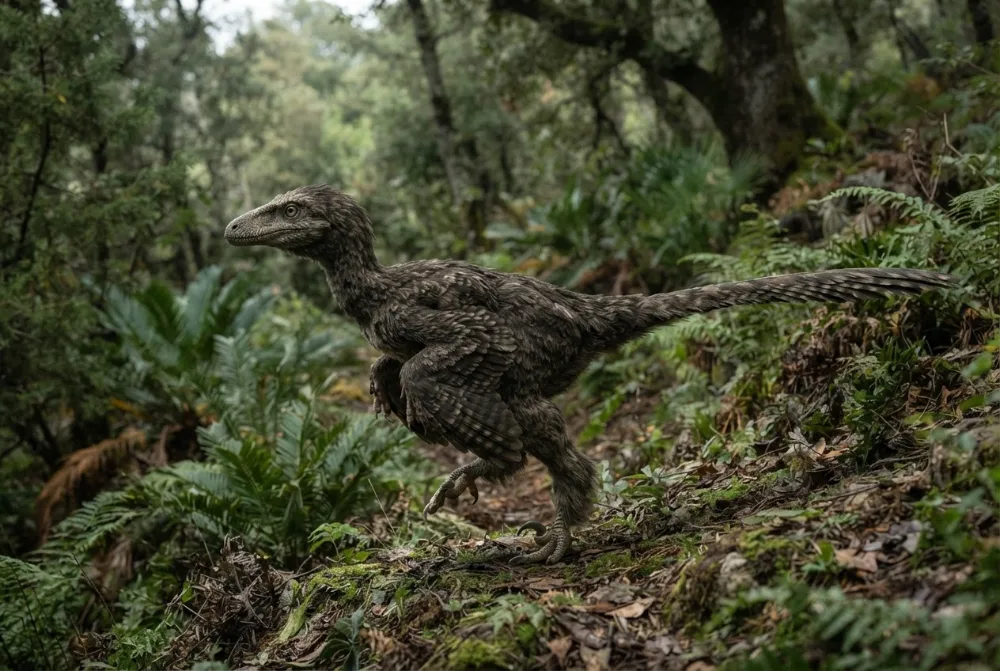
Tamarro was a small, fast-growing dinosaur that lived on an ancient island in what is now Spain. It was a troodontid, a group of bird-like, meat-eating dinosaurs. Scientists only know it from a single foot bone, but that bone has a unique hole not seen in any other troodontid.1
E tshetse leng?
E ne e le kgolo go le kae?
E ne e le telele go le kae?
E ne e le kwa godimo go le kae?
E ne e le bokete go le kae?
 telele jaaka dikatse tsa mo gae di le 4 go tswa kwa nkong go ya kwa mogatleng🍌telele jaaka dibanana di le 11 di latelana🍉bokete jaaka magapu a le 4🏃e ne e ka taboga dimetara di le 100 mo metsotswaneng e le 8.4 (motho yo o bonako go gaisa o tlhoka 9,6)
Tamarro e ne e le kgolo go le kae fa e bapisiwa le WENA?
Ke dipalo fela mo sebatling sa gago. Ga go sepe se se bolokwang kgotsa se se romelwang gope.
E ne e le bonako go le kae?


Dintlha tse di monate
Tamarro lived at the very end of the Cretaceous period, within 200,000 years of the asteroid that wiped out the dinosaurs.1
Its foot bone shows that Tamarro was a fast grower, reaching nearly adult size quickly, like many island animals.1
Tamarro is the first troodontid dinosaur ever found in Europe.1
The only known fossil of Tamarro is a single right second metatarsal, a bone from the foot.1
This foot bone has a special hole (a foramen) that is not found in any other troodontid, which helped scientists identify it as a new species.1
Tamarro lived on the Ibero-Armorican island, a large island that included parts of modern Spain, Portugal, and France.1
Scientists think Tamarro may have migrated from Asia to Europe, either by land bridges or by island hopping.1
Dipotso tse di botswang thata ka ga Tamarro
?What did Tamarro eat?
Tamarro was a meat-eating dinosaur, a troodontid, so it likely ate small animals. Scientists know this from its group, not from its single foot bone.31
?How big was Tamarro?
Tamarro was a small, mid-sized troodontid, but its exact size is unknown because only a foot bone has been found. It was a fast grower, reaching nearly adult size quickly.13
Ya baitseanape ba didino
- Leina la saense
- Tamarro
- Leina le neilwe ke
- Sellés et al. 20214
- Setlhopha
- Diraptoro
- Lelapa / clade
- Troodontidae4
- Thulaganyo
- Theropoda > Troodontidae4
- Bogolo jwa matlapa
- 72 go ya go 66 dimilione tsa dingwaga (Maastrichtian)4
- Dibopego tsa matlapa
- Talarn4
- Dinaga
- Sepania4
- Direkoto tsa difosili
- 1 mo The Paleobiology Database4
- Go fitlhelwa
- Tamarro was discovered in September 2003 by a team from the Museu de la Conca Dellà at the Sant Romà d'Abella site in Spain. It was named in 2021 by Sellés and colleagues.1
- Go sa ntse go ganetsanwa
- Scientists are not sure whether Tamarro was a dwarf species, like many other dinosaurs that lived on islands, or if it was just a young animal that hadn't finished growing.1
Kwa dintlha di tswang teng
- A fast-growing basal troodontid (Dinosauria: Theropoda) from the latest Cretaceous of Europe | Scientific Reports (nature.com)
- Tamarro insperatus, uno de los últimos dinosaurios que vivió en los Pirineos (nationalgeographic.com.es)
- Tamarro (en.wikipedia.org)
- Tamarro in The Paleobiology Database (CC BY 4.0): dingwaga, mafelo, dibopego tsa matlapa, thulaganyo.
Ntlha nngwe le nngwe mo tsebeng eno e na le nomoro e e supang motswedi wa yona. Fa re dirile phoso, maitshwarelo, re barati ba didino, ga re lokwalodikgang lwa saense. Re bolelele kwa [email protected] mme re tla e baakanya.
 Rex o tshwerwe ke tlala! Dino Wiki ke porojeke ya rre e a e diretseng morwawe yo o ratang didino, ke mahala, ga e na dipapatso e bile ga e na dilatedi. Batho ba bagolo ba ka fepa Rex senyamo go thusa gore e nne mo inthaneteng.Fepa Rex
 Velociraptor
 Microraptor
 Deinonychus
 Asiamericana
 Richardoestesia
 Saurornitholestes
 Tyrannosaurus
 Triceratops
 Spinosaurus
 Ankylosaurus
 Parasaurolophus
 Pteranodon