 O dino efe? Kwisi
 Ntwa ya didino
 Peiso ya didino
 Metshamekwana ya didino
 Alebamo ya disetikara
 Manane a TOP a didino
 Ngakgamatsa!
Turanoceratops
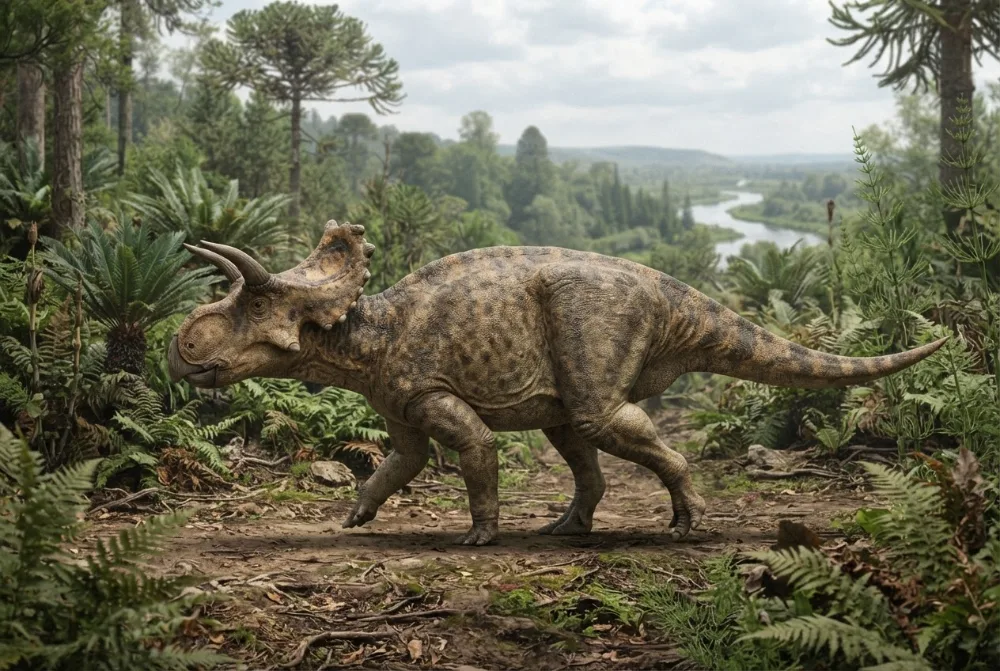
Turanoceratops was a small, plant-eating dinosaur with a parrot-like beak and two long horns above its eyes. It lived in what is now Uzbekistan about 90 million years ago. Scientists think it was a close cousin of the famous horned dinosaurs like Triceratops.12
E tshetse leng?
E ne e le kgolo go le kae?
E ne e le telele go le kae?
E ne e le kwa godimo go le kae?
kakanyo
E ne e le bokete go le kae?

 telele jaaka dikatse tsa mo gae di le 4 go tswa kwa nkong go ya kwa mogatleng🍌telele jaaka dibanana di le 11 di latelana🍉bokete jaaka magapu a le 35🧸bokete jaaka bana ba kreše ba le 9🎒bokete jaaka bana ba sekolo ba le 5🏃e ne e ka taboga dimetara di le 100 mo metsotswaneng e le 9.7 (motho yo o bonako go gaisa o tlhoka 9,6)
Turanoceratops e ne e le kgolo go le kae fa e bapisiwa le WENA?
Ke dipalo fela mo sebatling sa gago. Ga go sepe se se bolokwang kgotsa se se romelwang gope.
E ne e le bonako go le kae?


Dintlha tse di monate
Turanoceratops had two long horns above its eyes, like the later ceratopsids, but it lacked a nose horn.2
Its teeth had two roots each, which is a more advanced feature than in earlier horned dinosaurs like Zuniceratops.2
Turanoceratops lived during the Turonian stage, about 90 million years ago, making it one of the oldest known ceratopsids or their close relatives.13
The first fossils of Turanoceratops were found in the 1920s by Soviet scientists, but it was not officially named until 1989.1
Some scientists think Turanoceratops was a true ceratopsid, which would make it the only one known from Asia. Others disagree and place it just outside the group.12
The name Turanoceratops means 'Turan horned face', after the ancient Persian name for the region where it was found.1
Dipotso tse di botswang thata ka ga Turanoceratops
?How big was Turanoceratops?
Turanoceratops was a relatively small dinosaur. In 2010, Gregory S. Paul estimated its length at about 2 metres (6.6 ft) and its weight at 175 kilograms (386 lb).1
?What did Turanoceratops eat?
Turanoceratops was a herbivore, meaning it ate plants. It likely fed on ferns and conifers, using its sharp beak to bite off leaves or needles.1
Ya baitseanape ba didino
- Leina la saense
- Turanoceratops
- Leina le neilwe ke
- Nessov et al. 19894
- Setlhopha
- Didino tse di nang le dinaka
- Lelapa / clade
- Ceratopsoidea4
- Thulaganyo
- Ornithischia > Ceratopsia4
- Bogolo jwa matlapa
- 94 go ya go 90 dimilione tsa dingwaga (Turonian)4
- Dibopego tsa matlapa
- Bissekty4
- Dinaga
- Uzbekistan4
- Direkoto tsa difosili
- 6 mo The Paleobiology Database4
- Go fitlhelwa
- Turanoceratops was named in 1989 by Lev Nesov and colleagues based on a damaged upper jaw bone found near Dzharakuduk, Uzbekistan. The species name 'tardabilis' means 'retarding' in Latin, referring to the slow research process.1
- Go sa ntse go ganetsanwa
- Scientists still debate whether Turanoceratops was a true member of the Ceratopsidae family or just a close relative.12
Kwa dintlha di tswang teng
- Turanoceratops (en.wikipedia.org)
- Turanoceratops tardabilis--the first ceratopsid dinosaur from Asia (pubmed.ncbi.nlm.nih.gov)
- PBDB Taxon (paleobiodb.org)
- Turanoceratops in The Paleobiology Database (CC BY 4.0): dingwaga, mafelo, dibopego tsa matlapa, thulaganyo.
Ntlha nngwe le nngwe mo tsebeng eno e na le nomoro e e supang motswedi wa yona. Fa re dirile phoso, maitshwarelo, re barati ba didino, ga re lokwalodikgang lwa saense. Re bolelele kwa [email protected] mme re tla e baakanya.
 Rex o tshwerwe ke tlala! Dino Wiki ke porojeke ya rre e a e diretseng morwawe yo o ratang didino, ke mahala, ga e na dipapatso e bile ga e na dilatedi. Batho ba bagolo ba ka fepa Rex senyamo go thusa gore e nne mo inthaneteng.Fepa Rex
 Triceratops
 Protoceratops
 Ojoceratops
 Tatankaceratops
 Psittacosaurus
 Centrosaurus
 Tyrannosaurus
 Velociraptor
 Spinosaurus
 Ankylosaurus
 Parasaurolophus
 Pteranodon