 O dino efe? Kwisi
 Ntwa ya didino
 Peiso ya didino
 Metshamekwana ya didino
 Alebamo ya disetikara
 Manane a TOP a didino
 Ngakgamatsa!
Umoonasaurus
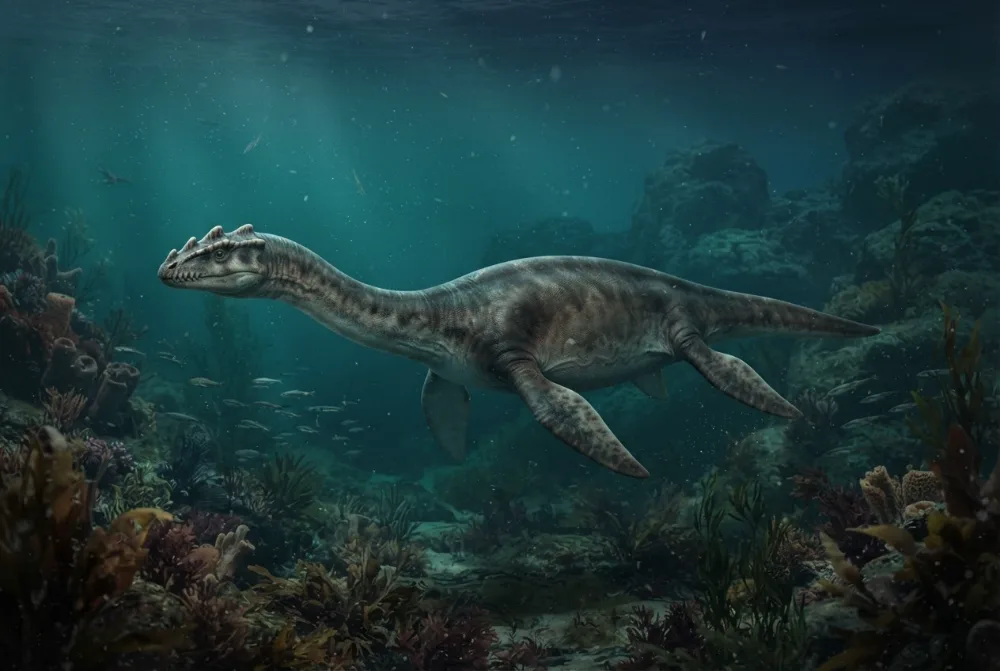
Umoonasaurus was a small, crested marine reptile that swam in cold seas near Antarctica about 115 million years ago. It had three bony crests on its head, like a tiny underwater dinosaur, but it was actually a plesiosaur, not a dinosaur. Its fossils are famous because they are preserved in beautiful blue opal.12
E tshetse leng?
E ne e le kgolo go le kae?
E ne e le telele go le kae?
 telele jaaka dintšwa di le 2.5 go tswa kwa nkong go ya kwa mogatleng🍌telele jaaka dibanana di le 14 di latelana🏊e ne e ka thuma boleele jwa letamo le legolo la go thuma (50 m) mo metsotswaneng e le 6.9
Umoonasaurus e ne e le kgolo go le kae fa e bapisiwa le WENA?
Ke dipalo fela mo sebatling sa gago. Ga go sepe se se bolokwang kgotsa se se romelwang gope.
E ne e le bonako go le kae?


Dintlha tse di monate
Umoonasaurus is known from several partial skeletons, and one of them is the most complete opalized vertebrate fossil ever found.1
It had three thin, blade-like crests on its skull: one along the top of its snout and a pair above its eyes. These crests may have been used for display, like a peacock's tail.1
Umoonasaurus lived in a cold, high-latitude inland sea near the South Pole, where water temperatures were near freezing.12
It was a small plesiosaur, only about 2.5 metres (8 feet) long as an adult. A juvenile specimen was less than 1 metre long.1
Umoonasaurus is the most primitive and also the last surviving member of its group, the rhomaleosaurids. It lived about 115 million years ago.12
Its tail ended in a 'pygostyle-like' structure made of fused vertebrae, similar to the tail tip of some modern birds.1
Dipotso tse di botswang thata ka ga Umoonasaurus
?What did Umoonasaurus eat?
Umoonasaurus ate small fish. Preserved gut contents show it ate small teleost fish.1
?Why did Umoonasaurus have crests?
Scientists think the three crests on its skull were used for display, like a peacock's tail, to help recognise each other or attract mates. They were too fragile for fighting.1
Ya baitseanape ba didino
- Leina la saense
- Umoonasaurus
- Leina le neilwe ke
- Kear et al. 20065
- Setlhopha
- Dipleisiosoro
- Lelapa / clade
- Leptocleididae5
- Thulaganyo
- Plesiosauria > Sauropterygia5
- Bogolo jwa matlapa
- 121 go ya go 100 dimilione tsa dingwaga (Aptian / Albian)5
- Dibopego tsa matlapa
- Bulldog Shale5
- Dinaga
- Ositerelia5
- Direkoto tsa difosili
- 4 mo The Paleobiology Database5
- Go fitlhelwa
- Umoonasaurus was named in 2006 by Benjamin Kear and colleagues. The holotype skeleton, nicknamed 'Eric', was bought by public donations and is preserved in opal from the Zorba Extension Opal Field near Coober Pedy, Australia.1
- Go sa ntse go ganetsanwa
- Scientists are not sure what the three crests on its head were used for. They were too fragile for fighting, so they might have been for display or recognizing other Umoonasaurus.1
Kwa dintlha di tswang teng
- An archaic crested plesiosaur in opal from the Lower Cretaceous high-latitude deposits of Australia (pmc.ncbi.nlm.nih.gov)
- An archaic crested plesiosaur in opal from the Lower Cretaceous high-latitude deposits of Australia (royalsocietypublishing.org)
- Umoonasaurus (en.wikipedia.org)
- Umoonasaurus demoscyllus - The Australian Museum (australian.museum)
- Umoonasaurus in The Paleobiology Database (CC BY 4.0): dingwaga, mafelo, dibopego tsa matlapa, thulaganyo.
Ntlha nngwe le nngwe mo tsebeng eno e na le nomoro e e supang motswedi wa yona. Fa re dirile phoso, maitshwarelo, re barati ba didino, ga re lokwalodikgang lwa saense. Re bolelele kwa [email protected] mme re tla e baakanya.
 Rex o tshwerwe ke tlala! Dino Wiki ke porojeke ya rre e a e diretseng morwawe yo o ratang didino, ke mahala, ga e na dipapatso e bile ga e na dilatedi. Batho ba bagolo ba ka fepa Rex senyamo go thusa gore e nne mo inthaneteng.Fepa Rex
 Elasmosaurus
 Pliosaurus
 Plesiosaurus
 Cimoliasaurus
 Colymbosaurus
 Trinacromerum
 Stegosaurus
 Iguanodon
 Archaeopteryx
 Giganotosaurus
 Microraptor
 Deinonychus