 O dino efe? Kwisi
 Ntwa ya didino
 Peiso ya didino
 Metshamekwana ya didino
 Alebamo ya disetikara
 Manane a TOP a didino
 Ngakgamatsa!
E tshetse leng?

E ne e le kgolo go le kae?
E ne e le telele go le kae?
E ne e le kwa godimo go le kae?
kakanyo
E ne e le bokete go le kae?
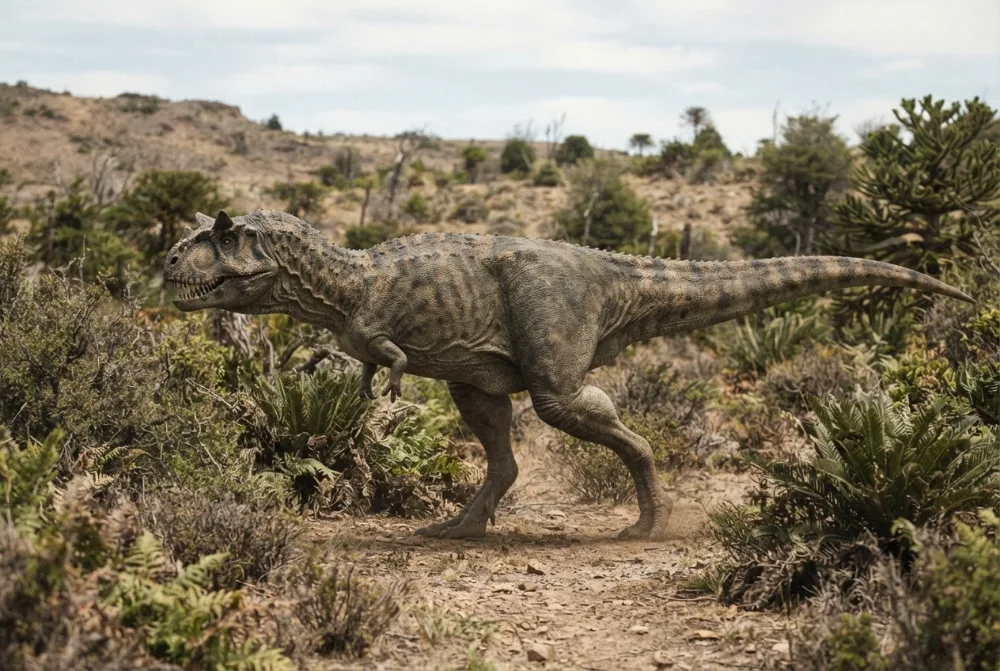
 telele jaaka dintšwa di le 6 go tswa kwa nkong go ya kwa mogatleng🍌telele jaaka dibanana di le 31 di latelana🍉bokete jaaka magapu a le 140🧸bokete jaaka bana ba kreše ba le 37🎒bokete jaaka bana ba sekolo ba le 22🏃e ne e ka taboga dimetara di le 100 mo metsotswaneng e le 9.2 (motho yo o bonako go gaisa o tlhoka 9,6)
Viavenator e ne e le kgolo go le kae fa e bapisiwa le WENA?
Ke dipalo fela mo sebatling sa gago. Ga go sepe se se bolokwang kgotsa se se romelwang gope.
E ne e le bonako go le kae?


Dintlha tse di monate
Viavenator belongs to a group called Furileusauria, which means 'stiff back lizard' in the Mapudungun language, because their backbones were very rigid.2
It lived during the Santonian age, about 85.7 to 83.6 million years ago, filling a gap in the fossil record between earlier and later abelisaurids.32
The only known species is Viavenator exxoni, named after ExxonMobil for helping preserve fossils in the La Invernada area.12
Its skeleton shows special features like a deep notch in the skull bones and a downturned crest on the shin bone, which helped scientists identify it as a new species.2
Viavenator had a very stiff backbone with extra connections between the vertebrae, making its spine almost like a single rod.2
It was a medium to big sized theropod, part of the abelisaurid family that lived in the southern continents during the Cretaceous.2
Dipotso tse di botswang thata ka ga Viavenator
?How big was Viavenator?
About 5.6 metres (18 feet) long.1
?What did Viavenator eat?
It was a carnivore, so it ate meat.1
?Why did Viavenator have a stiff back?
Its backbone was very rigid, with extra connections between vertebrae, which helped it move like a seesaw pivoting on its hips.2
?When did Viavenator live?
It lived during the Santonian age of the Late Cretaceous, about 85.7 to 83.6 million years ago.1
Ya baitseanape ba didino
- Leina la saense
- Viavenator
- Leina le neilwe ke
- Filippi et al. 20165
- Setlhopha
- Didino tse di jang nama
- Lelapa / clade
- Abelisauridae5
- Thulaganyo
- Theropoda > Ceratosauria > Abelisauridae5
- Bogolo jwa matlapa
- 86 go ya go 84 dimilione tsa dingwaga (Santonian)5
- Dibopego tsa matlapa
- Bajo de la Carpa5
- Dinaga
- Arejentina5
- Direkoto tsa difosili
- 1 mo The Paleobiology Database5
- Go fitlhelwa
- Viavenator was named and described in 2016 by Filippi and colleagues based on a partial skeleton found in the Bajo de la Carpa Formation of Argentina.13
- Go sa ntse go ganetsanwa
- Scientists are still debating exactly how Viavenator is related to other abelisaurids, as it seems to be a transitional form between earlier and later species.2
Kwa dintlha di tswang teng
- Viavenator (en.wikipedia.org)
- A new brachyrostran with hypertrophied axial structures reveals an unexpected radiation of latest Cretaceous abelisaurids (corporate.exxonmobil.com)
- PBDB Taxon (paleobiodb.org)
- Viavenator exxoni | Dinosaur Database by DinoAnimals.com (dinoanimals.com)
- Viavenator in The Paleobiology Database (CC BY 4.0): dingwaga, mafelo, dibopego tsa matlapa, thulaganyo.
Ntlha nngwe le nngwe mo tsebeng eno e na le nomoro e e supang motswedi wa yona. Fa re dirile phoso, maitshwarelo, re barati ba didino, ga re lokwalodikgang lwa saense. Re bolelele kwa [email protected] mme re tla e baakanya.
 Rex o tshwerwe ke tlala! Dino Wiki ke porojeke ya rre e a e diretseng morwawe yo o ratang didino, ke mahala, ga e na dipapatso e bile ga e na dilatedi. Batho ba bagolo ba ka fepa Rex senyamo go thusa gore e nne mo inthaneteng.Fepa Rex
 Allosaurus
 Carnotaurus
 Dilophosaurus
 Giganotosaurus
 Compsognathus
 Paronychodon
 Tyrannosaurus
 Triceratops
 Velociraptor
 Spinosaurus
 Ankylosaurus
 Parasaurolophus