 O dino efe? Kwisi
 Ntwa ya didino
 Peiso ya didino
 Metshamekwana ya didino
 Alebamo ya disetikara
 Manane a TOP a didino
 Ngakgamatsa!
Xiongguanlong
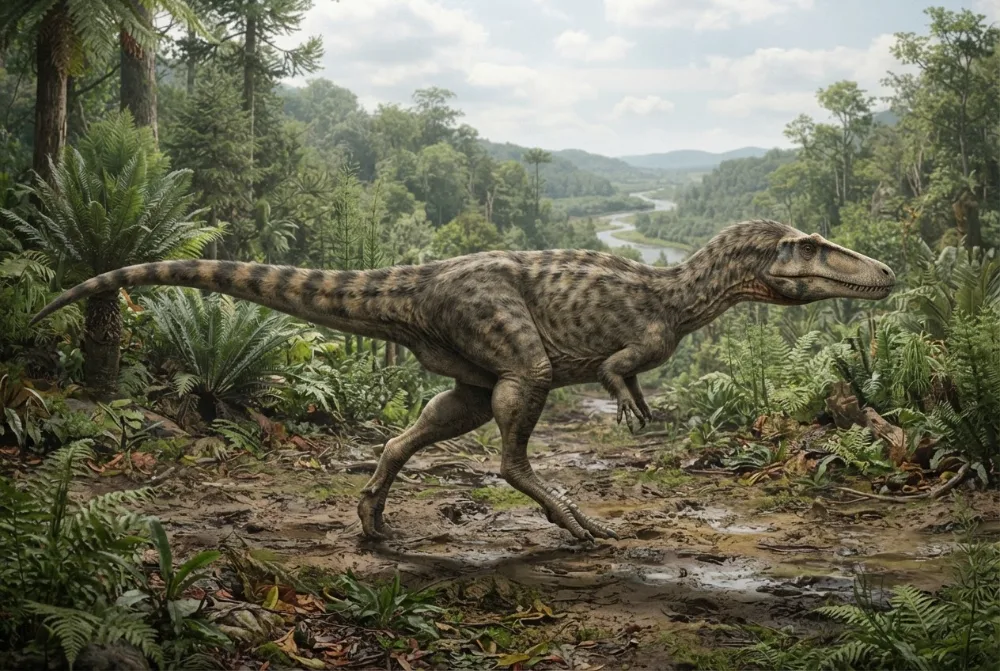
Xiongguanlong was an early cousin of the mighty T. rex. It had a long, narrow snout and lived in what is now China about 120 million years ago. It was a meat-eater that could run after its prey.12
E tshetse leng?
E ne e le kgolo go le kae?
E ne e le telele go le kae?
E ne e le kwa godimo go le kae?
kakanyo
E ne e le bokete go le kae?
 telele jaaka dintšwa di le 5 go tswa kwa nkong go ya kwa mogatleng🍌telele jaaka dibanana di le 28 di latelana🍉bokete jaaka magapu a le 54🧸bokete jaaka bana ba kreše ba le 14🎒bokete jaaka bana ba sekolo ba le 8🏃e ne e ka taboga dimetara di le 100 mo metsotswaneng e le 7.5 (motho yo o bonako go gaisa o tlhoka 9,6)
Xiongguanlong e ne e le kgolo go le kae fa e bapisiwa le WENA?
Ke dipalo fela mo sebatling sa gago. Ga go sepe se se bolokwang kgotsa se se romelwang gope.
E ne e le bonako go le kae?


Dintlha tse di monate
Xiongguanlong had a narrow and long muzzle, similar to the later tyrannosaur Alioramus.1
It is the sister taxon to Tyrannosauridae plus Appalachiosaurus, meaning it is closely related to the family that includes T. rex.1
Xiongguanlong shows several features that later became hallmarks of tyrannosaurids, like a sharp crest on the top of its skull and a boxy braincase.1
Its premaxillary teeth had a ridge on the inner side, a feature seen in later tyrannosaurids.1
The slender, unornamented nasals of Xiongguanlong suggest that the evolution of tyrannosaur feeding adaptations was more complex than previously thought.1
Xiongguanlong lived during the Aptian to Albian stages, about 121.4 to 113.2 million years ago.2
Dipotso tse di botswang thata ka ga Xiongguanlong
?How big was Xiongguanlong?
About 5 metres (16 feet) long and weighed around 270 kilograms (600 pounds).34
?What did Xiongguanlong eat?
It was a meat-eater that hunted small- to medium-sized animals.4
Ya baitseanape ba didino
- Leina la saense
- Xiongguanlong
- Leina le neilwe ke
- Li et al. 20095
- Setlhopha
- Ditiranosoro
- Lelapa / clade
- Tyrannosauroidea5
- Thulaganyo
- Theropoda > Tyrannosauroidea5
- Bogolo jwa matlapa
- 121 go ya go 113 dimilione tsa dingwaga (Aptian)5
- Dibopego tsa matlapa
- Xiagou5
- Dinaga
- Tšhaena5
- Direkoto tsa difosili
- 1 mo The Paleobiology Database5
- Go fitlhelwa
- Xiongguanlong was named by Daqing Li and colleagues in 2009 based on a fossil found in the Xinminpu Group of Gansu, China.1
- Go sa ntse go ganetsanwa
- Scientists are still debating how body size evolved in tyrannosauroids, and whether the trend of increasing size seen in North American tyrannosaurids extends through the whole group.1
Kwa dintlha di tswang teng
- A longirostrine tyrannosauroid from the Early Cretaceous of China (royalsocietypublishing.org)
- PBDB Taxon (paleobiodb.org)
- Xiongguanlong (en.wikipedia.org)
- Dinosaur - Xiongguanlong baimoensis - The Australian Museum (australian.museum)
- Xiongguanlong in The Paleobiology Database (CC BY 4.0): dingwaga, mafelo, dibopego tsa matlapa, thulaganyo.
Ntlha nngwe le nngwe mo tsebeng eno e na le nomoro e e supang motswedi wa yona. Fa re dirile phoso, maitshwarelo, re barati ba didino, ga re lokwalodikgang lwa saense. Re bolelele kwa [email protected] mme re tla e baakanya.
 Rex o tshwerwe ke tlala! Dino Wiki ke porojeke ya rre e a e diretseng morwawe yo o ratang didino, ke mahala, ga e na dipapatso e bile ga e na dilatedi. Batho ba bagolo ba ka fepa Rex senyamo go thusa gore e nne mo inthaneteng.Fepa Rex
 Tyrannosaurus
 Tarbosaurus
 Albertosaurus
 Daspletosaurus
 Gorgosaurus
 Alectrosaurus
 Stegosaurus
 Iguanodon
 Archaeopteryx
 Giganotosaurus
 Microraptor
 Deinonychus