 O dino efe? Kwisi
 Ntwa ya didino
 Peiso ya didino
 Metshamekwana ya didino
 Alebamo ya disetikara
 Manane a TOP a didino
 Ngakgamatsa!
Yamatosaurus
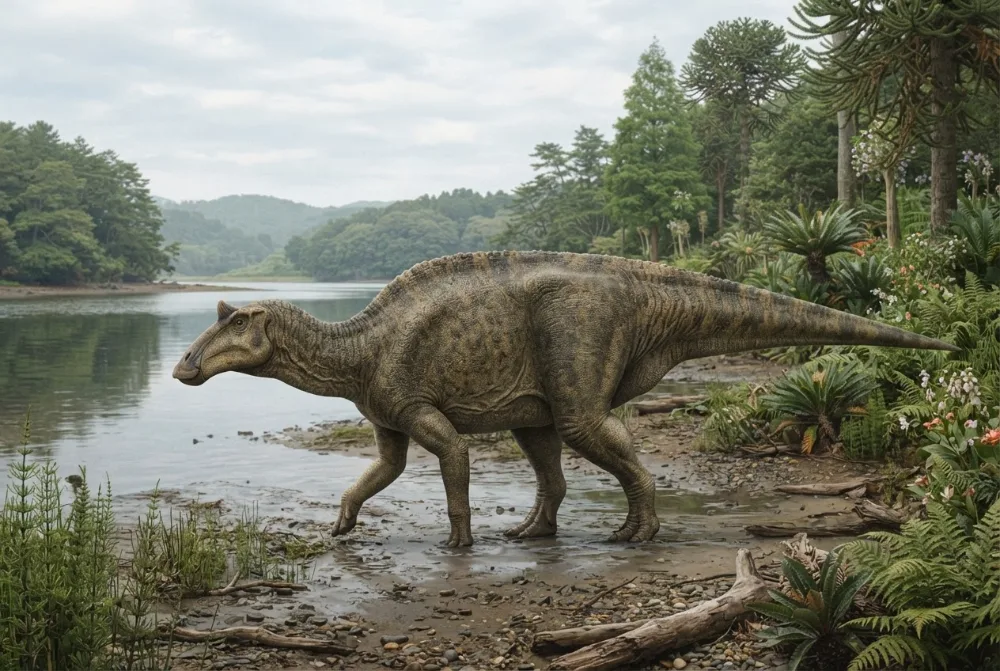
Yamatosaurus was a duck-billed dinosaur that lived in Japan near the end of the age of dinosaurs. It had a special jaw with only one tooth at a time in each spot, which is different from most other duck-billed dinosaurs. This plant-eater probably lived in coastal areas.21
E tshetse leng?
E ne e le kgolo go le kae?
E ne e le telele go le kae?
E ne e le kwa godimo go le kae?
E ne e le bokete go le kae?
 telele jaaka dikoloi di le 2 di emisitswe mo moleng🍌telele jaaka dibanana di le 56 di latelana
 bokete jaaka dintšwa di le 85🍉bokete jaaka magapu a le 340🧸bokete jaaka bana ba kreše ba le 89🎒bokete jaaka bana ba sekolo ba le 53🐻❄️bokete jaaka dibere tse ditshweu di le 4🏃e ne e ka taboga dimetara di le 100 mo metsotswaneng e le 13 (motho yo o bonako go gaisa o tlhoka 9,6)
Yamatosaurus e ne e le kgolo go le kae fa e bapisiwa le WENA?
Ke dipalo fela mo sebatling sa gago. Ga go sepe se se bolokwang kgotsa se se romelwang gope.
E ne e le bonako go le kae?


Dintlha tse di monate
Yamatosaurus had only one tooth in each tooth socket at a time, which is very unusual for a duck-billed dinosaur.2
It lived about 72 to 66 million years ago during the Maastrichtian stage of the Late Cretaceous.3
The fossils were found in marine rocks, meaning the dinosaur's body was washed into the sea after it died.2
Yamatosaurus is one of the oldest known hadrosaurids, or duck-billed dinosaurs, from Japan.2
Its shoulder bone, the coracoid, lacks a bump called the biceps tubercle, which is a primitive feature.2
The name Yamatosaurus comes from Yamato, an ancient name for Japan.1
Dipotso tse di botswang thata ka ga Yamatosaurus
?How big was Yamatosaurus?
Scientists do not know its exact size because only a partial skeleton has been found, including parts of the jaw, neck bones, and shoulder bone.12
?What did Yamatosaurus eat?
It was a plant-eater, like other duck-billed dinosaurs. Its teeth were adapted for chewing plants.1
Ya baitseanape ba didino
- Leina la saense
- Yamatosaurus
- Leina le neilwe ke
- Kobayashi et al. 20215
- Setlhopha
- Melomo-pidipidi
- Lelapa / clade
- Hadrosauridae5
- Thulaganyo
- Ornithischia > Ornithopoda > Iguanodontia > Hadrosauridae5
- Bogolo jwa matlapa
- 72 go ya go 66 dimilione tsa dingwaga (Maastrichtian)5
- Dibopego tsa matlapa
- Kita-ama5
- Dinaga
- Japane5
- Direkoto tsa difosili
- 1 mo The Paleobiology Database5
- Go fitlhelwa
- An amateur fossil collector named Shingo Kishimoto discovered the partial skeleton in May 2004 on Awaji Island, Japan. Scientists Yoshitsugu Kobayashi and colleagues named it Yamatosaurus izanagii in 2021.12
- Go sa ntse go ganetsanwa
- Scientists are not sure exactly how Yamatosaurus is related to other duck-billed dinosaurs, but they think it is a very early member of the group.2
Kwa dintlha di tswang teng
- Yamatosaurus (en.wikipedia.org)
- nature.com (nature.com)
- PBDB Taxon (paleobiodb.org)
- Yamatosaurus izanagii | Dinosaur Database by DinoAnimals.com (dinoanimals.com)
- Yamatosaurus in The Paleobiology Database (CC BY 4.0): dingwaga, mafelo, dibopego tsa matlapa, thulaganyo.
Ntlha nngwe le nngwe mo tsebeng eno e na le nomoro e e supang motswedi wa yona. Fa re dirile phoso, maitshwarelo, re barati ba didino, ga re lokwalodikgang lwa saense. Re bolelele kwa [email protected] mme re tla e baakanya.
 Rex o tshwerwe ke tlala! Dino Wiki ke porojeke ya rre e a e diretseng morwawe yo o ratang didino, ke mahala, ga e na dipapatso e bile ga e na dilatedi. Batho ba bagolo ba ka fepa Rex senyamo go thusa gore e nne mo inthaneteng.Fepa Rex
 Parasaurolophus
 Edmontosaurus
 Saurolophus
 Hypacrosaurus
 Corythosaurus
 Kritosaurus
 Tyrannosaurus
 Triceratops
 Velociraptor
 Spinosaurus
 Ankylosaurus
 Pteranodon