 O dino efe? Kwisi
 Ntwa ya didino
 Peiso ya didino
 Metshamekwana ya didino
 Alebamo ya disetikara
 Manane a TOP a didino
 Ngakgamatsa!
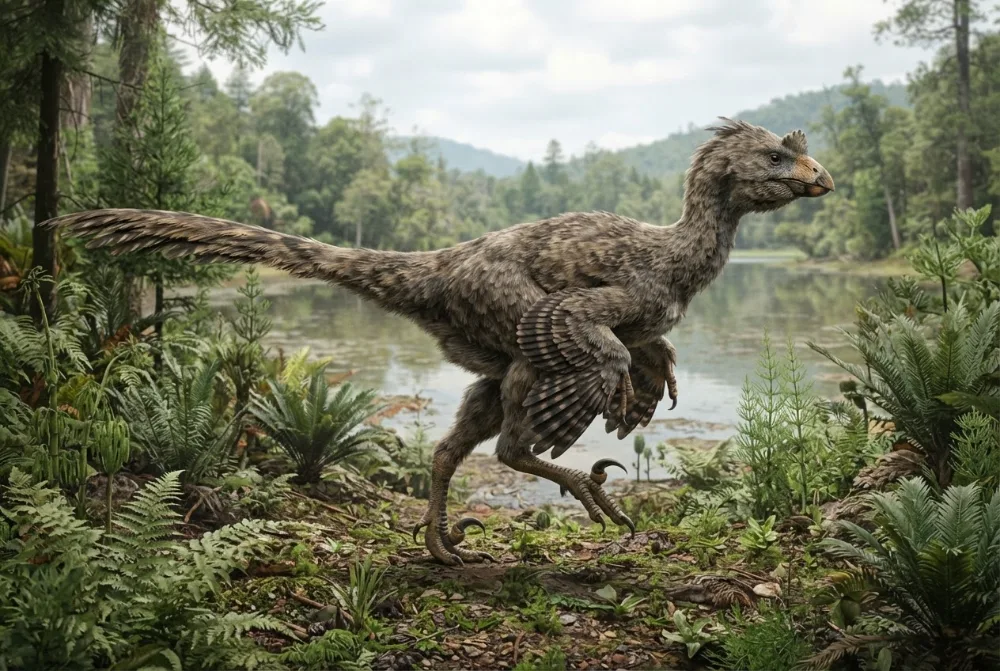
Yuanyanglong
Yuanyanglong was a small, feathered dinosaur that lived in the Early Cretaceous period. It was an oviraptorosaur, a group of bird-like dinosaurs that walked on two legs and had beaks.1
E tshetse leng?
E ne e le kgolo go le kae?
E ne e le telele go le kae?
E ne e le kwa godimo go le kae?
kakanyo
E ne e le bokete go le kae?
 telele jaaka dikatse tsa mo gae di le 4 go tswa kwa nkong go ya kwa mogatleng🍌telele jaaka dibanana di le 11 di latelana🍌bokete jaaka dibanana di le 120🏃e ne e ka taboga dimetara di le 100 mo metsotswaneng e le 10 (motho yo o bonako go gaisa o tlhoka 9,6)
Yuanyanglong e ne e le kgolo go le kae fa e bapisiwa le WENA?
Ke dipalo fela mo sebatling sa gago. Ga go sepe se se bolokwang kgotsa se se romelwang gope.
E ne e le bonako go le kae?


Dintlha tse di monate
Yuanyanglong is the first Early Cretaceous oviraptorosaur named from the Gobi Desert region, while other Gobi relatives come from later rocks.1
The name Yuanyanglong comes from the Mandarin word for lovebirds, because the two fossil skeletons were found together on the same block.1
The species name bainian means 'a hundred years' in Chinese, celebrating 100 years since the first oviraptorosaurs were named in 1924.1
Scientists found two partial skeletons, one with a poorly preserved skull and the other with parts of the hips, legs, and arms.1
Yuanyanglong is a basal oviraptorosaur, meaning it branched off early in the group's family tree, before many other oviraptorosaurs.1
Dipotso tse di botswang thata ka ga Yuanyanglong
?How big was Yuanyanglong?
It was a relatively small dinosaur, though its exact size is not given in the sources. It is described as a 'smaller' oviraptorosaur based on the two partial skeletons found.3
?What did Yuanyanglong eat?
It was an omnivore, meaning it ate both plants and small animals. Scientists found gastroliths (stomach stones) in its body cavity, which helped it grind up food.43
?Could Yuanyanglong run fast?
It had long legs and narrow feet, which usually help with running, but its hip bone had a very short area for leg muscles to attach. Scientists think it was probably not a fast runner and may have been better at wading in water like a modern wading bird.3
?Why was it called Yuanyanglong?
The name means 'lovebird dragon' in Chinese, because the two fossil skeletons were found lying together on the same rock block, like a pair of lovebirds.1
Ya baitseanape ba didino
- Leina la saense
- Yuanyanglong
- Leina le neilwe ke
- Hao et al. 20254
- Setlhopha
- Didino tse di sa tlwaelegang tsa dintsiba
- Lelapa / clade
- Oviraptorosauria4
- Thulaganyo
- Theropoda > Oviraptorosauria4
- Bogolo jwa matlapa
- 121 go ya go 100 dimilione tsa dingwaga (Aptian / Albian)4
- Dibopego tsa matlapa
- Miaogou4
- Dinaga
- Tšhaena4
- Direkoto tsa difosili
- 1 mo The Paleobiology Database4
- Go fitlhelwa
- The fossils were discovered in 2021 in the Miaogou Formation in Inner Mongolia, China. In 2024, Hao and colleagues announced the new genus and species Yuanyanglong bainian, and the full description was published in 2025.1
- Go sa ntse go ganetsanwa
- Scientists are still debating exactly where Yuanyanglong sits on the oviraptorosaur family tree, since its skeleton is incomplete.1
Kwa dintlha di tswang teng
- Yuanyanglong (en.wikipedia.org)
- Yuanyanglong bainian | Dinosaur Database by DinoAnimals.com (dinoanimals.com)
- 内蒙古发现窃蛋龙类恐龙新属种——百年鸳鸯龙----中国科学院古脊椎动物与古人类研究所 (ivpp.ac.cn)
- Yuanyanglong in The Paleobiology Database (CC BY 4.0): dingwaga, mafelo, dibopego tsa matlapa, thulaganyo.
Ntlha nngwe le nngwe mo tsebeng eno e na le nomoro e e supang motswedi wa yona. Fa re dirile phoso, maitshwarelo, re barati ba didino, ga re lokwalodikgang lwa saense. Re bolelele kwa [email protected] mme re tla e baakanya.
 Rex o tshwerwe ke tlala! Dino Wiki ke porojeke ya rre e a e diretseng morwawe yo o ratang didino, ke mahala, ga e na dipapatso e bile ga e na dilatedi. Batho ba bagolo ba ka fepa Rex senyamo go thusa gore e nne mo inthaneteng.Fepa Rex
Tse dingwe tsa setlhopha se le sengwe: Didino tse di sa tlwaelegang tsa dintsiba
 TherizinosaurusDidino tse di sa tlwaelegang tsa dintsiba
 OviraptorDidino tse di sa tlwaelegang tsa dintsiba
 ChirostenotesDidino tse di sa tlwaelegang tsa dintsiba
 CitipesDidino tse di sa tlwaelegang tsa dintsiba
 LeptorhynchosDidino tse di sa tlwaelegang tsa dintsiba
 AvimimusDidino tse di sa tlwaelegang tsa dintsiba
 Stegosaurus
 Iguanodon
 Archaeopteryx
 Giganotosaurus
 Microraptor
 Deinonychus