 Ban dino nga? Kiis
 Xeexu dino
 Rawante dino
 Fo yu ndaw yu dino
 Albomu sitikeer
 Limu TOP yu dino
 Bett ma!
Kañ la dundoon?

Naka la réyoon?
Naka la guddoon?
Naka la kawewoon?
Naka la diisoon?
 gudd ni 8 xaj, bakkan ba geen🍌gudd ni 44 banaana yu ñu topp-toppale🍉diis ni 200 xaal🧸diis ni 53 xale yu maternel🎒diis ni 31 xale yu lekkool🐻❄️diis ni 2 uurs yu weex🏃mënoon na daw 100 meetar ci 9 segond (nit ki gën a gaaw dafay soxla 9,6)
Naka la Afrovenator réyoon, bu ñu ko méngalee ak YAW?
Ay kalkil rekk ci sa navigatëer. Dara du ñu denc, dara du ñu yónne fenn.
Naka la gaawoon?


Xibaar yu neex
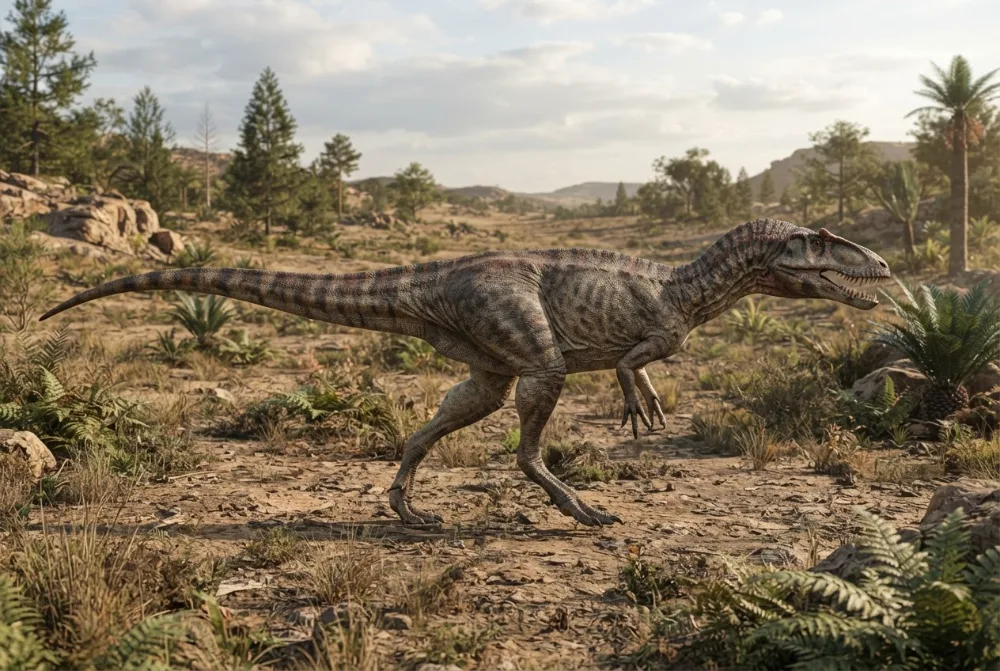
Afrovenator is the most complete predatory dinosaur from the Cretaceous period ever found in Africa.2
Afrovenator had a flexible, S-shaped neck and strong neck muscles, which helped it move its head side to side and up and down while hunting.1
Its lower leg bones were long compared to its thigh bone, meaning it was probably a fast runner.1
The name Afrovenator comes from Latin words meaning 'African hunter'.1
Afrovenator lived during the Middle to Late Jurassic Period, about 167 to 157 million years ago.1
Laaj yi ñu gën a laaj ci Afrovenator
?How big was Afrovenator?
Afrovenator was about 8 metres (26 feet) long from snout to tail tip, stood about 1.9 metres (6.2 feet) tall at the hips, and weighed around 790 kg (1,740 lb). Different scientists give slightly different estimates, but it was a medium-sized, slender predator.1
?What did Afrovenator eat?
Afrovenator was a meat-eater. It had long, blade-shaped teeth for slicing into prey, and it probably hunted other dinosaurs and animals in what is now the Sahara Desert.12
?When did Afrovenator live?
Afrovenator lived during the Middle to Late Jurassic Period, about 167 to 157 million years ago. Some older sources said it lived in the Early Cretaceous, but scientists now think it is Jurassic in age.1
?Where was Afrovenator found?
Afrovenator was discovered in 1993 in the Tiourarén Formation of Niger, in West Africa. Its skeleton is the most complete predatory dinosaur from the Jurassic period ever found in Africa.12
Ngir ñi xam dino lool
- Turu xam-xam
- Afrovenator
- Ku ko tudde
- Sereno et al. 19944
- Kurél
- Dino yuy lekk yàpp
- Njaboot / klad
- Megalosauridae4
- Klasifikasiyoŋ
- Theropoda4
- Màggaayu doj yi
- 171 ba 143 milyoŋ at (Bajocian / Tithonian)4
- Formasiyoŋi doj
- Tiourarén, Irhazer II4
- Réew yi
- Niseer4
- Fosil yu ñu gis
- 3 ci The Paleobiology Database4
- Gisees
- Afrovenator was named in 1994 by Paul Sereno and his team, based on a nearly complete skeleton found in Niger, West Africa. The species name, abakensis, comes from the Tuareg name for the region where it was found.1
- Ñu ngi koy werante ba tey
- Scientists are not sure exactly how big Afrovenator was, because different estimates give different lengths and weights.1
Fa xibaar yi jóge
- Afrovenator (en.wikipedia.org)
- Discoveries | Paul Sereno - Paleontologist | The University of Chicago (paulsereno.uchicago.edu)
- PBDB Taxon (paleobiodb.org)
- Afrovenator in The Paleobiology Database (CC BY 4.0): at, béréb yi, formasiyoŋi doj, klasifikasiyoŋ.
Bépp xibaar ci xët wii am na lim bu wone fa mu jóge. Su nu juumee, baal nu, nun ñu bëgg dino lanu, du ab sërnaalu xam-xam. Wax nu ko ci [email protected] nu defar ko.
 Rex xiif na! Dino Wiki, mbiru ab baay la ngir doomam ju góor ju bëgg dinosoor, ci neen te amul kaamuñaate, amul tracker. Mag ñi mën nañu jox Rex tuuti ñam ngir dimbali ko mu des ci internet.Dundal Rex
 Allosaurus
 Carnotaurus
 Dilophosaurus
 Giganotosaurus
 Compsognathus
 Paronychodon
 Brachiosaurus
 Diplodocus
 Brontosaurus
 Camarasaurus
 Morosaurus
 Apatosaurus